




Texting Ban Sails Through Florida House
A bill that would fully ban texting while driving in Florida swept to an easy victory in the state's House on March 1, when the legislative body voted 112-2 in favor of the legislation that would make texting while driving a primary offense.

Photo via cwozniak/Flickr.
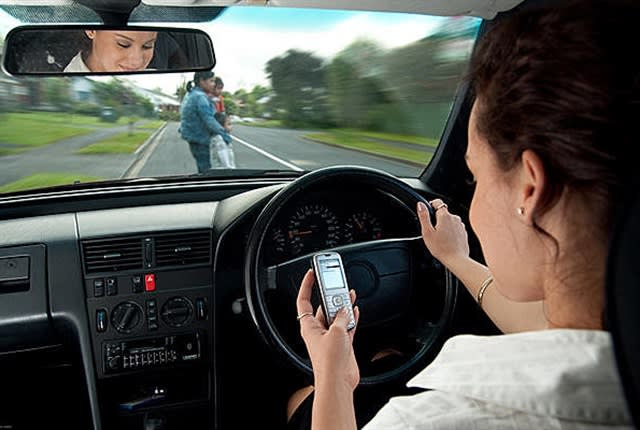
Photo via cwozniak/Flickr.
A bill that would fully ban texting while driving in Florida swept to an easy victory in the state's House on March 1, when the legislative body voted 112-2 in favor of the legislation that would make texting while driving a primary offense, reports the Miami Herald.
Presently, texting by noncommercial drivers is a secondary offense in Florida. Law enforcement officers can only give a summons for texting while driving when they stop motorists for other violations, like running a red light. The bill (HB 33) would allow police to pull over drivers solely for texting while behind the wheel.
The legislation has faced opposition in the state Senate where Sen. Rob Bradley recently blocked it, voicing concerns abut privacy rights as police would be given the power to inspect drivers' cellphones, reports the Herald.
Other opponents of the legislation believe the bill could potentially increase the chances for racial profiling by giving officers another reason to pull drivers over, regardless of whether or not they actually committed a traffic infraction, reports WUFT-FM.
To address the concerns regarding racial profiling, the House and Senate versions would require police to record the race and ethnicity of each person pulled over for texting while driving. The goal would be to create a database, allowing people to track whether or not racial profiling is occurring, reports WUFT-FM.
More Safety
Tips for Driving Safely on Halloween Night
This video features a reminder from the Connecticut Department of Transportation (DOT) and the Connecticut Police Chiefs Association, urging drivers to prioritize safety this Halloween.
Read More →
IIHS Crash Avoidance Tests Reveal Safety Gaps in Cargo Vans and Work Trucks
New crash-avoidance ratings from the Insurance Institute for Highway Safety reveal inconsistent performance among commercial vehicles, with several popular cargo vans and heavy-duty pickups struggling to avoid collisions with other vehicles and pedestrians.
Read More →
What’s Next for Fleet? Safety, AI & Industry Recognition | AF News Recap
Could your company's culture be encouraging distracted driving? This week, we're exploring how workplace expectations affect driver safety, what AI, EVs, and autonomous vehicles could mean for the future of fleet management, and how fleet professionals can strengthen their award nominations.
Read More →
Does Your Fleet's Culture Encourage Distracted Driving?
What happens when the people responsible for enforcing safety rules are the ones setting the wrong example? The answer may reveal why some of the biggest risks to fleet drivers have little to do with what's written in the employee handbook.
Read More →
Fleet Manager’s Ultimate Playbook: Navigating the New Standard in OEM Connectivity
Rising operating costs, driver safety concerns, and unplanned downtime are putting unprecedented pressure on modern fleets. Discover how fleet managers use embedded OEM connectivity and real-time vehicle data to cut TCO, prevent downtime, and protect drivers without aftermarket telematics hardware.
Read More →
From Driver Well-Being to EV Charging | AF News Recap
Mental health belongs in the fleet safety conversation. This week, we’re looking at five ways fleets can support employee well-being before a crisis, plus Holman’s expansion in Mexico, new one-day Fleet Forward passes, and why EV charging demand is outpacing infrastructure growth.
Read More →
Nexar-Nauto Merger Aims to Give Fleets Better Safety Intelligence Through Larger Driving Dataset
Stefan Heck tells Automotive Fleet that combining more than 10 billion miles of driving history with Nexar's AI models will give fleets deeper insights into driver risk and roadway conditions than either company could provide independently.
Read More →
Don't Wait for a Crisis: 5 Ways to Build Mental Health Into Your Fleet Safety Program
For Suicide Prevention Month, fleet and safety leaders have an opportunity to put mental health where it belongs: at the center of workplace safety.
Read More →
How Camera Data Can Strengthen a Fleet’s Insurance Renewal
Insights from a commercial insurance carrier and a broker show how fleets can turn video telematic data, driver coaching, and improved claims results into a stronger case at insurance renewal.
Read More →
The Safest Fleets Aren’t the Ones with the Most Technology
You’ve made the telematics investment. Here’s how to capture the other half of its value and build the safest fleet on the road.
Read More →