




Texas Leads Nation in Drowsy Driving Fatalities
Texas led the country in sleep-related crash fatalities in 2016, according to a recent study about the prevalence of deadly accidents stemming from sleep deprivation. The Lone Star state recorded 159 deaths, accounting for 22.1% of all drowsy driving fatalities nationwide.

Screenshot via Show n tell/Vimeo

Screenshot via Show n tell/Vimeo
Texas led the country in sleep-related crash fatalities in 2016, according to a recent study about the prevalence of deadly accidents stemming from sleep deprivation. The Lone Star state recorded 159 deaths, accounting for 22.1% of all drowsy driving fatalities nationwide.
Alabama came in second, with 43 fatalities and accounting for 6% of all drowsy driving deaths. The report notes that the high population of Texas may account, at least in part, for its top ranking. However, the same cannot be said for Alabama.
Other states that ranked among the top ten include: California (with 38 fatalities), Ohio (24), Kentucky (23), Arizona (22), Florida (22), Pennsylvania (22), Michigan (21), and Tennessee (19).
The study, conducted by Sleep Junkie and published in February, analyzed data from the National Highway Traffic Safety Administration's Fatality Analysis Reporting System, a nationwide census of fatal crashes and their causes.
Other key findings from the report include:
Roughly two-thirds (66.9%) of fatal crashes involving sleepy drivers were collisions with inanimate objectsrather than other vehicles.
Approximately 15% of fatal crashes occur when the drowsy driver swerves into oncoming traffic, resulting in a head-on collision with another car.
Front-to-rear collisions with another vehicle represented 7.5% of fatal crashes resulting from a lack of sleep. This kind of crash likely occurs due to a driver's failure to stop when the car ahead of them brakes, according to the study authors.
More than 9% of crashes involving sleep-deprived drivers occurred between 5 and 6 a.m., and 8.8% took place during the following hour. The timing suggests that these drivers are either commuting to work or leaving a late-night shift — shift workers are a high-risk group for drowsy driving.
Sundays and Mondays were statistically the worst days for sleep-related crashes; and June and September were the worst months, accounting for 11% and 10%, respectively, for all drowsy driving fatalities.
According to the Center for Disease Control and Prevention, 1 in 25 drivers have fallen asleep at the wheel in the past month, resulting in up to 6,000 fatal drowsy driving crashes annually.
Read the full report here.
More Safety

From Driver Well-Being to EV Charging | AF News Recap
Mental health belongs in the fleet safety conversation. This week, we’re looking at five ways fleets can support employee well-being before a crisis, plus Holman’s expansion in Mexico, new one-day Fleet Forward passes, and why EV charging demand is outpacing infrastructure growth.
Read More →
Nexar-Nauto Merger Aims to Give Fleets Better Safety Intelligence Through Larger Driving Dataset
Stefan Heck tells Automotive Fleet that combining more than 10 billion miles of driving history with Nexar's AI models will give fleets deeper insights into driver risk and roadway conditions than either company could provide independently.
Read More →
Don't Wait for a Crisis: 5 Ways to Build Mental Health Into Your Fleet Safety Program
For Suicide Prevention Month, fleet and safety leaders have an opportunity to put mental health where it belongs: at the center of workplace safety.
Read More →
How Camera Data Can Strengthen a Fleet’s Insurance Renewal
Insights from a commercial insurance carrier and a broker show how fleets can turn video telematic data, driver coaching, and improved claims results into a stronger case at insurance renewal.
Read More →
The Safest Fleets Aren’t the Ones with the Most Technology
You’ve made the telematics investment. Here’s how to capture the other half of its value and build the safest fleet on the road.
Read More →
Hidden in Plain Sight: Fleet Compliance Risks
Fleet compliance isn't just about having policies — it's about consistently enforcing them. This practical guide reveals six hidden compliance risks common in public sector and shared fleet operations and outlines proven strategies to improve visibility, accountability, and audit readiness
Read More →
NETS Sets 2026 Fleet Safety Benchmark Conference for Indianapolis
The Sept. 15–17 program will feature fleet benchmarking data, case studies, emerging technologies, and implementation strategies while running alongside the NSC Safety Congress & Expo.
Read More →
Off-the-Job Crashes Account for 43% of Employers’ $61.7 Billion Crash Burden
NETS quantifies costs dispersed across fleet, risk, HR, and other departments while providing new per-crash benchmarks for employers.
Read More →
Ram Recalls More Than 1.27 Million 1500 Pickups for Seat Belt Anchor Issue
The recall affects certain 2019-2026 Ram 1500 pickups that may have improperly attached second-row seat belt buckle anchors.
Read More →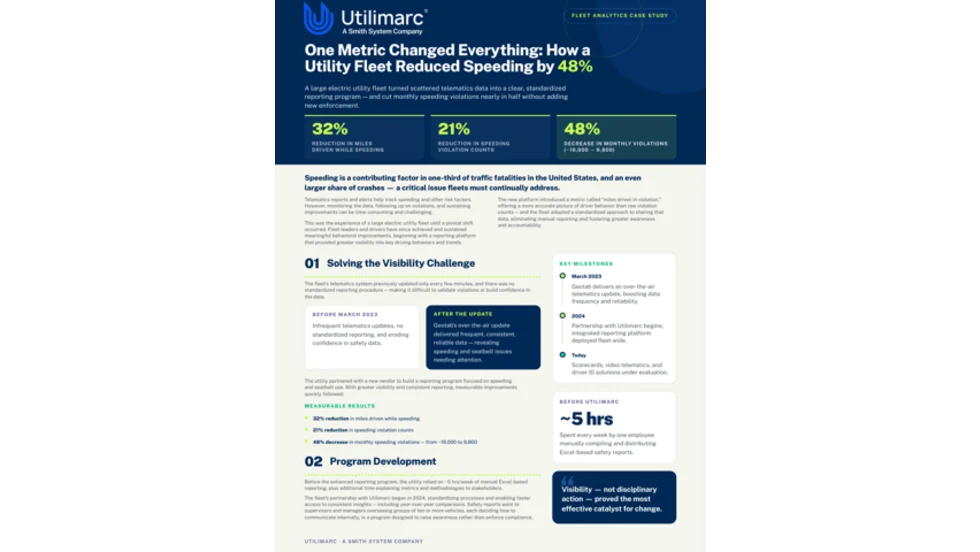
How Better Visibility Cut Speeding Violations by 48%
Fleet leaders don't need more data, they need clearer visibility into what the data is saying. This case study explores how one utility replaced speeding-event counts with a single metric — miles driven in violation — to strengthen safety and significantly reduce speeding violations.
Read More →