Automotive Fleet
MenuMENU
SearchSEARCH

Tests May Help Predict Whether Someone With Alzheimer’s Can Drive Safely

IOWA CITY, IA --- New research suggests that doctors may be able to use cognitive tests to help determine whether a person with Alzheimer's disease can still operate a car safely, ScienceDaily.com reported.

by Staff
February 11, 2009
2 min to read


IOWA CITY, IA --- New research suggests that doctors may be able to use cognitive tests to help determine whether a person with Alzheimer's disease can still operate a car safely, ScienceDaily.com reported.

"The number of people with dementia is increasing as our population ages, and we will face a growing public health problem of elderly drivers with memory loss," said study author Jeffrey Dawson with the University of Iowa in Iowa City. The research is published in the Feb. 10 issue of Neurology. The study was supported by the National Institute on Aging.

Ad Loading...

In the study, 40 drivers with early Alzheimer's disease and 115 elderly drivers without this diagnosis completed a series of off-road tests that measured thinking, movement and visual skills. The test participants also drove a 35-mile route in and outside the city. Driving safety errors were recorded by a driving expert, based on a video review of the drive.

The research found that drivers with Alzheimer's disease committed an average of 42 safety mistakes -- 27 percent more than the drivers without Alzheimer's disease, who made an average of 33 safety errors on the test drive. The most common mistakes were lane violations.

For every five years older the participant was, the number of safety errors rose by about two and a half, whether or not the driver had Alzheimer's disease. Among drivers with Alzheimer's disease, those who performed better on the off-road tests made fewer on-road safety errors.

"The goal is to prevent crashes while still maximizing patients' rights and freedom to be mobile," said Dawson. "By measuring driver performance through off-road tests of memory, visual and motor abilities, we may be able to develop a standardized assessment of a person's fitness to drive."






More Safety

Chris Brown sits across from safety experft at Lifesaver mobile in an interview about distracted driving and phone use tech.
Safetyby Chris BrownMay 1, 2026

Reducing Risk by Eliminating Phone Use Behind the Wheel

Distracted driving remains one of the most persistent risks in fleet operations. New approaches focus on removing mobile device use entirely while adding real-time safety support.

Read More →
Safetyby Jeanny RoaApril 15, 2026

Distracted Driving in the Age of Smart Tech – Part 2

As distraction risks evolve, fleets are turning to smarter, more connected technologies to better understand what’s happening behind the wheel. Part 2 explores how these tools are helping identify risky behaviors and improve visibility across operations.

Read More →
Safetyby Jeanny RoaApril 11, 2026

 Data Rights, Risks, and Responsibilities After a Crash

What fleets capture to improve safety can also expose them in litigation, forcing leaders to rethink how data is managed, stored, and shared.

Read More →
Ad Loading...
Driver holding a phone while steering, illustrating distracted driving and the importance of mental awareness and attention on the road for fleet safety.
Safetyby Judie NuskeyApril 10, 2026

From Distraction to Detection: Strengthening Awareness in Fleet Drivers

Distracted driving is often measured by what we can see—phones in hand, eyes off the road. But what about the distractions we can’t? A recent incident raises a bigger question about awareness, attention, and why subtle risks so often go unnoticed.

Read More →
Safetyby StaffApril 8, 2026

Lytx 2026 Road Safety Report

While serious crashes are declining, a rise in minor incidents and ongoing risk hotspots underscore the need for continued fleet safety investment.

Read More →
Driver’s hands on steering wheel in a sunlit vehicle, representing real-world driver behavior and the shift from data monitoring to hands-on training in fleet safety programs.
Safetyby Judie NuskeyApril 7, 2026

Behind-the-Wheel vs. Classroom Training: What Actually Changes Driver Behavior?

Fleets have more driver data than ever, so why isn't behavior changing? Training requires more than reports and coaching — it requires real-world practice.

Read More →
Ad Loading...
A person in a car on their phone behind the steering wheel.
Safetyby Jeanny RoaApril 1, 2026

Distracted Driving in the Age of Smart Tech – Part 1

A two-part conversation with Stefan Heck on how AI is transforming the fight against distracted driving. As fleets adopt smarter tools, the focus shifts from reacting to preventing risk. In Part 1, we look at where AI is making an impact for fleets today.

Read More →
Pedestrians crossing a busy street, highlighting the importance of driver awareness and caution to prevent pedestrian accidents.
Safetyby StaffMarch 30, 2026

Pedestrian Safety Starts With the Driver

More people on foot means more risk for drivers. These pedestrian safety tips can help prevent serious injuries and keep everyone safer on the road.

Read More →
SponsoredMarch 30, 2026

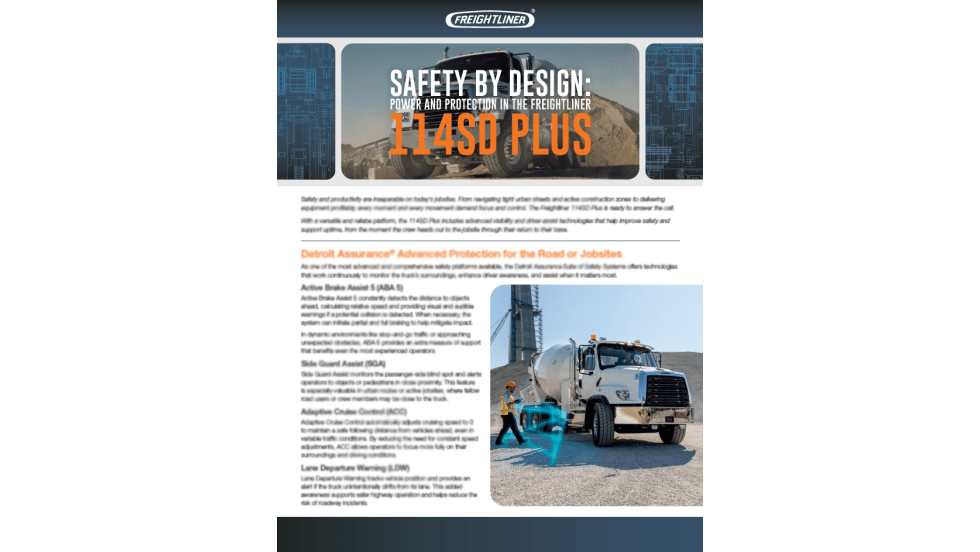
Safety by Design: Power and Protection in the Freightliner 114SD Plus

Fleet managers are under pressure to reduce accidents, control costs, and improve operational efficiency. See how advanced vehicle safety technologies are helping fleets operate smarter and safer.

Read More →
Ad Loading...
Safetyby StaffMarch 26, 2026

Pedestrian Deaths Drop in First Half of 2025, Marking Largest Decline in Years

An 11% drop in pedestrian fatalities in early 2025 signals progress in U.S. road safety, but elevated death rates and ongoing risks underscore the need for continued action from fleets and policymakers.

Read More →