




Related: Uber Suspends Self-Driving Tests After Vehicle Kills Pedestrian
Tesla Removed from Crash Investigation for Violating NTSB Rules
Tesla will no longer be able to participate in the National Transportation Safety Board investigation of a fatal crash involving a Tesla Model X after it violated the agency’s rules on sharing investigative information before being vetted and confirmed.
by Staff
April 12, 20183 min to read
Updated 4/13 – Tesla will no longer be able to participate in the National Transportation Safety Board investigation of a fatal crash involving a Tesla Model X after it violated the agency’s rules on sharing investigative information before being vetted and confirmed.
NTSB
The NTSB sometimes offers companies a role in an investigation when it can provide technical assistance to the agency and Tesla was offered and accepted the role in the investigation of the March 23 incident. The crash involved a Model X that was traveling near Mountain View, Calif., with the vehicle’s semi-autonomous autopilot system engaged.
There was some back and forth between Tesla and the NTSB on why the electric car maker was removed from the investigation and whether it had chosen to leave or not. Tesla initially claimed that it decided to leave the investigation because the NTSB wasn't allowing the company to release information about the investigation to the public. But in a statement released April 12, the NTSB said that Tesla was, in fact, involuntarily removed because it decided to release information without running it by the agency first.
It was reported in early April that NTSB investigators were not happy with Tesla for releasing information on the crash. Tesla publicly stated that the autopilot system had been engaged with the minimum follow distance set. The company indicated that with minimum follow distances that drivers needed to be attentive to the road and ready to intervene with hands on the steering wheel. It was revealed that the driver in the March 23 crash, who was killed when the car slammed into a highway barrier, was not acting according to its recommendations when the accident occurred.
The NTSB asks parties that are involved in crash investigations to vet released data before releasing it to the public because the information may be incomplete and can lead to speculation and incorrect assumptions about the probable cause of a crash. The incomplete information can hurt the investigation process and does a disservice to the public, according to the agency.
“It is unfortunate that Tesla, by its actions, did not abide by the party agreement,” said Robert Sumwalt, NTSB chairman. “We decided to revoke Tesla’s party status and informed Mr. Musk in a phone call last evening and via letter today. While we understand the demand for information that parties face during an NTSB investigation, uncoordinated releases of incomplete information do not further transportation safety or serve the public interest.”
Despite no longer being an official part of the investigation, Tesla will still be required to cooperate with requests for information from the NTSB during the investigation because it is the manufacturer of the vehicle involved in the crash.
This is not the first time that the NTSB has removed a party from an investigation. In 2009, the NTSB removed the National Air Traffic Controllers Association from the investigation into a mid-air collision in New York. It also revoked the party status of both the Independent Pilots Association and UPS during an investigation into the crash of a UPS flight in Alabama in 2014.
UPDATE: Tesla fired back with another statement contesting the NTSB's timeline of events and said it would file a formal complaint against the agency in Congress.
"It's been clear in our conversations with the NTSB that they're more concerned with press headlines than actually promoting safety. Among other things, they repeatedly released partial bits of incomplete information to the media in violation of their own rules, at the same time that they were trying to prevent us from telling all the facts," the statement read.
"We will also be issuing a Freedom Of Information Act request to understand the reasoning behind their focus on the safest cars in America while they ignore the cars that are the least safe. Perhaps there is a sound rationale for this, but we cannot imagine what that could possibly be."
More Safety

Nexar-Nauto Merger Aims to Give Fleets Better Safety Intelligence Through Larger Driving Dataset
Stefan Heck tells Automotive Fleet that combining more than 10 billion miles of driving history with Nexar's AI models will give fleets deeper insights into driver risk and roadway conditions than either company could provide independently.
Read More →
Don't Wait for a Crisis: 5 Ways to Build Mental Health Into Your Fleet Safety Program
For Suicide Prevention Month, fleet and safety leaders have an opportunity to put mental health where it belongs: at the center of workplace safety.
Read More →
How Camera Data Can Strengthen a Fleet’s Insurance Renewal
Insights from a commercial insurance carrier and a broker show how fleets can turn video telematic data, driver coaching, and improved claims results into a stronger case at insurance renewal.
Read More →
The Safest Fleets Aren’t the Ones with the Most Technology
You’ve made the telematics investment. Here’s how to capture the other half of its value and build the safest fleet on the road.
Read More →
Sponsored•August 7, 2026
Hidden in Plain Sight: Fleet Compliance Risks
Fleet compliance isn't just about having policies — it's about consistently enforcing them. This practical guide reveals six hidden compliance risks common in public sector and shared fleet operations and outlines proven strategies to improve visibility, accountability, and audit readiness
Read More →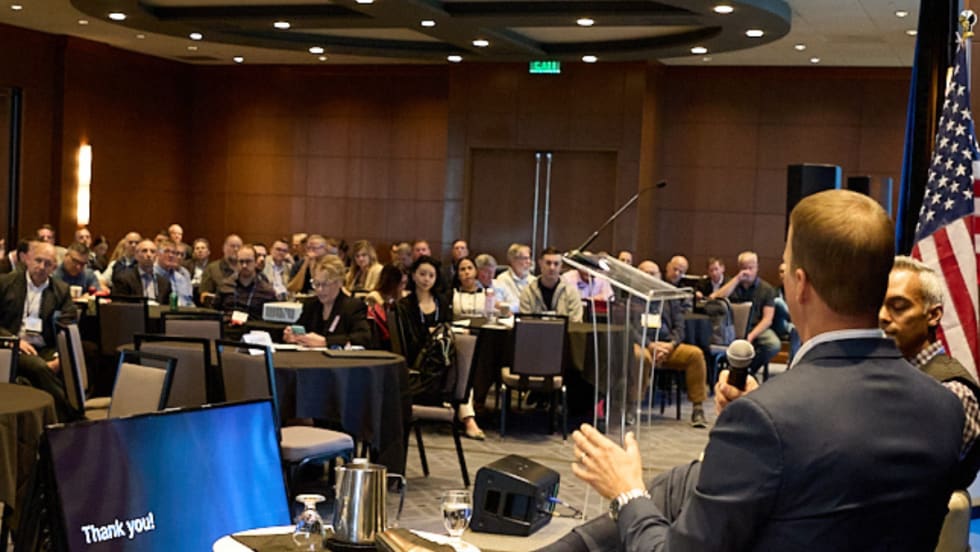
NETS Sets 2026 Fleet Safety Benchmark Conference for Indianapolis
The Sept. 15–17 program will feature fleet benchmarking data, case studies, emerging technologies, and implementation strategies while running alongside the NSC Safety Congress & Expo.
Read More →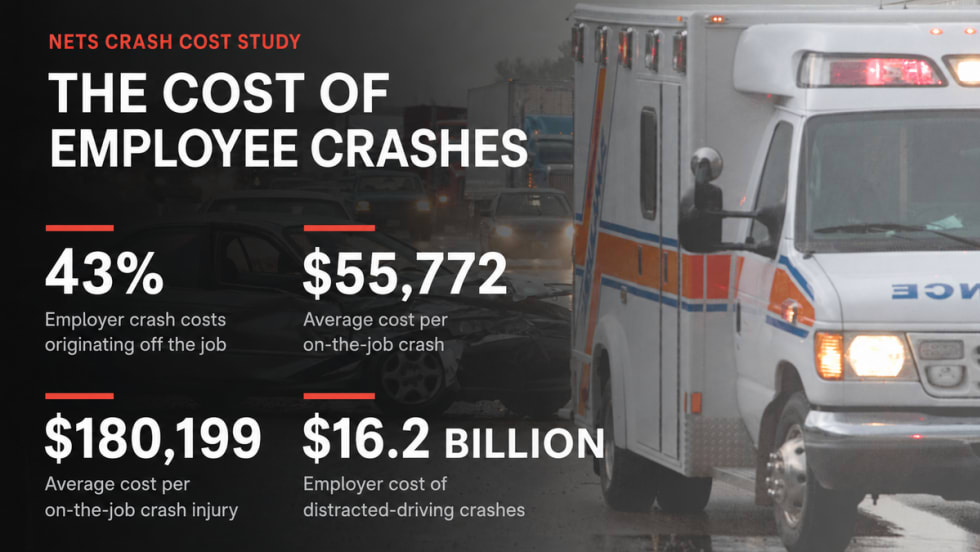
Off-the-Job Crashes Account for 43% of Employers’ $61.7 Billion Crash Burden
NETS quantifies costs dispersed across fleet, risk, HR, and other departments while providing new per-crash benchmarks for employers.
Read More →
Ram Recalls More Than 1.27 Million 1500 Pickups for Seat Belt Anchor Issue
The recall affects certain 2019-2026 Ram 1500 pickups that may have improperly attached second-row seat belt buckle anchors.
Read More →
Sponsored•July 17, 2026
How Better Visibility Cut Speeding Violations by 48%
Fleet leaders don't need more data, they need clearer visibility into what the data is saying. This case study explores how one utility replaced speeding-event counts with a single metric — miles driven in violation — to strengthen safety and significantly reduce speeding violations.
Read More →
Operation Safe Driver Week: Why the Industry's Oldest Safety Campaign Still Matters to Fleets
A look at how a 2007 enforcement initiative became one of the most consequential weeks on the fleet safety calendar, and what it means for your drivers in 2026.
Read More →