




Tesla Model S Draws Record-Setting Safety Score
NHTSA awards the all-electric vehicle a 5-Star rating overall and in every crash test subcategory. The vehicle sets a new record for the lowest likelihood of injury to occupants.
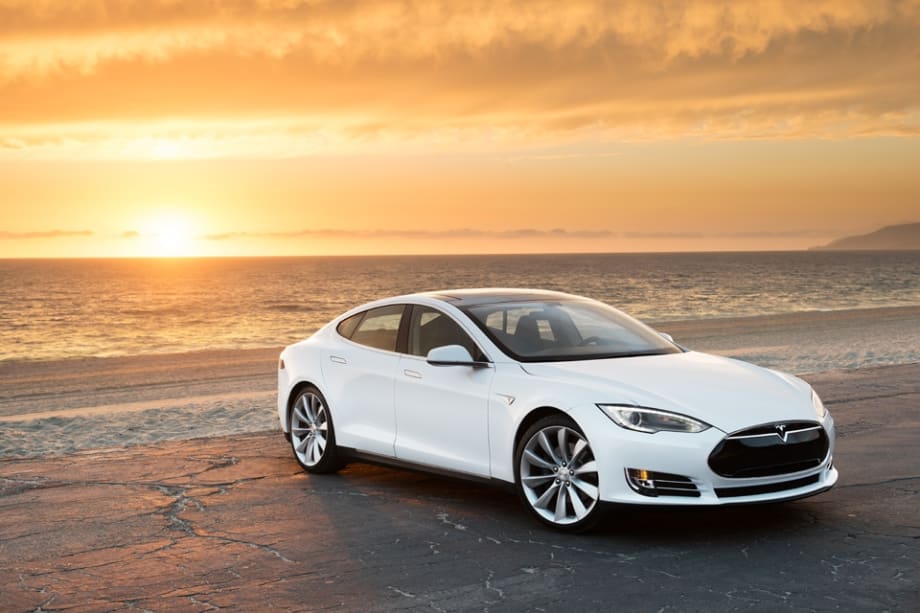
Tesla Model S
Tesla Model S
The National Highway Traffic Safety Administration has awarded the Tesla Model S a 5-star safety rating -- not just overall, but in every subcategory without exception, Tesla Motors announced.
Approximately 1 percent of all cars tested by the federal government achieve 5 stars across the board. NHTSA does not publish a star rating above 5, but safety levels better than 5 stars are captured in the overall Vehicle Safety Score (VSS) provided to manufacturers. The Model S drew a new combined record of 5.4 stars, Tesla said. Of all vehicles tested, including every major make and model approved for sale in the United States, the Model S set a new record for the lowest likelihood of injury to occupants.
Though the Model S is a sedan, it also exceeded the safety score of all SUVs and minivans. This score takes into account the probability of injury from front, side, rear and rollover accidents.
In the front, the Model S has the advantage of not having a large gasoline engine block, thus creating a much longer crumple zone to absorb a high-speed impact, the automaker pointed out. This is fundamentally a force-over-distance problem – the longer the crumple zone, the more time there is to slow down occupants at g loads that do not cause injuries. Just like jumping into a pool of water from a tall height, it is better to have the pool be deep and not contain rocks. The Model S motor is only about a foot in diameter and is mounted close to the rear axle, and the front section that would normally contain a gasoline engine is used for a second trunk.
For the side pole intrusion test, considered one of the most difficult to pass, the Model S was the only car in the "good" category among the other top 1 percent of vehicles tested. The Model S preserved 63.5% of driver residual space. Tesla said it achieved this outcome by nesting multiple deep aluminum extrusions in the side rail of the car that absorb the impact energy and transfer load to the rest of the vehicle. This causes the pole to be either sheared off or to stop the car before the pole hits an occupant.
The rear crash testing was particularly important, given the optional third-row children's seat. For this, the Tesla factory installs a double bumper if the third-row seat is ordered. This was needed to protect against a highway speed impact in the rear with no permanently disabling injury to the third-row occupants. The third row is already the safest location in the car for frontal or side injuries.
The Model S was also superior in rollover risk tests. During testing at an independent facility, the Model S refused to turn over via the normal methods and special means were needed to cause the car to roll. That’s because the battery pack is mounted below the floor pan, providing a very low center of gravity.
During validation of Model S roof crush protection at an independent commercial facility, the testing machine failed at just above 4 g's. While the exact number is uncertain because the Model S broke the testing machine, this means that at least four additional fully loaded Model S vehicles could be placed on top of an owner's car without the roof caving in. This is achieved primarily through a center (B) pillar reinforcement attached via aerospace-grade bolts, Tesla said.
More Safety

Nexar-Nauto Merger Aims to Give Fleets Better Safety Intelligence Through Larger Driving Dataset
Stefan Heck tells Automotive Fleet that combining more than 10 billion miles of driving history with Nexar's AI models will give fleets deeper insights into driver risk and roadway conditions than either company could provide independently.
Read More →
Don't Wait for a Crisis: 5 Ways to Build Mental Health Into Your Fleet Safety Program
For Suicide Prevention Month, fleet and safety leaders have an opportunity to put mental health where it belongs: at the center of workplace safety.
Read More →
How Camera Data Can Strengthen a Fleet’s Insurance Renewal
Insights from a commercial insurance carrier and a broker show how fleets can turn video telematic data, driver coaching, and improved claims results into a stronger case at insurance renewal.
Read More →
The Safest Fleets Aren’t the Ones with the Most Technology
You’ve made the telematics investment. Here’s how to capture the other half of its value and build the safest fleet on the road.
Read More →
Hidden in Plain Sight: Fleet Compliance Risks
Fleet compliance isn't just about having policies — it's about consistently enforcing them. This practical guide reveals six hidden compliance risks common in public sector and shared fleet operations and outlines proven strategies to improve visibility, accountability, and audit readiness
Read More →
NETS Sets 2026 Fleet Safety Benchmark Conference for Indianapolis
The Sept. 15–17 program will feature fleet benchmarking data, case studies, emerging technologies, and implementation strategies while running alongside the NSC Safety Congress & Expo.
Read More →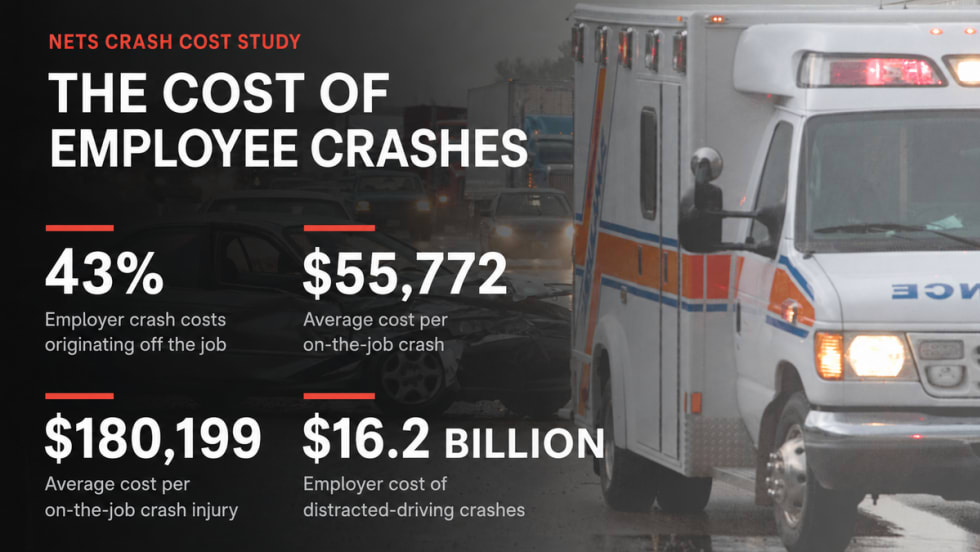
Off-the-Job Crashes Account for 43% of Employers’ $61.7 Billion Crash Burden
NETS quantifies costs dispersed across fleet, risk, HR, and other departments while providing new per-crash benchmarks for employers.
Read More →
Ram Recalls More Than 1.27 Million 1500 Pickups for Seat Belt Anchor Issue
The recall affects certain 2019-2026 Ram 1500 pickups that may have improperly attached second-row seat belt buckle anchors.
Read More →
How Better Visibility Cut Speeding Violations by 48%
Fleet leaders don't need more data, they need clearer visibility into what the data is saying. This case study explores how one utility replaced speeding-event counts with a single metric — miles driven in violation — to strengthen safety and significantly reduce speeding violations.
Read More →
Operation Safe Driver Week: Why the Industry's Oldest Safety Campaign Still Matters to Fleets
A look at how a 2007 enforcement initiative became one of the most consequential weeks on the fleet safety calendar, and what it means for your drivers in 2026.
Read More →