




Technology is Key to Improving Fleet Loss Recovery Performance
TREVOSE, PA - Fleets can cut their loss recovery times by nearly 60 percent and save their companies millions of dollars a years in labor and interest expenses by making better use of technology, according to Chris Villella, senior manager of loss recovery and insurance services for the CEI Group Inc.
TREVOSE, PA - Fleets can cut their loss recovery times by nearly 60 percent and save their companies millions of dollars a years in labor and interest expenses by making better use of technology, Chris Villella, senior manager of loss recovery and insurance services for the CEI Group Inc. told an audience of subrogation professionals at the Fifth Annual National Automobile Subrogations Strategies ExecuSummit.
Including savings on time, labor, paper and postage and reduced interest expenses, a subrogation department that processes $1 million in recovery claims a month can generate savings of nearly $250,000 a year, Villella told the gathering of subrogation professionals, held at the Monhegan Sun Resort and Casino in Uncasville, CT.
Citing specific examples, Villella told the group that:
Using faxes instead of the US mail to send and receive claim documents can reducethe amount of time it takes to recover damages by as much as 28 percent, or 23 days off an 80-day average recovery cycle period.
Using email can cut claim recovery time by another 60 percent, or 25 days.
A pilot program of a web-based subrogation clearinghouse called E-Subro Hub, created and operated by the non-profit Arbitration Forums, Inc., has reduced average recovery claim time for participating firms by another 19 days.
A recent study of CEI's own subrogration claims processing found that using faxes and emails resulted in nearly seven fewer follow-up contacts and more than an hour of labor time per claim, resulting in operational savings of more nearly $34 each, Villella told the group. Participation in the E-Subro Hub pilot program has yielded CEI nearly another $8 in savings per processed claim. Last year, the program was conducted in six states and the District of Columbia, he said.
Villella said the major benefit of reducing damage loss recovery time is a faster inflow of cash, enabling a company or government to depend less on short-term lines of credit to cover operating expenses.
About The CEI Group, Inc. (CEI)
CEI is a leading provider of technology-enhanced vehicle accident, driver safety and fleet risk management services. Its provider network includes some 4,000 collision repair shops in North America, including more than 800 heavy-duty truck collision repair centers. Its customers include self-insured commercial, institutional and governmental fleets, directly and through its alliances with fleet leasing companies. CEI also provides vehicle direct repair program outsourcing to leading property and casualty insurance companies.
Founded in 1983, CEI has headquarters near Philadelphia, PA, with field sales offices in Trevose, PA; Monroe, MI; Tulsa, OK; and Pittsburgh PA. In 2000, CEI launched DriverCareTM, a line of fleet risk management and driver safety services, including DriverCare Risk ManagerTM, DriverCare mvrCompleteTM, DriverCare QuarterlyTM and DriverCare Web-Based TrainingTM. For more information about CEI, please visit www.ceinetwork.com.
More Operations
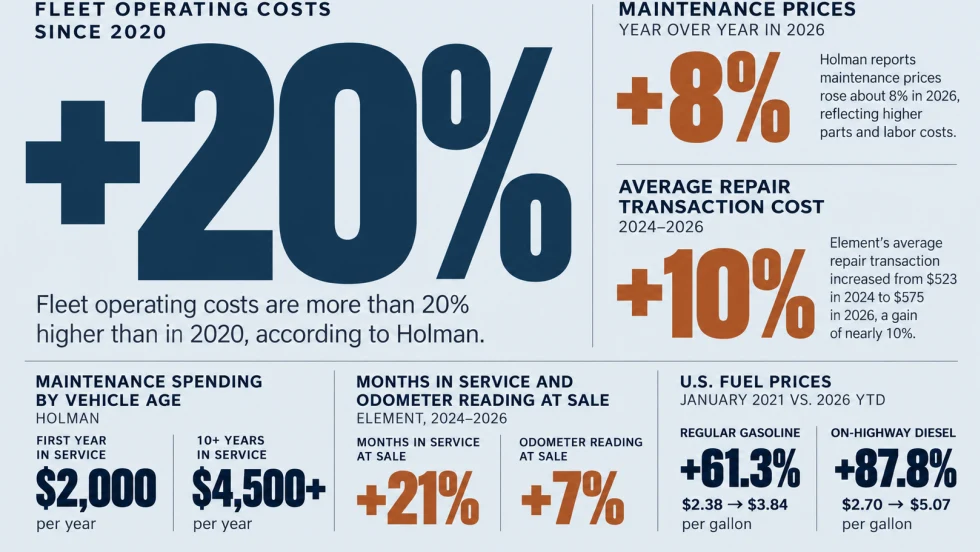
Managing Fleet Costs in an Era of Permanent Volatility
Fleet operating costs have risen more than 20% since 2020, raising a key question: When does extending a vehicle's service life stop making financial sense?
Read More →
The Next Evolution of Fleet Management: Autonomous Operations
This opening keynote session at the Fleet Forward Conference highlights the future of autonomous driving for fleets.
Read More →
How to Reduce the Total Cost of Risk From Catalytic Converter Theft
A stolen catalytic converter can cost fleets far more in downtime and lost productivity than in repairs. A total-cost-of-risk approach can help fleet managers quantify their exposure and prioritize theft prevention.
Read More →

Personal-Use Charges Rise as Vehicle Values Fall | AF News Recap
Personal-use charges are climbing, wholesale used-vehicle values are declining, and commercial fleet sales growth is slowing. This week, we're breaking down the latest fleet data, plus how Element Fleet Management is helping Waymo prepare for its first Canadian robotaxi market.
Read More →
Here's When You Should Make an Exception to Fleet Policy
Fleet policies are designed to create consistency, but not every driver or situation fits neatly within standard rules.
Read More →
AI-Native or AI-Acquired: What Should Fleet Managers Look for in an AI Platform?
Six questions can help fleet managers look beyond AI marketing claims to evaluate integration, data access, and real-world operational performance.
Read More →
A buyer's guide to fleet management software in 2027
Buying fleet management software in 2027 means looking beyond features and price. As fleet operations, technology and expectations evolve, this guide explores what today’s fleet professionals should consider when choosing a system that can deliver value now and adapt to what comes next.
Read More →
What Will Shape the Next Era of Fleet Management?
EVs, AI, and autonomous vehicles are reshaping fleet management. Discover what’s ahead—and how fleet leaders can prepare for the next era.
Read More →
How Fleets Can Recruit and Train Veterans for Technician Roles
Here's how the technician shortage has affected uptime for fleets, and what to do about it.
Read More →
Avis Budget Group Deploys Neology Toll Management Technology Across Major Brands
Neology’s neoFleet platform will manage toll transactions and toll-authority operations for vehicles across Avis, Budget, Payless, Budget Truck and Zipcar.
Read More →