




Takata Recalls Demand Nuanced, Phased Approach
Some new vehicles still contain defective Takata air bag inflators, which will be recalled by the end of 2019.
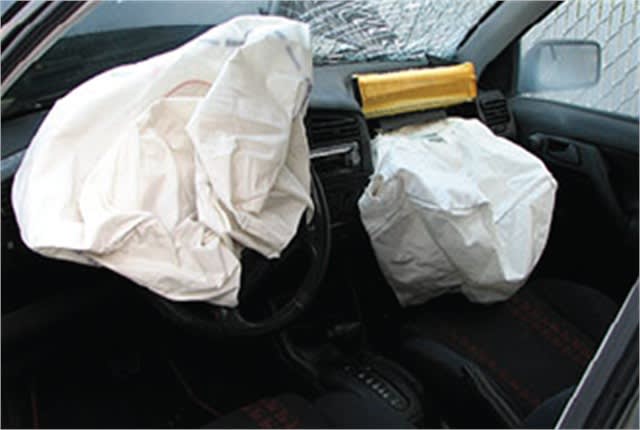
Photo courtesy of NHTSA.
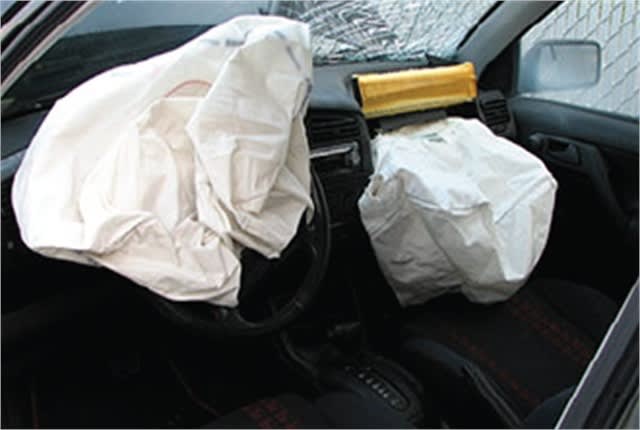
Photo courtesy of NHTSA.
At least four automakers — Mitsubishi, Volkswagen, Toyota, and FCA US — have confirmed they’re still equipping some new vehicles with defective Takata air bag inflators that will ultimately need to be recalled, according to a new U.S. Senate committee report.
But these automakers are legally allowed to sell these vehicles under an order by the National Highway Traffic Safety Administration. A new report released by Senator Bill Nelson, the leading Democrat on the Senate Commerce Committee, highlights this counter-intuitive policy. The historic scope of the Takata recalls, however, has forced both NHTSA and the automakers to adjust how they normally respond to a deadly vehicle defect.
Because of the sheer volume of vehicles involved, as well as the time-delayed nature of the safety defect, the Takata air bag inflator recalls have required a phased, priority-driven approach. There simply aren’t enough replacement air bag inflators available to resolve the problem neatly and quickly. The five recall phases, which will stretch through the end of 2019, are based on the level of risk involved. Newer vehicles are at a much lower risk.
The risk of inflator rupture slowly builds over the course of years. A combination of time, environmental moisture, and fluctuating high temperatures leads to the degradation of the ammonium nitrate propellant in the air bag inflators, according to multiple studies.
Takata air bag inflator ruptures have been tied to as many as 13 fatalities worldwide and more than 100 injuries.
In May, NHTSA announced that Takata had agreed to acknowledge that 35-40 million more of its frontal air bag inflators are defective, adding to the already 28.8 million inflators previously recalled. These recalls will cover all Takata frontal air bag inflators with an ammonium nitrate-based propellant and without a chemical drying agent – or desiccant -- to help keep the ammonium nitrate stabilized.
“The science clearly shows that these inflators become unsafe over time, faster when exposed to humidity and variations of temperature,” NHTSA Administrator Mark Rosekind said last month. “This recall schedule ensures the inflators will be recalled and replaced before they become dangerous, giving vehicle owners sufficient time to have them replaced before they pose a danger to vehicle occupants. NHTSA will continue to evaluate all available research and will act quickly to protect safety.”
Replacement air bag inflators will be made available to the highest-risk vehicles first – older vehicles in areas with high absolute humidity. Vehicle priority schedule details will be released this summer.
The Senate Commerce Committee report noted that two of the four automakers selling new vehicles with the defective inflators — Mitsubishi and Volkswagen — have agreed to release the names of the specific models involved. They are 2016 Mitsubishi i-MiEV, 2017 Mitsubishi i-MiEV, 2016 Volkswagen CC, 2016 Audi TT, and 2017 Audi R8 vehicles.
According to the report, Toyota said that the company expects to produce approximately 175,000 vehicles with the defective Takata inflators between March 2016 and July 2017. Additionally, FCA (Fiat Chrysler Automobiles) US stated that at least one of its current models contains a frontal passenger-side air bag that uses the non-desiccated ammonium-nitrate inflators.
“What’s troubling here is that consumers are buying new cars not realizing they’re going to be recalled,” Nelson said in a released statement. “These cars shouldn’t be sold until they’re fixed.”
The vehicles in question, however, will be subject to recall by the end of 2019 so the air bag inflators can be replaced.
Meanwhile, automakers have begun releasing lists of vehicles covered by the recall expansion. Ford, for example, announced that the company is calling back 1.8 million additional vehicles in the U.S. so dealers can replace the passenger-side frontal air bag inflators. Affected are 2007-2010 Ford Edge, 2006-2011 Ford Fusion, 2005-2011 Ford Mustang, 2007-2011 Ford Ranger, 2007-2010 Lincoln MKX, 2006-2011 Lincoln MKZ, 2006-2011 Zephyr, 2006-2011 Mercury Milan, and 2005-2006 Ford GT vehicles built in North America.
General Motors, on the other hand, is issuing a preliminary recall of some 2007-2011 full-size trucks and SUVs with Takata passenger-side frontal air bag inflators. The action is preliminary because GM believes that these vehicles “do not pose an unreasonable safety risk at this time,” the company said in a released statement. “This is based on no inflator ruptures during an estimated 44,000 crash deployments as well as analysis of parts returned from the field, and can be explained by the unique Takata inflator made for GM’s vehicles and features unique to GM trucks and SUVs.”
The Takata passenger-side air bag inflators used in these trucks and SUVs are a variant engineered specifically for GM vehicles, the automaker explained. They include features such as greater venting, unique propellant wafer configurations, and machined steel end caps.
Moreover, the inflators are packaged in the instrument panel in a way that minimizes exposure to moisture from the climate control system, according to GM.
“Importantly, these full-size trucks and SUVs have features and attributes that minimize the maximum temperature to which the inflator will be exposed, such as large interior volumes and standard solar-absorbing windshields and side glass,” GM said.
As a result, GM will continue to test and monitor the Takata inflators in its vehicles. The company has also initiated a third-party environmental conditioning study that will simulate long-term temperature cycling to continue assessing inflator aging and estimate likely service life.
GM also is establishing a part-return program that will collect and CT scan Takata inflators recovered from GM vehicles, primarily from the high absolute humidity areas believed to pose the highest risks.
“GM is continuing to closely monitor and study the performance of Takata airbag inflators in GM vehicles in the field,” the company said. “If GM concludes at any time that these inflators are unsafe, the company will take appropriate action in cooperation with NHTSA.”
This preliminary recall will cover 2007-2011 Chevrolet Silverado 1500, Avalanche, Tahoe and Suburban vehicles; 2007-2011 GMC Sierra 1500, Yukon and Yukon XL vehicles; 2007-2011 Cadillac Escalade, Escalade EXT and Escalade ESV vehicles; and 2009-2011 Silverado and Sierra 2500 and 3500 pickups.
To check to see whether the Takata recalls include any of your fleet vehicles, click here.
More Safety

Tips for Driving Safely on Halloween Night
This video features a reminder from the Connecticut Department of Transportation (DOT) and the Connecticut Police Chiefs Association, urging drivers to prioritize safety this Halloween.
Read More →
IIHS Crash Avoidance Tests Reveal Safety Gaps in Cargo Vans and Work Trucks
New IIHS crash avoidance ratings show uneven performance among cargo vans and heavy-duty pickups, with most struggling to avoid vehicle-to-vehicle collisions.
Read More →
What’s Next for Fleet? Safety, AI & Industry Recognition | AF News Recap
Could your company's culture be encouraging distracted driving? This week, we're exploring how workplace expectations affect driver safety, what AI, EVs, and autonomous vehicles could mean for the future of fleet management, and how fleet professionals can strengthen their award nominations.
Read More →
Does Your Fleet's Culture Encourage Distracted Driving?
What happens when the people responsible for enforcing safety rules are the ones setting the wrong example? The answer may reveal why some of the biggest risks to fleet drivers have little to do with what's written in the employee handbook.
Read More →
Fleet Manager’s Ultimate Playbook: Navigating the New Standard in OEM Connectivity
Rising operating costs, driver safety concerns, and unplanned downtime are putting unprecedented pressure on modern fleets. Discover how fleet managers use embedded OEM connectivity and real-time vehicle data to cut TCO, prevent downtime, and protect drivers without aftermarket telematics hardware.
Read More →
From Driver Well-Being to EV Charging | AF News Recap
Mental health belongs in the fleet safety conversation. This week, we’re looking at five ways fleets can support employee well-being before a crisis, plus Holman’s expansion in Mexico, new one-day Fleet Forward passes, and why EV charging demand is outpacing infrastructure growth.
Read More →
Nexar-Nauto Merger Aims to Give Fleets Better Safety Intelligence Through Larger Driving Dataset
Stefan Heck tells Automotive Fleet that combining more than 10 billion miles of driving history with Nexar's AI models will give fleets deeper insights into driver risk and roadway conditions than either company could provide independently.
Read More →
Don't Wait for a Crisis: 5 Ways to Build Mental Health Into Your Fleet Safety Program
For Suicide Prevention Month, fleet and safety leaders have an opportunity to put mental health where it belongs: at the center of workplace safety.
Read More →
How Camera Data Can Strengthen a Fleet’s Insurance Renewal
Insights from a commercial insurance carrier and a broker show how fleets can turn video telematic data, driver coaching, and improved claims results into a stronger case at insurance renewal.
Read More →
The Safest Fleets Aren’t the Ones with the Most Technology
You’ve made the telematics investment. Here’s how to capture the other half of its value and build the safest fleet on the road.
Read More →