





Read More: Twenty Pedestrians Died Daily On U.S. Roads in 2022
SUVs, Pickups Have Low Driver Death Rates
While a recent analysis from the Insurance Institute of Highway Safety shows several SUV and pickup models have some of the lowest driver death rates, these large vehicles pose a significant danger to drivers of other vehicles.
July 21, 2023
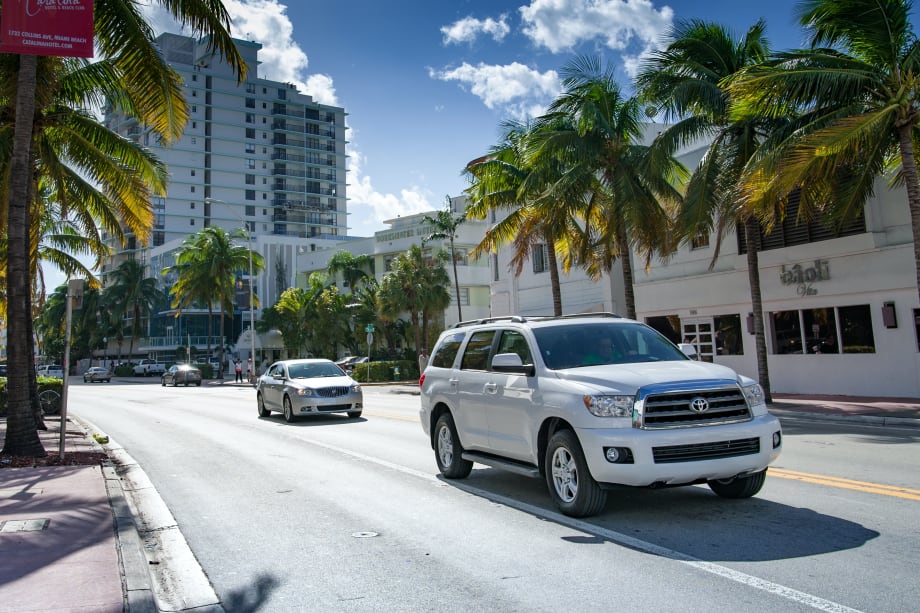
In a recent analysis by the Insurance Institute of Highway Safety, 16 SUV models ranked among a total of 23 vehicles across all categories with the lowest rates of driver deaths.
Photo: pexels.com/mali maeder
4 min to read
When it comes to safety for the person behind the wheel, bigger vehicles may be better. When examining vehicles by make and model, recent data finds that 16 SUVs and two pickups rank among a total of 23 vehicles with the lowest rates of driver deaths per million registered vehicle years.
The Insurance Institute for Highway Safety (IIHS) has been calculating driver death rates approximately every three years since 1989. The latest rates are based on fatalities that occurred from 2018 to 2021 for vehicles from the 2020 model year.
The driver death rates for 2020 models across all vehicles categories —minicars, small, midsize and large cars, SUVs, and pickups — range widely, from zero for four models to 205 for the worst performer, the 2020 Mitsubishi Mirage G4 minicar.
Noteworthy, two SUVs — the BMW X3 4WD and the Nissan Pathfinder 2WD — boast a driver death rate of zero. But across the board, the driver death rates for SUVs are consistently low when compared to cars of all sizes.
For example, minicars had the highest driver death rates, averaging 153 deaths per million registered vehicle years. Compare this to the highest driver death rates among SUVs, which is six deaths per million registered vehicle years for eight models. These include the Acura MDX 4WD, Acura RDX 4WD, BMW X5 4WD, Chevrolet Traverse 4WD, Ford Edge 4WD, Lexus NX 300 2WD, Porsche Macan, and Subaru Ascent.
Another six SUV models have even lower driver death rates ranging from two to five. As for the two pickup models on the list, the driver death rates are equally low, with a rate of five for the GMC Canyon Crew Cab 4WD and a rate of six for the Toyota Tacoma Double Cab long bed. Moreover, not a single SUV or pickup is listed among the 21 vehicles with the highest rates of driver deaths.
Trends in Driver Deaths Over Time
According to IIHS, driver death rates for pickups, SUVs, and cars have all fallen over time, but the rates have fallen more so for SUVs and pickups.
When assessed as a general vehicle category rather than by make and model, the trend is clear. In 1978, the driver death rate for all SUVs was 273 deaths per million registered vehicles, compared with 155 for cars and 237 for pickups. In 2021, the rate for all SUVs was 28, compared with 64 for cars and 40 for pickups. Over time, driver death rates for larger vehicles have fallen below that of cars.
The most recent analysis of specific models coupled with this historic data indicates that drivers behind the wheel of an SUV or pickup — as compared to many car models — may be safer in the event of a crash. That said, these same large vehicles do pose a significant danger to drivers in other vehicles.
Other-Driver Deaths
This year for the first time IIHS also calculated the best and worst models according to the number of drivers in other vehicles killed in crashes with them. And this is where the data points to the dark side of large, weighty vehicles.
Seven of the 20 vehicles with the highest other-driver death rates are large or very large pickups, and four more are midsize SUVs. For example, the Ram 3500 Crew Cab long bed 4WD ranks first on the list with the highest other-driver death rate of 189 deaths per million registered vehicle years. The Ford F-350 Crew Cab 4WD ranks third for other-driver deaths with a rate of 147 and the Ram 2500 Mega Cab 4WD places fourth with a rate of 145.
Midsize SUVs don't fare much better. For example, the Jeep Grand Cherokee 2WD has an other-driver death rate of 103, the Chevrolet Blazer 2WD has a rate of 93, the Dodge Journey 2WD comes in at 90, and the other-driver death rate for the Jeep Wrangler two-door 4WD is 89.
To give this data context the average other-driver death rate for all 2020 vehicle models was 53 deaths per million registered vehicle years. That means that when a crash occurs, several SUVs and pickups are clearly more deadly than many car models for the drivers of other vehicles.
More Safety
Tips for Driving Safely on Halloween Night
This video features a reminder from the Connecticut Department of Transportation (DOT) and the Connecticut Police Chiefs Association, urging drivers to prioritize safety this Halloween.
Read More →
IIHS Crash Avoidance Tests Reveal Safety Gaps in Cargo Vans and Work Trucks
New crash-avoidance ratings from the Insurance Institute for Highway Safety reveal inconsistent performance among commercial vehicles, with several popular cargo vans and heavy-duty pickups struggling to avoid collisions with other vehicles and pedestrians.
Read More →
What’s Next for Fleet? Safety, AI & Industry Recognition | AF News Recap
Could your company's culture be encouraging distracted driving? This week, we're exploring how workplace expectations affect driver safety, what AI, EVs, and autonomous vehicles could mean for the future of fleet management, and how fleet professionals can strengthen their award nominations.
Read More →
Does Your Fleet's Culture Encourage Distracted Driving?
What happens when the people responsible for enforcing safety rules are the ones setting the wrong example? The answer may reveal why some of the biggest risks to fleet drivers have little to do with what's written in the employee handbook.
Read More →
Sponsored•October 1, 2026
Fleet Manager’s Ultimate Playbook: Navigating the New Standard in OEM Connectivity
Rising operating costs, driver safety concerns, and unplanned downtime are putting unprecedented pressure on modern fleets. Discover how fleet managers use embedded OEM connectivity and real-time vehicle data to cut TCO, prevent downtime, and protect drivers without aftermarket telematics hardware.
Read More →
From Driver Well-Being to EV Charging | AF News Recap
Mental health belongs in the fleet safety conversation. This week, we’re looking at five ways fleets can support employee well-being before a crisis, plus Holman’s expansion in Mexico, new one-day Fleet Forward passes, and why EV charging demand is outpacing infrastructure growth.
Read More →
Nexar-Nauto Merger Aims to Give Fleets Better Safety Intelligence Through Larger Driving Dataset
Stefan Heck tells Automotive Fleet that combining more than 10 billion miles of driving history with Nexar's AI models will give fleets deeper insights into driver risk and roadway conditions than either company could provide independently.
Read More →
Don't Wait for a Crisis: 5 Ways to Build Mental Health Into Your Fleet Safety Program
For Suicide Prevention Month, fleet and safety leaders have an opportunity to put mental health where it belongs: at the center of workplace safety.
Read More →
How Camera Data Can Strengthen a Fleet’s Insurance Renewal
Insights from a commercial insurance carrier and a broker show how fleets can turn video telematic data, driver coaching, and improved claims results into a stronger case at insurance renewal.
Read More →
The Safest Fleets Aren’t the Ones with the Most Technology
You’ve made the telematics investment. Here’s how to capture the other half of its value and build the safest fleet on the road.
Read More →