




Survey Highlights Fleet Concerns & Priorities: Cost, Safety, and EV Adoption
The findings show over 81% of respondents said finding new solutions to make their fleets more efficient is a priority.

According to the Network of Employers for Traffic Safety, a single nonfatal accident on the job can cost over $75,000, making safety a genuine concern for those looking at a fleet’s bottom line.
Source: Automotive Fleet
Shell Fleet Solutions partnered with
, to survey fleet owners, operators, managers, and drivers regarding the most pressing concerns and priorities facing their businesses.
The results revealed key concerns surrounding the total cost of ownership,
, and electric vehicles.
TCO Takes Top Priority
As fleet managers plan and set goals for the upcoming year, over 71% of respondents agreed that
were deep concerns for their fleet this year.
This response highlights supply chain disruptions, inflation, recession fears, sustainability mandates, and a consensus on
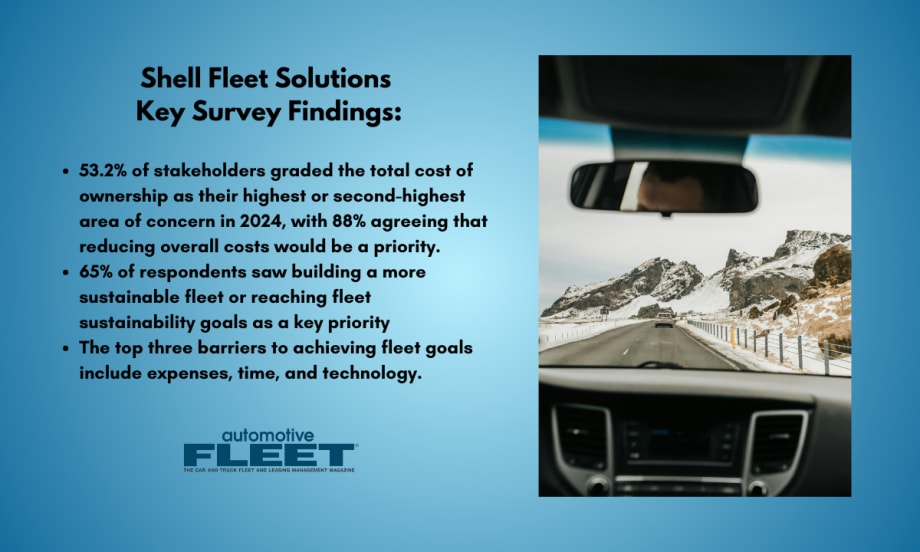
as a top focus. 53.2% of stakeholders rated TCO as their highest or second-highest concern, with 88% agreeing that reducing overall costs would be a priority in 2024.
Safety Continues to Be Essential in Daily Operations
Safety is important to fleets, as demonstrated in survey results by the number two rated area of concern for 2024 and the number one area that fleet stakeholders were most proud of. Considering that reducing overall costs is a priority for stakeholders, the results suggest that
is cost-efficient.
According to the
, a single nonfatal accident on the job can cost over $75,000, making safety a genuine concern for those looking at a fleet’s bottom line.
High Rates of EV Adoption and Fleet Sustainability
Fleet stakeholders report significant time spent exploring
. Sustainability ranked fourth in areas rated as most time-consuming in 2023, and time spent seeking EV solutions earned strong scores, including:
65% of respondents agree or strongly agree that building a more sustainable fleet or reaching fleet sustainability goals is a priority or top concern for 2024.
Over 56% agree or strongly agree that investing in initial or additional EVs is a priority this year.
When respondents were asked about the industries and trends they pay the most attention to, 41% mentioned
(EVs) or related sectors, such as sustainability, indicating a significant focus on the growing prominence of EVs and the broader sustainability movement.
“Many fleets would like to see a full-circle sustainable solution, from energy source to EV implementation, but there are fleets where EVs don’t make sense right now, or they may need solutions like hybrid fleets,” Chris Nolan, Shell Global key account manager with Shell Fleet Solutions, said
.
Fleets Urgently Seeking New Solutions
The survey also highlighted that fleets are on a tight timeframe to achieve their goals:
Nearly 40% stated they have 12 months to implement changes that benefit their fleet, and over 25% only have 6 to 9 months to address barriers and make meaningful progress. Over 81% of respondents said finding new solutions to
is a priority. Numerous fleets are actively engaging with or integrating new technologies and data into their operations, with more than 62% acknowledging that these initiatives are key priorities.
“Fleets are seeking expert guidance to take their operations to the next level, understanding that
are improving and can help in various ways,” Jim Perkins, Director of Shell Fleet Solutions, U.S., said.
Fleets could benefit from external expertise to help address these challenges or areas of concern surrounding cost-related priorities, such as
, improving safety, and boosting efficiencies.
More Operations

How Fleets Can Recruit and Train Veterans for Technician Roles
Here's how the technician shortage has affected uptime for fleets, and what to do about it.
Read More →
Avis Budget Group Deploys Neology Toll Management Technology Across Major Brands
Neology’s neoFleet platform will manage toll transactions and toll-authority operations for vehicles across Avis, Budget, Payless, Budget Truck and Zipcar.
Read More →
Fleet Personal-Use Charges Edge Higher in 2026
Nearly eight in 10 surveyed fleets allow personal use of company vehicles, while just over half of respondents report charging employees for the privilege.
Read More →
The Future of Fleet + What’s Changing Right Now | AF News Recap
Could developments overseas offer a preview of what’s coming for U.S. fleets? This week, we’re looking at the future of AI, autonomy, and electrification, plus Ford Pro’s new certified pre-owned program, smarter vehicle offboarding, and a new way for fleets to manage toll expenses.
Read More →
How to Handle Vehicle Offboarding
What do fleet managers need to do when a driver leaves?
Read More →
Fleet Manager’s Ultimate Playbook: Navigating the New Standard in OEM Connectivity
Rising operating costs, driver safety concerns, and unplanned downtime are putting unprecedented pressure on modern fleets. Discover how fleet managers use embedded OEM connectivity and real-time vehicle data to cut TCO, prevent downtime, and protect drivers without aftermarket telematics hardware.
Read More →
U.S. Bank Adds Verra Mobility Toll Management to Voyager Fleet Platform
The integration allows U.S. Bank Voyager fleet customers to manage toll payments and violations alongside fuel, EV charging and maintenance expenses.
Read More →
ADAS Prevents Crashes. But Repairs Cost More | AF News Recap
ADAS-equipped vehicles may crash less often, but they can cost more when they do. This week, we’re breaking down what that tradeoff means for fleets, plus Subaru’s first Forester Wilderness Hybrid, Nissan’s new e-POWER Rogue, and why Calstart has become Catalyst Mobility.
Read More →
Moventum Fleet Management Names Mark Iorillo Head of Sales
Iorillo brings nearly 20 years of fleet management and sales experience to the role, including previous positions at Element Fleet Management, CEI, Donlen and Ryder.
Read More →
Fleet Has a Talent Pipeline Problem. What Comes Next? | AF News Recap
Where will fleet’s next generation of leaders come from? This week, we’re looking at the industry’s talent pipeline, what certification can add to a fleet career, how to build an award-worthy track record, and the return of Automotive Fleet’s Personal Use Survey.
Read More →