




Survey Concludes Most Drivers See Hands-Free Law Having Little Effect
SOUTHFIELD, Mich. --- A survey of licensed drivers in California and Washington shows overwhelming support for the coming hands-free law which takes effect July 1, but that it will have little effect on the cell phone usage of drivers.
SOUTHFIELD, Mich. --- A survey of licensed drivers in California and Washington shows overwhelming support for the coming hands-free law which takes effect July 1, but that it will have little effect on the cell phone usage of drivers.
The survey also documents a great deal of confusion as to when the law actually takes effect, what the cost of the traffic fines are in their respective states, whether it's a primary or secondary law, and what kinds of devices can be used to comply with the new law. The survey shows that 75 percent of drivers (California, 76 percent; Washington, 71 percent) support the law, while only 10 percent oppose it. In addition, 75 percent of drivers consider cell phone use while driving to be dangerous -- yet 63 percent of respondents use their cell phone while driving on average about an hour a day, one quarter of their daily drive time, and primarily for non-urgent matters.
The survey was completed last month by Harris Interactive, a leading market research firm, and queried 997 drivers in California and Washington. It was commissioned by Parrot, a manufacturer of Bluetooth hands-free car kits.
Interestingly, key factors driving the purchase of a hands-free device by respondents were "obeying the law" and "safety" at 51 and 50 percent, respectively. The study also revealed that 47 percent of drivers already use some type of hands-free device, whether it's a headset, the speaker of their cell phone, or a portable or installed hands-free car kit.
"The survey findings reflect how cell phones are a ubiquitous part of our daily lives. But when it comes to safety, the best solution is simply to avoid the vast majority of calls, and drive," said David Wenning, senior vice president of Parrot. "Our view is that it's best to simply pull off the road and stop if you really need to make or take a call."
The survey revealed that 41 percent of drivers in California and Washington currently use their cell phones while driving, with those between the ages of 35 and 45 spending 40 percent of their drive commute on the phone -- the largest proportion among the age groups surveyed.
In addition, one in four respondents or 25 percent of drivers aged 34 or younger admitted to text messaging while driving. Between the two states, Californians generally spend more time on the phones than their Washington counterparts (26 percent to 18 percent), corresponding to their respective commute periods (81.8 minutes for California and 67.2 minutes for Washington on average). Women also spend almost twice as much time on their cell phones as compared with men (1.3 hours to 0.7 hours).
Despite widespread cell phone usage, 88 percent of people surveyed did not find talking on their phone while driving to be "extremely" or "very important." A total of 68 percent of respondents describe the majority of their phone calls as family/friends related (88 percent of all calls by women compared with 54 percent by men).
In general, drivers under the age of 46 attached greater importance to cell phone use while driving compared with older drivers. Only 19 percent of the 18-34 group and 11 percent of the 35-45 group indicated that cell phone conversations while driving were either "extremely" or "very" important.
While half of California drivers are aware of the July 1 start date of the law, only 28 percent of Washington drivers identified the correct date. Further, close to three out of 10 respondents or 28 percent believe the law is already in effect in Washington, while 33 percent are not sure of the date.
However, drivers in California and Washington are equally misinformed about the fines involved for using a hands-held phone while driving. Only 13 percent of Californians and 19 percent of Washingtonians were fairly close to their actual fine ($20 and up to $101, respectively).
Although most respondents claim to support the upcoming law, three out of five respondents or 59 percent intend to use their phone about the same amount as they do now. Even fewer respondents (29 percent) feel the law will have at least a moderate effect on their cell phone use while driving, and two out of five or 43 percent say it will have no effect at all on their cell usage while driving.
Only 39 percent correctly identified Bluetooth as a wireless technology, while the balance -- 61 percent -- either were not sure or misidentified Bluetooth as a product such as a headset or car kit. As a group, men were more likely to correctly identify Bluetooth than were women (46 percent versus 32 percent), while those in the 18-34 and 46-59 age groups (both at 44 percent) were much more like to properly identify the technology than those 35-45 or 60+ years of age.
Further, only half of the respondents (51 percent) said their cell phone is Bluetooth enabled. The others said they weren't sure, or their phone did not have Bluetooth. This is important because most hands-free devices today - - other than a cell phone speaker or a wired headset -- require a Bluetooth-enabled phone in order to use them.
This survey was conducted online in California and Washington states by Harris Interactive on behalf of Parrot between April 2-9, 2008 among 997 adults ages 18 and over who live in California or Washington, have a driver's license, and own a cell phone. Results were weighted as needed for age, sex, race/ethnicity, education, region and household income. Propensity score weighting was also used to adjust for respondents' propensity to be online.
More Safety

Nexar-Nauto Merger Aims to Give Fleets Better Safety Intelligence Through Larger Driving Dataset
Stefan Heck tells Automotive Fleet that combining more than 10 billion miles of driving history with Nexar's AI models will give fleets deeper insights into driver risk and roadway conditions than either company could provide independently.
Read More →
Don't Wait for a Crisis: 5 Ways to Build Mental Health Into Your Fleet Safety Program
For Suicide Prevention Month, fleet and safety leaders have an opportunity to put mental health where it belongs: at the center of workplace safety.
Read More →
How Camera Data Can Strengthen a Fleet’s Insurance Renewal
Insights from a commercial insurance carrier and a broker show how fleets can turn video telematic data, driver coaching, and improved claims results into a stronger case at insurance renewal.
Read More →
The Safest Fleets Aren’t the Ones with the Most Technology
You’ve made the telematics investment. Here’s how to capture the other half of its value and build the safest fleet on the road.
Read More →
Hidden in Plain Sight: Fleet Compliance Risks
Fleet compliance isn't just about having policies — it's about consistently enforcing them. This practical guide reveals six hidden compliance risks common in public sector and shared fleet operations and outlines proven strategies to improve visibility, accountability, and audit readiness
Read More →
NETS Sets 2026 Fleet Safety Benchmark Conference for Indianapolis
The Sept. 15–17 program will feature fleet benchmarking data, case studies, emerging technologies, and implementation strategies while running alongside the NSC Safety Congress & Expo.
Read More →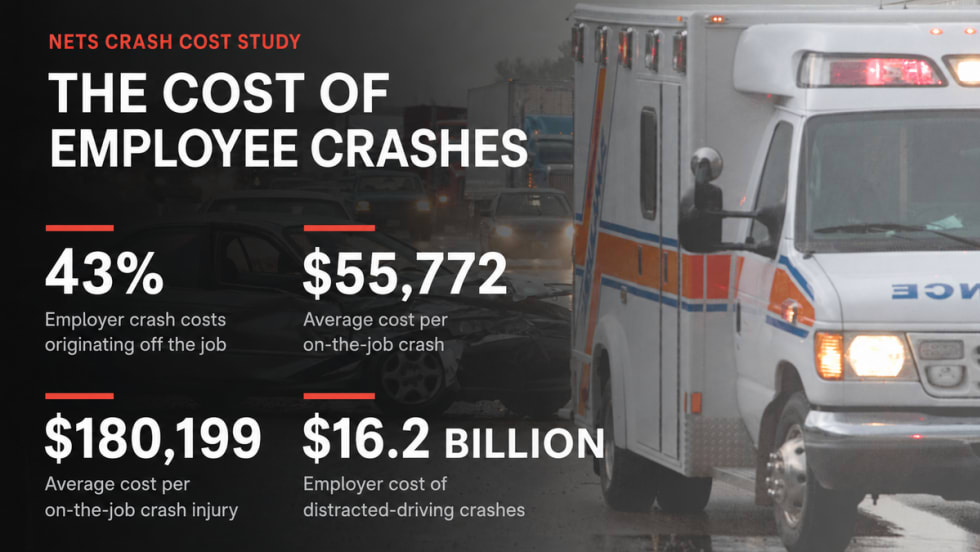
Off-the-Job Crashes Account for 43% of Employers’ $61.7 Billion Crash Burden
NETS quantifies costs dispersed across fleet, risk, HR, and other departments while providing new per-crash benchmarks for employers.
Read More →
Ram Recalls More Than 1.27 Million 1500 Pickups for Seat Belt Anchor Issue
The recall affects certain 2019-2026 Ram 1500 pickups that may have improperly attached second-row seat belt buckle anchors.
Read More →
How Better Visibility Cut Speeding Violations by 48%
Fleet leaders don't need more data, they need clearer visibility into what the data is saying. This case study explores how one utility replaced speeding-event counts with a single metric — miles driven in violation — to strengthen safety and significantly reduce speeding violations.
Read More →
Operation Safe Driver Week: Why the Industry's Oldest Safety Campaign Still Matters to Fleets
A look at how a 2007 enforcement initiative became one of the most consequential weeks on the fleet safety calendar, and what it means for your drivers in 2026.
Read More →