




Survey: Companies Remain Concerned About Employee Use of Mobile Devices While Driving
A total of 71% of employers have policies, but only 32% are confident that current enforcement is effective, according to a new survey from Aegis Mobility.
Employers continue to be concerned about the risk and liability posed by employee use of mobile devices while driving on the job. Seven in 10 companies in the U.S. and Canada surveyed for this report have adopted written policies designed to curb employee distracted driving, but only 32% are confident that current enforcement methods are effective, according to Aegis Mobility’s third annual survey of 547 fleet safety and risk management professionals.
Key survey findings include:
· “Hands-Free” and “Zero Tolerance” are the most popular policies. 45% of existing employer policies prohibit all use, except hands-free. 41% prohibit all use, no exceptions. 12% prohibit texting, emailing and browsing.
· Efforts to enforce distracted driving policies remain steady. 86% of companies report taking some steps to enforce distracted driving policies.
· Confidence is lacking in current policy enforcement. Confidence in current enforcement efforts is limited. Only 32% report they are “very confident” that current methods are effective. 60% are “somewhat confident,” while 8% are “not confident.”
· Interest in policy technology continues to grow. 22% of companies plan to evaluate either device-based software, device analytics or in-vehicle cameras within the next 12 months to better enforce compliance with distracted driving policies.
· Android and iPhone smartphones are fast growing, while Blackberry and Push-to-Talk (PTT) phones are hanging in. Android and iPhone continue to grow rapidly and now represent 61% of corporate-liable smartphone devices. BlackBerrys have decreased, but remain prominent with 30% market share and appear to have good prospects to maintain share based on customer interest in the new BlackBerry 10 devices.
· The tablet wave is coming to commercial fleet vehicles. A full 27% of respondents currently equip employee drivers with some form of tablet computer. Of those, 73% are iPads and 27% are Android. Prospects for continued growth appear strong since 8% of total respondents indicate plans to deploy tablets to employee drivers within the next 12 months.
“The year-over-year results of our survey show that fleet operators continue to recognize the serious risks associated with employee use of mobile phones while driving,” said Aegis Mobility CEO Paul Zimmerman. “Further, the survey results show that employers lack confidence in current enforcement methods and seek technology solutions to automate compliance with mobile device use policies.”
To download the full survey analysis, click here.
Aegis Mobility is a leading provider of patented software for mobile devices to prevent workplace distracted driving. Designed specifically for corporate customers, FleetSafer enables employers to proactively promote safe and legal use of mobile devices while employees are driving on the job.
For more information, visit www.aegismobility.com.
More Safety
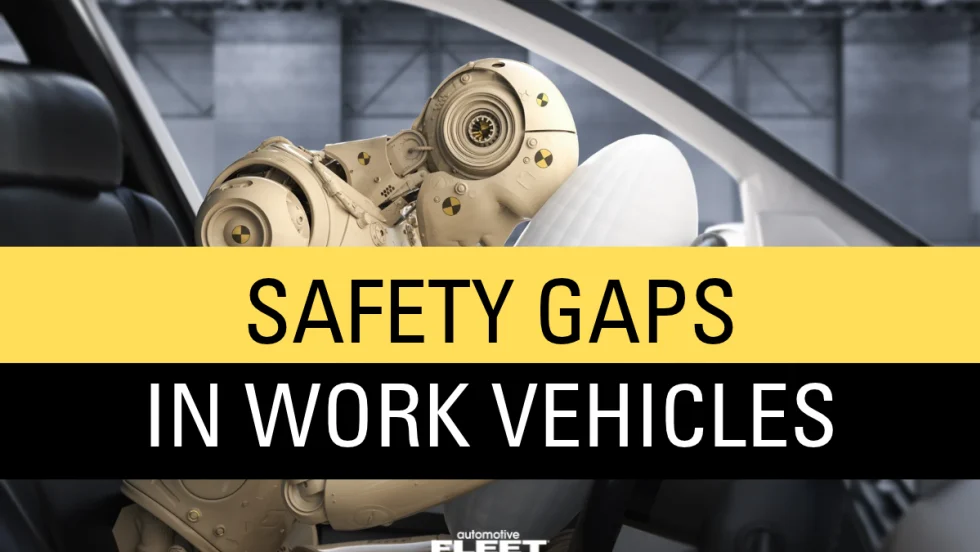
IIHS Crash Avoidance Tests Reveal Safety Gaps in Cargo Vans and Work Trucks
New crash-avoidance ratings from the Insurance Institute for Highway Safety reveal inconsistent performance among commercial vehicles, with several popular cargo vans and heavy-duty pickups struggling to avoid collisions with other vehicles and pedestrians.
Read More →
What’s Next for Fleet? Safety, AI & Industry Recognition | AF News Recap
Could your company's culture be encouraging distracted driving? This week, we're exploring how workplace expectations affect driver safety, what AI, EVs, and autonomous vehicles could mean for the future of fleet management, and how fleet professionals can strengthen their award nominations.
Read More →
Does Your Fleet's Culture Encourage Distracted Driving?
What happens when the people responsible for enforcing safety rules are the ones setting the wrong example? The answer may reveal why some of the biggest risks to fleet drivers have little to do with what's written in the employee handbook.
Read More →
Fleet Manager’s Ultimate Playbook: Navigating the New Standard in OEM Connectivity
Rising operating costs, driver safety concerns, and unplanned downtime are putting unprecedented pressure on modern fleets. Discover how fleet managers use embedded OEM connectivity and real-time vehicle data to cut TCO, prevent downtime, and protect drivers without aftermarket telematics hardware.
Read More →
From Driver Well-Being to EV Charging | AF News Recap
Mental health belongs in the fleet safety conversation. This week, we’re looking at five ways fleets can support employee well-being before a crisis, plus Holman’s expansion in Mexico, new one-day Fleet Forward passes, and why EV charging demand is outpacing infrastructure growth.
Read More →
Nexar-Nauto Merger Aims to Give Fleets Better Safety Intelligence Through Larger Driving Dataset
Stefan Heck tells Automotive Fleet that combining more than 10 billion miles of driving history with Nexar's AI models will give fleets deeper insights into driver risk and roadway conditions than either company could provide independently.
Read More →
Don't Wait for a Crisis: 5 Ways to Build Mental Health Into Your Fleet Safety Program
For Suicide Prevention Month, fleet and safety leaders have an opportunity to put mental health where it belongs: at the center of workplace safety.
Read More →
How Camera Data Can Strengthen a Fleet’s Insurance Renewal
Insights from a commercial insurance carrier and a broker show how fleets can turn video telematic data, driver coaching, and improved claims results into a stronger case at insurance renewal.
Read More →
The Safest Fleets Aren’t the Ones with the Most Technology
You’ve made the telematics investment. Here’s how to capture the other half of its value and build the safest fleet on the road.
Read More →
Hidden in Plain Sight: Fleet Compliance Risks
Fleet compliance isn't just about having policies — it's about consistently enforcing them. This practical guide reveals six hidden compliance risks common in public sector and shared fleet operations and outlines proven strategies to improve visibility, accountability, and audit readiness
Read More →