




Study: U.S. Road Fatalities Down 22%
ANN ARBOR, MI - Over the past five years, road fatalities in the United States have fallen 22 percent, primarily because of the poor economy and the increased prevalence of air bags, according to University of Michigan researchers.
ANN ARBOR, MI - Over the past five years, road fatalities in the United States have fallen 22 percent, primarily because of the poor economy and the increased prevalence of airbags, according to University of Michigan researchers.
"A reduction of such magnitude over such a short time has not occurred since road safety statistics were first kept starting in 1913, except for the reductions during World War II," said Michael Sivak, a research professor at the University of Michigan Transportation Research Institute.
More drivers have slowed down and limited their long-distance leisure travel to save gas and money -- and that trend has ultimately lives. At the same time, there has been an increase in vehicles equipped with both side and front airbags. On the other hand, fatal crashes involving distracted driving (using cell phones, talking to passengers, eating, etc.) have increased 42 percent.
In a new study in the current issue of Traffic Injury Prevention, Sivak and UMTRI colleague Brandon Schoettle noted that U.S. road deaths declined from 43,500 in 2005 to about 34,000 last year. Using data from the Fatality Analysis Reporting System (a database of all fatal traffic crashes in the United States), the researchers examined 19 conditions or variables involved in fatal crashes in 2005 and in 2008 (the latest year for which detailed data were available).
The changes in the frequency of many of the crash conditions suggest that the recent economic downturn resulted in fewer crashes, they said. For example, the largest declines in fatal crashes by time of day occurred during the afternoon and morning rush hours -- consistent with reduced commuter traffic.
Moreover, fatal crashes on rural interstate highways dropped substantially, whereas those on city streets rose. This trend is consistent with a decrease in long-distance leisure driving and an increase in local leisure driving in response to economic concerns. In addition, fatal crashes that occurred on roads with a speed limit of at least 50 mph were down more than on roads with slower speeds.
"This pattern is consistent with the postulated decrease in speeds as a consequence of drivers' efforts to improve the fuel economy of their vehicles," Sivak said.
Other factors that indicate the impact of a bad economy on the nation's highways include a 30-percent decrease in fatal crashes in construction zones (reduced state highway budgets mean less construction) and a nearly 20-percent drop in fatal crashes involving heavy commercial trucks (consistent with the overall reduction in freight shipments due to the economic downturn).
"Beyond economic concerns, an important additional contributing factor for the large drop in fatalities was likely the increased use of side airbags and airbags, in general," Sivak said.
Sivak and Schoettle found that side airbag deployment increased dramatically (220 percent), most likely indicating increased installation of side airbags. Further, both front-to-side and front-to-front fatal collisions declined more than all fatal collisions, suggesting greater use and improvement of airbags.
Finally, the UMTRI study looked at a few driver-behavior factors and found large reductions in fatal crashes in which the driver drove erratically, recklessly, carelessly or in a negligent manner (58 percent); was drowsy, sleepy, asleep or fatigued (39 percent); or failed to keep the vehicle in the proper lane (29 percent).
However, distracted or inattentive driving, such as using a cell phone, talking or eating, was identified for nearly 3,400 drivers involved in fatal crashes in 2008, compared to nearly 2,400 in 2005.
More Safety

Nexar-Nauto Merger Aims to Give Fleets Better Safety Intelligence Through Larger Driving Dataset
Stefan Heck tells Automotive Fleet that combining more than 10 billion miles of driving history with Nexar's AI models will give fleets deeper insights into driver risk and roadway conditions than either company could provide independently.
Read More →
Don't Wait for a Crisis: 5 Ways to Build Mental Health Into Your Fleet Safety Program
For Suicide Prevention Month, fleet and safety leaders have an opportunity to put mental health where it belongs: at the center of workplace safety.
Read More →
How Camera Data Can Strengthen a Fleet’s Insurance Renewal
Insights from a commercial insurance carrier and a broker show how fleets can turn video telematic data, driver coaching, and improved claims results into a stronger case at insurance renewal.
Read More →
The Safest Fleets Aren’t the Ones with the Most Technology
You’ve made the telematics investment. Here’s how to capture the other half of its value and build the safest fleet on the road.
Read More →
Hidden in Plain Sight: Fleet Compliance Risks
Fleet compliance isn't just about having policies — it's about consistently enforcing them. This practical guide reveals six hidden compliance risks common in public sector and shared fleet operations and outlines proven strategies to improve visibility, accountability, and audit readiness
Read More →
NETS Sets 2026 Fleet Safety Benchmark Conference for Indianapolis
The Sept. 15–17 program will feature fleet benchmarking data, case studies, emerging technologies, and implementation strategies while running alongside the NSC Safety Congress & Expo.
Read More →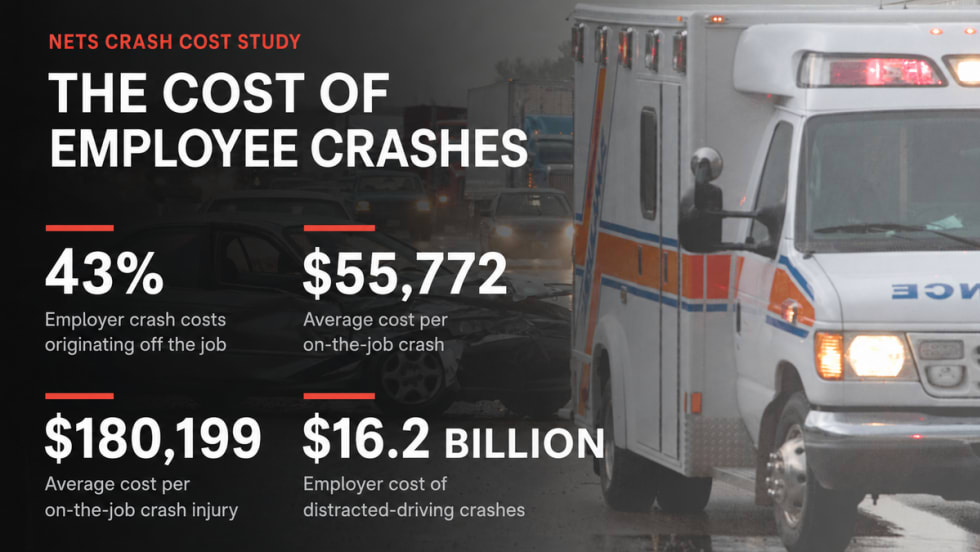
Off-the-Job Crashes Account for 43% of Employers’ $61.7 Billion Crash Burden
NETS quantifies costs dispersed across fleet, risk, HR, and other departments while providing new per-crash benchmarks for employers.
Read More →
Ram Recalls More Than 1.27 Million 1500 Pickups for Seat Belt Anchor Issue
The recall affects certain 2019-2026 Ram 1500 pickups that may have improperly attached second-row seat belt buckle anchors.
Read More →
How Better Visibility Cut Speeding Violations by 48%
Fleet leaders don't need more data, they need clearer visibility into what the data is saying. This case study explores how one utility replaced speeding-event counts with a single metric — miles driven in violation — to strengthen safety and significantly reduce speeding violations.
Read More →
Operation Safe Driver Week: Why the Industry's Oldest Safety Campaign Still Matters to Fleets
A look at how a 2007 enforcement initiative became one of the most consequential weeks on the fleet safety calendar, and what it means for your drivers in 2026.
Read More →