




Study: Truckers Violating Medical Rules Continue to Pose Safety Risk
WASHINGTON, D.C. --- Hundreds of thousands of tractor-trailer and bus drivers in the United States hold commercial driver's licenses despite also qualifying for full federal disability payments, according to a new U.S. safety study.
WASHINGTON, D.C. --- Hundreds of thousands of tractor-trailer and bus drivers in the United States hold commercial driver's licenses despite also qualifying for full federal disability payments, according to a new congressional committee safety study. Some of those drivers have suffered seizures, heart attacks or unconscious spells, the Associated Press reported.
According to AP, which reviewed a copy of the study, the highway safety problems persist despite years of government warnings and hundreds of deaths and injuries blamed on commercial truck and bus drivers who blacked out, collapsed or suffered major health problems behind the wheels of vehicles that can weigh 40 tons or more.
The study found that it's so easy to fabricate the medical certificates required to operate commercial trucks that there's little incentive for truckers to obtain a legitimate document.
The House Transportation and Infrastructure Committee's study also found so few controls over how drivers obtain medical certificates that it's "relatively easy for a motivated commercial driver to circumvent the physical examination requirement."
There isn't any database or central repository that would allow state inspectors to verify the legitimacy of a medical certificate.
"Because so few attempts are made to authenticate a certificate, there is little risk that a driver will be caught if he or she forges or adulterates a certificate," according to the report.
The Transportation Committee's study was based on a sample of 614 medical certificates obtained from truck drivers at roadside inspections in California, Illinois and Ohio. The committee's staff attempted to contact the examiners named on the medical certificates but could only verify 407 as valid, AP reported. One Ohio doctor contacted by the committee said forgery of medical certificates is so commonplace "no one gets alarmed by it anymore."
The committee called Federal Motor Carrier Safety Administration officials to explain at a hearing why the agency hasn't fully implemented recommendations made nearly seven years ago on how to keep medically unfit truck drivers off the road. The witness list also included officials from the National Transportation Safety Board, which made the recommendations.
The Federal Motor Carrier Safety Administration acknowledges it hasn't completed any of eight recommendations that U.S. safety regulators have proposed since 2001. One would set minimum standards for officials who determine whether truckers are medically safe to drive. Another would prevent truckers from "doctor shopping'' to find a physician who might overlook a risky health condition.
"We have a major public safety problem, and we haven't corrected it,'' said Gerald Donaldson, senior research director at the Washington-based Advocates for Highway and Auto Safety, told AP.
Truckers violating federal medical rules have been caught in every state, according to a review by the AP of 7.3 million commercial driver violations compiled by the Transportation Department in 2006 --- the latest data available. Texas, Maryland, Georgia, Florida, Indiana, Pennsylvania, Illinois, Michigan, Alabama, New Jersey, Minnesota and Ohio were states where drivers were sanctioned most frequently for breaking medical rules, such as failing to carry a valid medical certificate. Those 12 states accounted for half of all such violations in the United States, AP reported.
More Safety

Nexar-Nauto Merger Aims to Give Fleets Better Safety Intelligence Through Larger Driving Dataset
Stefan Heck tells Automotive Fleet that combining more than 10 billion miles of driving history with Nexar's AI models will give fleets deeper insights into driver risk and roadway conditions than either company could provide independently.
Read More →
Don't Wait for a Crisis: 5 Ways to Build Mental Health Into Your Fleet Safety Program
For Suicide Prevention Month, fleet and safety leaders have an opportunity to put mental health where it belongs: at the center of workplace safety.
Read More →
How Camera Data Can Strengthen a Fleet’s Insurance Renewal
Insights from a commercial insurance carrier and a broker show how fleets can turn video telematic data, driver coaching, and improved claims results into a stronger case at insurance renewal.
Read More →
The Safest Fleets Aren’t the Ones with the Most Technology
You’ve made the telematics investment. Here’s how to capture the other half of its value and build the safest fleet on the road.
Read More →
Hidden in Plain Sight: Fleet Compliance Risks
Fleet compliance isn't just about having policies — it's about consistently enforcing them. This practical guide reveals six hidden compliance risks common in public sector and shared fleet operations and outlines proven strategies to improve visibility, accountability, and audit readiness
Read More →
NETS Sets 2026 Fleet Safety Benchmark Conference for Indianapolis
The Sept. 15–17 program will feature fleet benchmarking data, case studies, emerging technologies, and implementation strategies while running alongside the NSC Safety Congress & Expo.
Read More →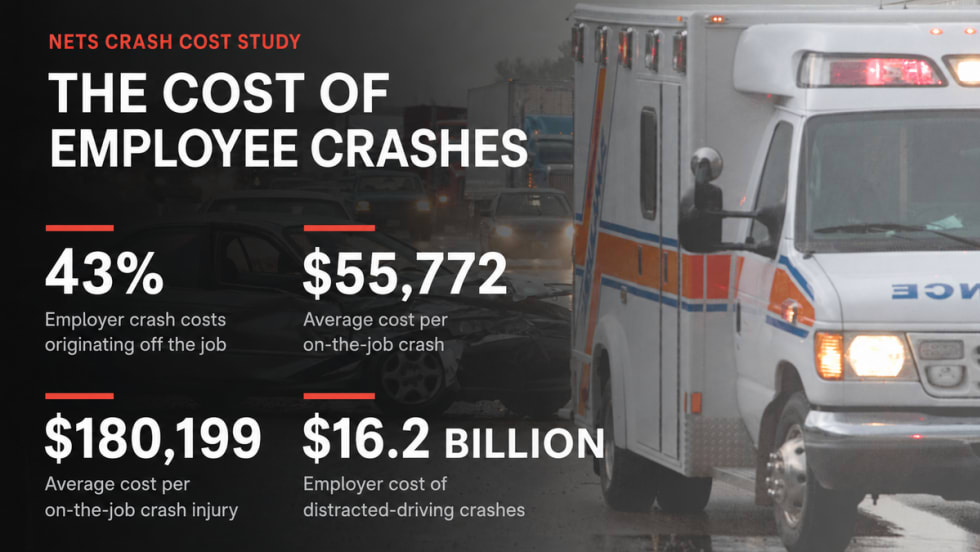
Off-the-Job Crashes Account for 43% of Employers’ $61.7 Billion Crash Burden
NETS quantifies costs dispersed across fleet, risk, HR, and other departments while providing new per-crash benchmarks for employers.
Read More →
Ram Recalls More Than 1.27 Million 1500 Pickups for Seat Belt Anchor Issue
The recall affects certain 2019-2026 Ram 1500 pickups that may have improperly attached second-row seat belt buckle anchors.
Read More →
How Better Visibility Cut Speeding Violations by 48%
Fleet leaders don't need more data, they need clearer visibility into what the data is saying. This case study explores how one utility replaced speeding-event counts with a single metric — miles driven in violation — to strengthen safety and significantly reduce speeding violations.
Read More →
Operation Safe Driver Week: Why the Industry's Oldest Safety Campaign Still Matters to Fleets
A look at how a 2007 enforcement initiative became one of the most consequential weeks on the fleet safety calendar, and what it means for your drivers in 2026.
Read More →