




Study: Privatizing Toll Roads May Result in More Crashes
WASHINGTON, D.C. --- Privatizing toll roads in the U.S. may result in significant diversions of truck traffic from privatized toll roads to "free" roads, and may result in more crashes and increased costs associated with use of other roads, according to a new study.
WASHINGTON, D.C. --- Privatizing toll roads in the U.S. may result in significant diversions of truck traffic from privatized toll roads to "free" roads, and may result in more crashes and increased costs associated with use of other roads, according to a new study.
Peter Swan of Penn State Harrisburg and Michael Belzer of Wayne State University presented the findings of their study, "Empirical Evidence of Toll Road Traffic Diversion and Implications for Highway Infrastructure Privatization," on Jan. 14 at the 87th annual meeting of the Transportation Research Board in Washington, D.C.
The study used data from the state of Ohio, the Federal Highway Administration, and the Ohio Turnpike to predict annual turnpike truck vehicle miles traveled, and therefore diverted vehicle miles, based on national truck traffic and turnpike rates. The researchers then compared estimated truck traffic diverted from the turnpike to truck traffic on Ohio road segments on possible substitute routes.
Both economic models support the hypothesis that rate increases divert traffic from toll roads to "free" roads.
"While recently privatized roads do not have enough history to determine how high actual rates will rise, adequate data do exist to determine what happens when toll rates increase dramatically on state-run toll roads," said co-author Swan, assistant professor of logistics and operations management at Penn State Harrisburg.
The study concludes that if governments allow private toll road operators to maximize profits, higher tolls will divert trucks to local roads, depending on the suitability of substitute roads. The authors estimated that for 2005, a for-profit, private operator of the Ohio Turnpike could have raised tolls to roughly three times what they were under the public turnpike authority, resulting in about a 40-percent diversion of trucks from the Ohio Turnpike to other roads.
"The Ohio Turnpike substantially increased tolls during the 1990s to help finance construction of a third lane in each direction over substantial portions of the Turnpike," the researchers said. "Because the Ohio Turnpike raised its rates for trucks in the 1990s and later lowered them again, sufficient data exist to calculate a demand curve for the turnpike based on demand and the toll rate. We then use the resulting demand curve to estimate diversion of trucks caused by the changes in the toll rates and to forecast how toll rates might affect turnpike truck revenue."
The number of diverted trucks is important to both the state of Ohio and the nation for economic and social reasons.
First, many of the substitute roads are two-lane highways with crash rates many times that of the turnpike. Second, the increased traffic has reduced the quality of life for communities located along diversion routes and dramatically increased the maintenance costs of many of these roads, said the researchers.
Finally, higher truck tolls have two negative effects on the economy. Motor carriers eventually pass all tolls to consumers in the form of higher prices for goods. While higher toll rates may not decrease the efficiency of non-diverted trucks, they have raised costs.
Furthermore, diversion reduces the efficiency of these trucks because they clearly are taking a second-best route. The resulting loss of efficiency can stifle economic activity, according to the study. Many of these economic and social costs may not be considered in future leases or sales, especially when such costs are paid by people in states other than the one making the lease agreement.
The study researchers question whether it makes good policy sense to substitute the existing fuel tax-based system of funding road infrastructure with a system that uses widespread tolls and to grant long-term leases to private enterprises that will operate them for profit.
"The combination of inadequate maintenance, lack of capital for new capacity, and ever-growing demand has led to renewed calls for tolls," Swan and Belzer stated. "It is curious that national policy clearly supports sales or long-term leases of roads to private parties when such negative results can be expected. It does not appear that the U.S. Department of Transportation has considered how far tolling and highway privatization should go ... how such a market-based system of interstate highways will affect the parallel system of publicly-owned state and local roads ... or the effect of private tolling on interstate commerce --– unless U.S. DOT is already committed to the toll-based funding for all roads."
"If the true problem is that political leaders are unwilling to face the voters with the reality that there is no free lunch, then the problem we seek to solve by tolling and privatization will not solve the problem at all. In fact, our research suggests that it will only make the problem worse," Swan and Belzer said.
More Safety

Nexar-Nauto Merger Aims to Give Fleets Better Safety Intelligence Through Larger Driving Dataset
Stefan Heck tells Automotive Fleet that combining more than 10 billion miles of driving history with Nexar's AI models will give fleets deeper insights into driver risk and roadway conditions than either company could provide independently.
Read More →
Don't Wait for a Crisis: 5 Ways to Build Mental Health Into Your Fleet Safety Program
For Suicide Prevention Month, fleet and safety leaders have an opportunity to put mental health where it belongs: at the center of workplace safety.
Read More →
How Camera Data Can Strengthen a Fleet’s Insurance Renewal
Insights from a commercial insurance carrier and a broker show how fleets can turn video telematic data, driver coaching, and improved claims results into a stronger case at insurance renewal.
Read More →
The Safest Fleets Aren’t the Ones with the Most Technology
You’ve made the telematics investment. Here’s how to capture the other half of its value and build the safest fleet on the road.
Read More →
Hidden in Plain Sight: Fleet Compliance Risks
Fleet compliance isn't just about having policies — it's about consistently enforcing them. This practical guide reveals six hidden compliance risks common in public sector and shared fleet operations and outlines proven strategies to improve visibility, accountability, and audit readiness
Read More →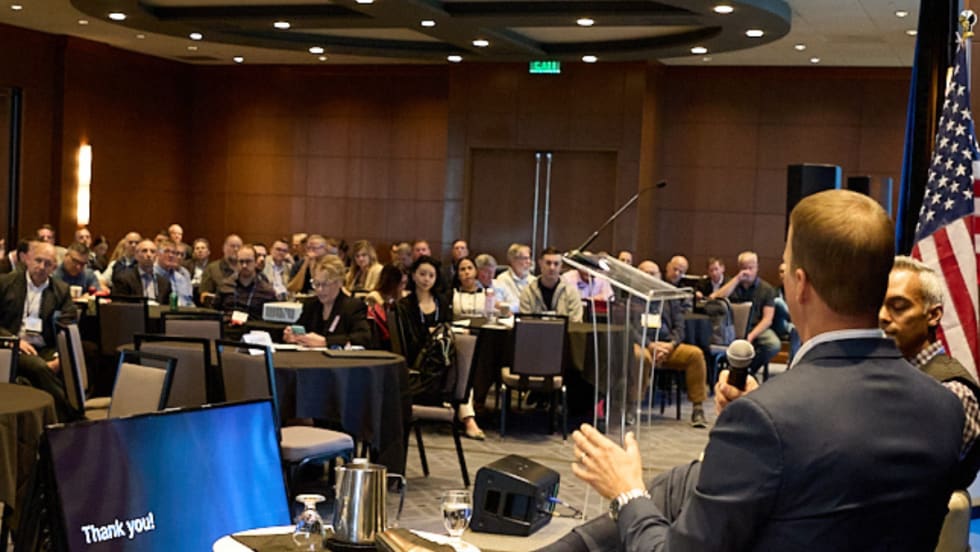
NETS Sets 2026 Fleet Safety Benchmark Conference for Indianapolis
The Sept. 15–17 program will feature fleet benchmarking data, case studies, emerging technologies, and implementation strategies while running alongside the NSC Safety Congress & Expo.
Read More →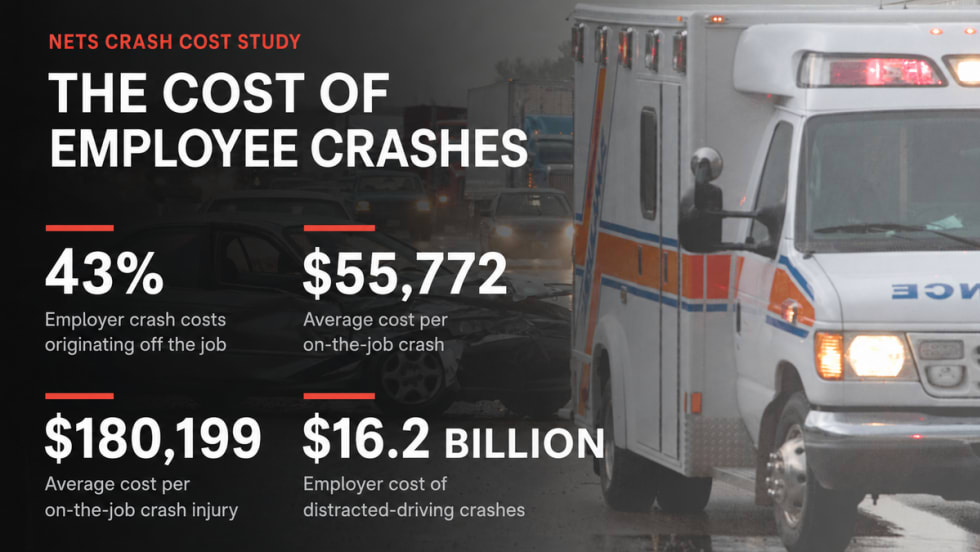
Off-the-Job Crashes Account for 43% of Employers’ $61.7 Billion Crash Burden
NETS quantifies costs dispersed across fleet, risk, HR, and other departments while providing new per-crash benchmarks for employers.
Read More →
Ram Recalls More Than 1.27 Million 1500 Pickups for Seat Belt Anchor Issue
The recall affects certain 2019-2026 Ram 1500 pickups that may have improperly attached second-row seat belt buckle anchors.
Read More →
How Better Visibility Cut Speeding Violations by 48%
Fleet leaders don't need more data, they need clearer visibility into what the data is saying. This case study explores how one utility replaced speeding-event counts with a single metric — miles driven in violation — to strengthen safety and significantly reduce speeding violations.
Read More →
Operation Safe Driver Week: Why the Industry's Oldest Safety Campaign Still Matters to Fleets
A look at how a 2007 enforcement initiative became one of the most consequential weeks on the fleet safety calendar, and what it means for your drivers in 2026.
Read More →