




Study Highlights Drug Use as Factor in Road Fatalities
WASHINGTON - In a new report on drug use by drivers involved in America's fatal crashes, the National Highway Traffic Safety Administration (NHTSA) this week reported post-mortem testing results showing an increase in the level of drug involvement among fatally injured drivers over a five-year period from 2005 to 2009.
WASHINGTON - In a new report on drug use by drivers involved in America's fatal crashes, the National Highway Traffic Safety Administration (NHTSA) this week reported post-mortem testing results showing an increase in the level of drug involvement among fatally injured drivers over a five-year period from 2005 to 2009.
However, "drug involvement" does not mean the driver was impaired or that drug use was the cause of the crash.
According to data compiled by NHTSA, 63 percent of the 21,798 drivers who were killed in motor vehicle crashes in 2009 were tested for drugs. Of these, 3,952 tested positive for drug involvement, representing 18 percent of the total for that year. The report also showed drug use reported by the states among fatally injured drivers increasing from 13 percent in 2005, to 15 percent in 2006, 16 percent in 2007, and 18 percent in 2008.
The drug data released Nov. 30 was collected by NHTSA as part of its Fatality Analysis Reporting System (FARS) and included information collected from the states under three broad categories: whether the driver was tested, the type of test conducted, and the test results. The types of drugs recorded in FARS include narcotics, depressants, stimulants, hallucinogens, cannabinoids, phencyclidines (PCPs), anabolic steroids and inhalants. The groups include illicit drugs as well as legally prescribed drugs and over-the-counter medicines.
"Every driver on the road has a personal responsibility to operate his or her vehicle with full and uncompromised attention on the driving task," said NHTSA Administrator David Strickland. "Today's report provides a warning signal that too many Americans are driving after having taken drugs, not realizing the potential for putting themselves and others on the highway at risk."
In announcing the drug findings, Strickland noted that drug test results are unavailable for a large portion of fatally injured drivers. He also conceded that there was a wide variance among states regarding the extent of drug testing conducted.
He added that state drug testing techniques and procedures are evolving and that currently states, as well as jurisdictions within a state, may test for different drugs, use different test types, and employ different concentration thresholds for determining whether a test was positive or not.
"The results we are releasing today indicate that drugs were found to be present in post-mortem examinations," Strickland explained. "Drug involvement does not necessarily imply impairment or indicate that drug use was the cause of the crash."
He noted that while many years of real-world observations and empirical evidence have shown a strong relationship between alcohol concentration levels in the blood and impairment and crash correlation, the same evidence is not yet available for drugs.
"While it's clear that science and state policies regarding drugs and driving are evolving, one fact is indisputable. If you are taking any drugs that might impair your ability to drive safely, then you need to put common sense and caution to the forefront, and give your keys to someone else," Strickland said. "It doesn't matter if its drugs or alcohol -- if you're impaired, don't drive."
The NHTSA administrator added that NHTSA is continuing to conduct research to better understand the correlation between drug levels and their impact on crashes. Strickland also explained that, under NHTSA's drug evaluation and classification program, the agency has prepared nearly 1,000 instructors and trained more than 6,000 police officers in 46 states to recognize symptoms of driver impairment by drugs other than alcohol.
More Safety

Nexar-Nauto Merger Aims to Give Fleets Better Safety Intelligence Through Larger Driving Dataset
Stefan Heck tells Automotive Fleet that combining more than 10 billion miles of driving history with Nexar's AI models will give fleets deeper insights into driver risk and roadway conditions than either company could provide independently.
Read More →
Don't Wait for a Crisis: 5 Ways to Build Mental Health Into Your Fleet Safety Program
For Suicide Prevention Month, fleet and safety leaders have an opportunity to put mental health where it belongs: at the center of workplace safety.
Read More →
How Camera Data Can Strengthen a Fleet’s Insurance Renewal
Insights from a commercial insurance carrier and a broker show how fleets can turn video telematic data, driver coaching, and improved claims results into a stronger case at insurance renewal.
Read More →
The Safest Fleets Aren’t the Ones with the Most Technology
You’ve made the telematics investment. Here’s how to capture the other half of its value and build the safest fleet on the road.
Read More →
Hidden in Plain Sight: Fleet Compliance Risks
Fleet compliance isn't just about having policies — it's about consistently enforcing them. This practical guide reveals six hidden compliance risks common in public sector and shared fleet operations and outlines proven strategies to improve visibility, accountability, and audit readiness
Read More →
NETS Sets 2026 Fleet Safety Benchmark Conference for Indianapolis
The Sept. 15–17 program will feature fleet benchmarking data, case studies, emerging technologies, and implementation strategies while running alongside the NSC Safety Congress & Expo.
Read More →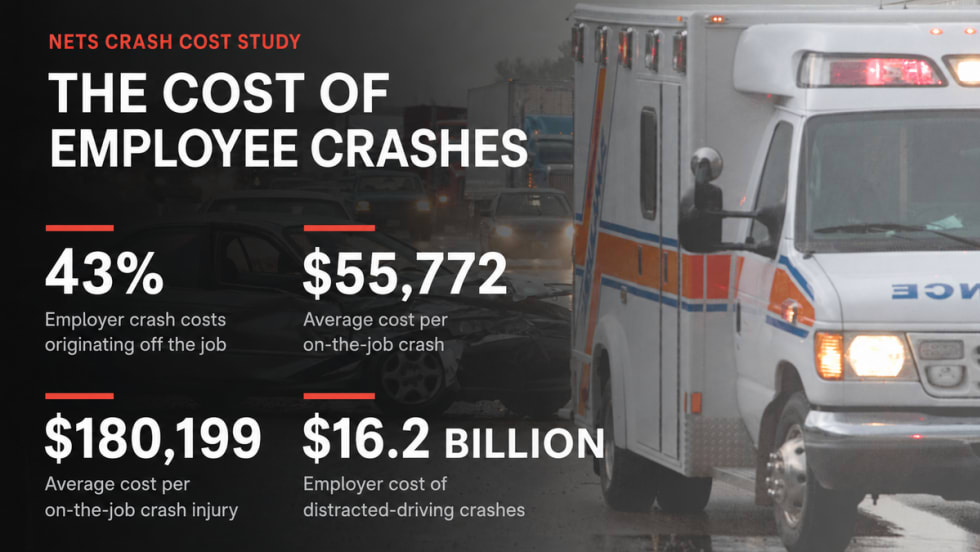
Off-the-Job Crashes Account for 43% of Employers’ $61.7 Billion Crash Burden
NETS quantifies costs dispersed across fleet, risk, HR, and other departments while providing new per-crash benchmarks for employers.
Read More →
Ram Recalls More Than 1.27 Million 1500 Pickups for Seat Belt Anchor Issue
The recall affects certain 2019-2026 Ram 1500 pickups that may have improperly attached second-row seat belt buckle anchors.
Read More →
How Better Visibility Cut Speeding Violations by 48%
Fleet leaders don't need more data, they need clearer visibility into what the data is saying. This case study explores how one utility replaced speeding-event counts with a single metric — miles driven in violation — to strengthen safety and significantly reduce speeding violations.
Read More →
Operation Safe Driver Week: Why the Industry's Oldest Safety Campaign Still Matters to Fleets
A look at how a 2007 enforcement initiative became one of the most consequential weeks on the fleet safety calendar, and what it means for your drivers in 2026.
Read More →