




Study Finds Cell Phones Could Cause Non-Cancerous Tumors
People who have used cell phones for at least 10 years might have an increased risk of developing a rare brain tumor, according to a study published October 13 in the international journal Epidemiology, according to an article published in the South Florida Sun-Sentinel newspaper.
People who have used cell phones for at least 10 years might have an increased risk of developing a rare brain tumor, according to a study published October 13 in the international journal Epidemiology, according to an article published in the South Florida Sun-Sentinel newspaper. A team of researchers at Institute of Environmental Medicine at the Karolinska Institute in Stockholm, Sweden, found almost a fourfold increase of the tumors, known as acoustic neuromas, on the side of the head where the phone was most often held. The work was done as part of the World Health Organization's cell phone research agenda, and experts in the field said it must be taken seriously and is likely to rekindle consumer worries about the risks of using the phones. At least one past study conducted for the cell phone industry also had suggested a link between the phones and this type of tumor. But cell phone industry officials said the Swedish research is only one study and that no conclusions can be drawn from it. The study, involving 150 acoustic neuroma patients and 600 healthy people, is one of at least six studies of possible links between cell phone use and acoustic neuromas. Most of those studies had fewer long-term users than the Karolinska study. Acoustic neuromas are slow-growing noncancerous tumors that develop on a nerve linking the brain and the inner ear. The most common first symptom is hearing loss, but as the tumor grows it can push against brain tissue. If not treated, it can be life threatening. Such tumors are very rare, occurring in about one person per 100,000 in the general population. To conduct the three-year study, the Karolinska researchers interviewed people who had developed the tumors — asking about their cell phone use, how many different phones they had used, the makes and models, duration of calls, whether they used a hands-free set and on which side of the head they held the phone. Researchers said they found no association between the tumors and the amount of use measured in hours or cumulative number of calls, but rather on the length of time those in the study had been regular users of cell phones. Regular use was defined as an average of at least once a week during six months or more. Dr. Henry Lai, research professor of bioengineering at the University of Washington in Seattle, also said the Karolinska study is not the first to show a link between cell phones and acoustic neuromas. "Another Swedish researcher, Dr. Lennart Hardell found similar results in 2002," Lai said, "so this is, in effect, a replication. I think the data are quite solid and are cause for concern on long-term cell phone use." Lai's own research found DNA breaks in the brain cells of animals exposed to radio-frequency radiation, results that were first published in 1994, and have been repeated by others, he said. "We looked at DNA damage in animals, not in humans, and found that cell phone radiation can damage DNA," he said. The body's immune system has the ability to repair DNA breaks, but sometimes it can make a mistake and cause a mutation, which could be the first step toward cancer, Lai said. Sam Milham of Olympia, Wash., an epidemiologist and pioneer in studying the effects of electromagnetic radiation on humans, said it usually takes 20 years or more for solid tumors to develop. "I'm actually astonished that they found anything like this early," Milham said. "If that energy can do that to normal nerve tissue cells, what can it do to adjacent brain cells? I think it's the tip of a big iceberg, and the peak could be at 25 years past exposure. "What's really alarming is that in the last five years an enormous number of people started using cell phones, including kids, so I think this is just the beginning of it. I hope I'm wrong."
More Operations

How to Manage Conflict for Your Fleet Operations
Conflict management is becoming a core leadership skill. Here are five strategies fleet leaders should know.
Read More →
Turning Connected Vehicle Data Into Decisions That Matter
Fleet leaders have more data than ever, but turning that data into clear, actionable decisions remains a challenge. This white paper shows how leading organizations are using connected vehicle data to improve safety, reduce costs, and optimize fleet performance. Learn how to turn insight into action across your fleet.
Read More →
Cameras, Safety and Insurance: From Reactive Claims to Real-time Prevention
Commercial auto remains one of the most challenging and costly lines of coverage for fleet operators and insurers alike. Learn more about how to effectively address these issues from Onur Aksan, Enterprise Business Development Executive, Geotab.
Read More →

Are You Tracking Your Fleet's True Total Cost of Ownership?
Bobit Business Media surveyed 190 fleet professionals and found that while most fleets are tracking costs, fragmented systems and data gaps are keeping true TCO visibility out of reach. With rising pressure to control spend in an increasingly volatile environment, the gap between what fleets think they know and what the data actually shows is wider than you might expect. See how your peers are managing costs today and where the industry still has room to improve.
Read More →
Turn Fleet Data Into Smarter Decisions
Fleet leaders have access to more operational data than ever, but disconnected systems and unclear metrics often slow decision-making instead of improving it. This whitepaper outlines five practical steps fleets can take to transform fragmented data into actionable insights that improve planning, safety, utilization, and long-term performance.
Read More →
Hybrids: Electrification Without the Challenges
For fleet managers, fuel is one of the biggest line items in the budget — and it's one hybrids can shrink without changing how your people work. Download the eBook to see the numbers, understand the technology, and get a step-by-step guide to making the switch.
Read More →
How NOV Uses Telematics to Improve Fleet Safety Across 160 Locations
James Victory of NOV discusses how the company manages fleet safety, maintenance, and telematics across more than 150 locations supporting oilfield operations throughout the U.S.
Read More →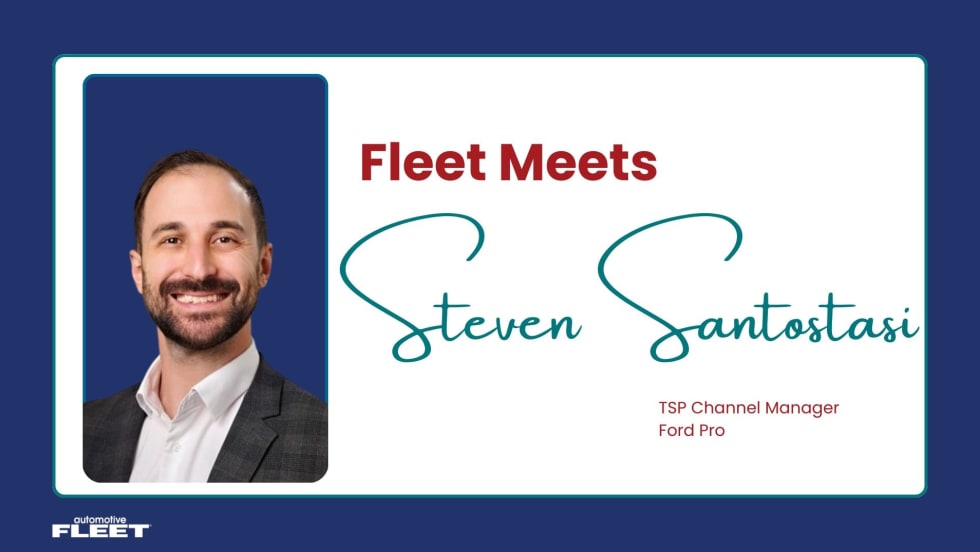
Fleet Meets: Steven Santostasi
This edition of the Fleet Meets series features Steven Santostasi, the current TSP channel manager for Ford Pro.
Read More →
Why Fleet Managers Are Replacing Departmental Vehicles with Shared Motor Pools
Departmentally assigned vehicles often create hidden costs through underutilization, poor visibility, and increased administrative burden. This white paper explores how shared motor pool strategies help fleets reduce costs, improve accountability, and optimize vehicle utilization.
Read More →
Soap Box Derby Challenge: Assembling the Crew
Meet Gabriel, Matthew, and Angel — the team helping bring this soap box derby build to life.
Read More →