




Study: Driver Fatigue a Factor in 20 Percent of Crashes
A new study by the Virginia Tech Transportation Institute concludes that driver fatigue is a much more common cause of crashes than previously believed.
A 100-car naturalistic driving study, conducted by the Virginia Tech Transportation Institute, has concluded that fatigue is a cause of 20% of crashes, rather than the 2-3% previously estimated. Previous estimates were based on surveys, simulator studies and test tracks.
What’s more, 18- to 20-year-olds account for significantly more fatigue-related crashes than any other age group. Adolescents’ sleep patterns shift to later hours. But the school day still tends to start early, resulting in daytime sleepiness. Older drivers can face similar issues with late nights and early work times, but have more experience coping with moderate fatigue – although, not always.
“One of the most important results from the 100-car naturalistic driving study was the degree to which fatigue is a cause of accidents,” said Charlie Klauer, group leader for teen risk and injury prevention at the transportation institute’s Center for Vulnerable Road User Safety. “A finding that surprised people is the prevalence of fatigue during the day. We found significantly more crashes/near crashes due to fatigue during the day than at night.”
The study allowed researchers to observe driver behavior just prior to a crash. In 20% of all crashes and 16% of all near crashes, the driver was showing fatigue.
“We saw eye-lid closure, head bobbing, severe loss of facial musculature, micro sleep – which is when your eyes drift shut and then pop up,” said Klauer. “This was not just yawning. The drivers were asleep.”
A total of 100 drivers who commuted into or out of the Northern Virginia/Washington, D.C., metropolitan area were initially recruited as primary drivers for the research project. They had their vehicles instrumented or received a leased vehicle instrumented for the study. Since other family members and friends would occasionally drive the instrumented vehicles, data were collected on 132 additional drivers.
Researchers selected a larger sample of drivers below the age of 25, compared to the total population of drivers, and a sample that drove more than the average number of miles.
Virginia Tech Transportation Institute engineers developed the data acquisition system used for the 100-car study.
Sensors included five video channels, forward and rearward Vorad radar units, accelerometers, lane tracking software, and an in-vehicle network sensor. The cameras were mounted unobtrusively to facilitate naturalistic driving behavior.
Researchers viewed more than 110,000 events in order to validate 10,548 events – specifically, 82 crashes, including 13 where the data was incomplete; 761 near crashes; 8,295 incidents, such as braking hard for slowing or stopped traffic; and 1,423 non-conflict events, such as running a stop light with no traffic present.
In addition, researchers viewed 20,000 randomly selected six-second segments of video. Incidents of moderate to severe driver fatigue were noted, providing an estimate of the amount of time drivers were fatigued but were not involved in a crash or near-crash.
The total number of subjects who were involved in fatigue-related crashes and near-crashes was 38, with 11 drivers accounting for 58% of all the fatigue-related crashes and near-crashes.
“Applying the findings to the population at large, these results suggest that drivers are at a four-times greater risk of a crash or near-crash if they choose to drive while fatigued,” said Tom Dingus, director of the Virginia Tech Transportation Institute. “That suggests that about 12% of all crashes and near-crashes in the population are attributable to fatigue.”
Analyses with the 100-car study database will continue. Data from a new U.S. study, the Strategic Highway Research Program, with 2,000 cars, will also provide greater statistical power.
In addition, new naturalistic driving studies focused on 16- to 18-year-old drivers are now under way. A Naturalistic Teenage Driving Study, sponsored by the National Institute of Child Health and Human Development, seeks to determine the effects of experience on driving performance -- and the extent of variability in driving performance under specific driving conditions, such as at night.
The National Highway Traffic Safety Administration provided additional funds to analyze the data from the teen driving study to help determine which driving performance parameters and situations should be used to provide feedback about unsafe driving performance to newly licensed teens.
The 100-Car Naturalistic Driving data set was collected in 2003 and 2004 and has been mined numerous times since. Databases from the 100-car study are available for public use on the Virginia Tech Transportation Institute website. Several publications resulting from analysis of the data are reported by the National Highway Traffic Safety Administration.
More Safety

Nexar-Nauto Merger Aims to Give Fleets Better Safety Intelligence Through Larger Driving Dataset
Stefan Heck tells Automotive Fleet that combining more than 10 billion miles of driving history with Nexar's AI models will give fleets deeper insights into driver risk and roadway conditions than either company could provide independently.
Read More →
Don't Wait for a Crisis: 5 Ways to Build Mental Health Into Your Fleet Safety Program
For Suicide Prevention Month, fleet and safety leaders have an opportunity to put mental health where it belongs: at the center of workplace safety.
Read More →
How Camera Data Can Strengthen a Fleet’s Insurance Renewal
Insights from a commercial insurance carrier and a broker show how fleets can turn video telematic data, driver coaching, and improved claims results into a stronger case at insurance renewal.
Read More →
The Safest Fleets Aren’t the Ones with the Most Technology
You’ve made the telematics investment. Here’s how to capture the other half of its value and build the safest fleet on the road.
Read More →
Hidden in Plain Sight: Fleet Compliance Risks
Fleet compliance isn't just about having policies — it's about consistently enforcing them. This practical guide reveals six hidden compliance risks common in public sector and shared fleet operations and outlines proven strategies to improve visibility, accountability, and audit readiness
Read More →
NETS Sets 2026 Fleet Safety Benchmark Conference for Indianapolis
The Sept. 15–17 program will feature fleet benchmarking data, case studies, emerging technologies, and implementation strategies while running alongside the NSC Safety Congress & Expo.
Read More →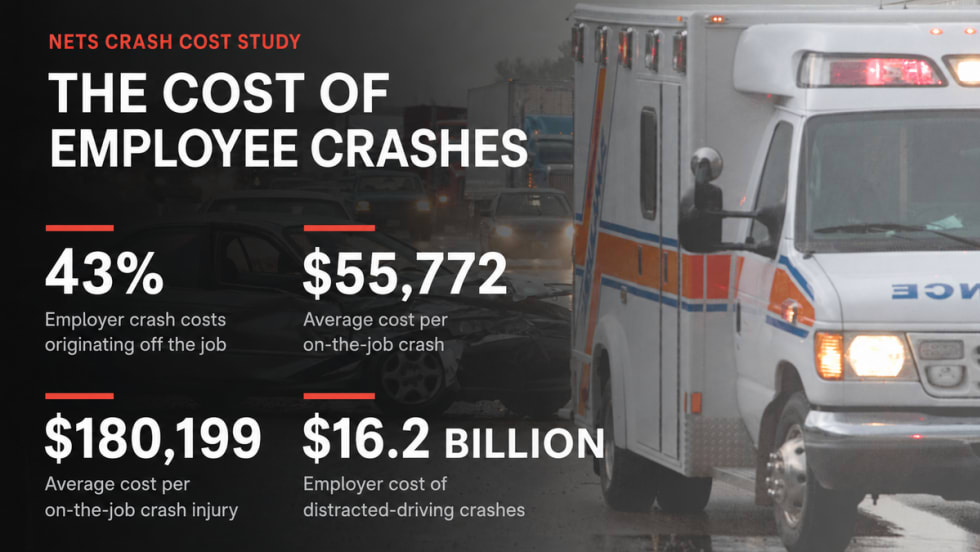
Off-the-Job Crashes Account for 43% of Employers’ $61.7 Billion Crash Burden
NETS quantifies costs dispersed across fleet, risk, HR, and other departments while providing new per-crash benchmarks for employers.
Read More →
Ram Recalls More Than 1.27 Million 1500 Pickups for Seat Belt Anchor Issue
The recall affects certain 2019-2026 Ram 1500 pickups that may have improperly attached second-row seat belt buckle anchors.
Read More →
How Better Visibility Cut Speeding Violations by 48%
Fleet leaders don't need more data, they need clearer visibility into what the data is saying. This case study explores how one utility replaced speeding-event counts with a single metric — miles driven in violation — to strengthen safety and significantly reduce speeding violations.
Read More →
Operation Safe Driver Week: Why the Industry's Oldest Safety Campaign Still Matters to Fleets
A look at how a 2007 enforcement initiative became one of the most consequential weeks on the fleet safety calendar, and what it means for your drivers in 2026.
Read More →