




Study: Almost 1 Out of 3 Drivers Admits to Drowsy Driving in Past Month
WILMINGTON, DE — Nearly all drivers (96 percent) feel drowsy driving is an unacceptable behavior, yet almost a third (32 percent) admitted driving when they were so tired that they had difficulty keeping their eyes open in the past month, according to the AAA Foundation for Traffic Safety’s 2011 safety culture survey.
WILMINGTON, DE — Nearly all drivers (96 percent) feel drowsy driving is an unacceptable behavior, yet almost a third (32 percent) admitted driving when they were so tired that they had difficulty keeping their eyes open in the past month, according to the AAA Foundation for Traffic Safety’s 2011 safety culture survey.
A study released last year by the AAA Foundation found that one of every six deadly crashes and one in eight crashes causing serious injury involved a drowsy driver. This is substantially higher than previous estimates, confirming the suspicions of researchers that the impact of drowsy driving on motor vehicle crashes, injuries, and deaths has been greatly underestimated.
"Although the vast majority of drivers recognize the serious threat of drowsy driving, a ‘Do as I Say, Not as I Do’ attitude exists when getting behind the wheel. Drowsy driving kills, just as sure as drunk, drugged and distracted driving does," said AAA Foundation President and CEO Peter Kissinger. "Drivers have a tendency to underestimate the impact being tired has on their driving ability, which puts themselves and others at risk."
In recognition of this year's Drowsy Driving Prevention Week hosted by the National Sleep Foundation, the AAA Foundation and AAA are trying to raise awareness among all drivers of the seriousness of drowsy driving.
Recent AAA Foundation research on drowsy driving found that two out of every five drivers (41 percent) admit to having fallen asleep at the wheel at some point, with one in 10 saying they had done so in the past year.
"What's so alarming is that over half of these drivers reported having fallen asleep while driving on high‐speed roads," said Jake Nelson, AAA's director of traffic safety advocacy and research. "These data underscore the importance of educating drivers about the dangers of drowsy driving."
For more than two decades, the National Sleep Foundation has worked to raise drowsy driving awareness and related education.
"It is shocking to consider that nearly a third of drivers admit to operating a vehicle in the last month while drowsy," said David Cloud, CEO of the National Sleep Foundation. "We applaud AAA’s work to call attention toward this important public safety issue."
Warning signs of sleepiness include, but are not limited to:
Having difficulty keeping your eyes open and focused, and/or having heavy eyelids
Difficulty keeping your head up
Drifting from your lane, swerving, tailgating and/or hitting rumble strips
Inability to clearly remember the last few miles driven
Missing traffic signs or driving past your intended exit
Yawning repeatedly and rubbing your eyes
Feeling irritable or restless.
To remain alert and prevent a fall-asleep crash, AAA offers these tips:
Get plenty of sleep (at least seven hours) the night before a long trip
Stop driving if you become sleepy; someone who is tired could fall asleep at any time – fatigue impacts reaction time, judgment and vision, causing people who are very sleepy to behave in similar ways to those who are drunk
Travel at times when you are normally awake, and stay overnight rather than driving straight through
Schedule a break every two hours or every 100 miles
Drink a caffeinated beverage. Since it takes about 30 minutes for caffeine to enter the bloodstream, find a safe place to take a 20‐ to 30-minute nap while you’re waiting for the caffeine to take effect
Travel with an awake passenger.
For more information on drowsy driving, including the foundation's brochure, "How To Avoid Drowsy Driving," visit www.AAAFoundation.org.
More Safety

From Driver Well-Being to EV Charging | AF News Recap
Mental health belongs in the fleet safety conversation. This week, we’re looking at five ways fleets can support employee well-being before a crisis, plus Holman’s expansion in Mexico, new one-day Fleet Forward passes, and why EV charging demand is outpacing infrastructure growth.
Read More →
Nexar-Nauto Merger Aims to Give Fleets Better Safety Intelligence Through Larger Driving Dataset
Stefan Heck tells Automotive Fleet that combining more than 10 billion miles of driving history with Nexar's AI models will give fleets deeper insights into driver risk and roadway conditions than either company could provide independently.
Read More →
Don't Wait for a Crisis: 5 Ways to Build Mental Health Into Your Fleet Safety Program
For Suicide Prevention Month, fleet and safety leaders have an opportunity to put mental health where it belongs: at the center of workplace safety.
Read More →
How Camera Data Can Strengthen a Fleet’s Insurance Renewal
Insights from a commercial insurance carrier and a broker show how fleets can turn video telematic data, driver coaching, and improved claims results into a stronger case at insurance renewal.
Read More →
The Safest Fleets Aren’t the Ones with the Most Technology
You’ve made the telematics investment. Here’s how to capture the other half of its value and build the safest fleet on the road.
Read More →
Hidden in Plain Sight: Fleet Compliance Risks
Fleet compliance isn't just about having policies — it's about consistently enforcing them. This practical guide reveals six hidden compliance risks common in public sector and shared fleet operations and outlines proven strategies to improve visibility, accountability, and audit readiness
Read More →
NETS Sets 2026 Fleet Safety Benchmark Conference for Indianapolis
The Sept. 15–17 program will feature fleet benchmarking data, case studies, emerging technologies, and implementation strategies while running alongside the NSC Safety Congress & Expo.
Read More →
Off-the-Job Crashes Account for 43% of Employers’ $61.7 Billion Crash Burden
NETS quantifies costs dispersed across fleet, risk, HR, and other departments while providing new per-crash benchmarks for employers.
Read More →
Ram Recalls More Than 1.27 Million 1500 Pickups for Seat Belt Anchor Issue
The recall affects certain 2019-2026 Ram 1500 pickups that may have improperly attached second-row seat belt buckle anchors.
Read More →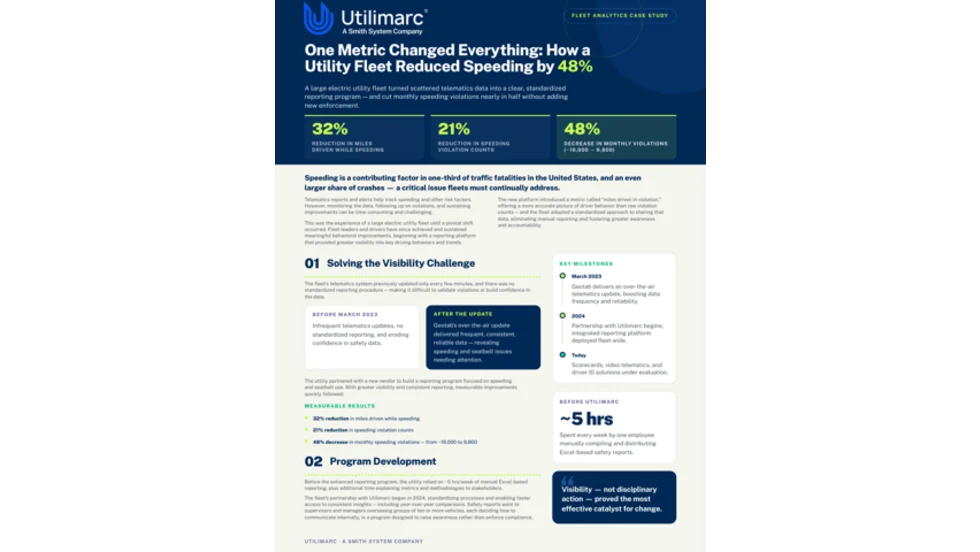
How Better Visibility Cut Speeding Violations by 48%
Fleet leaders don't need more data, they need clearer visibility into what the data is saying. This case study explores how one utility replaced speeding-event counts with a single metric — miles driven in violation — to strengthen safety and significantly reduce speeding violations.
Read More →