




State Farm: Deer-Related Collisions Up 7.7% in Past Year
BLOOMINGTON, IL –The insurance company estimates that 1.23 million collisions caused by the presence of deer occurred in the U.S. between July 1, 2011 and June 30, 2012.
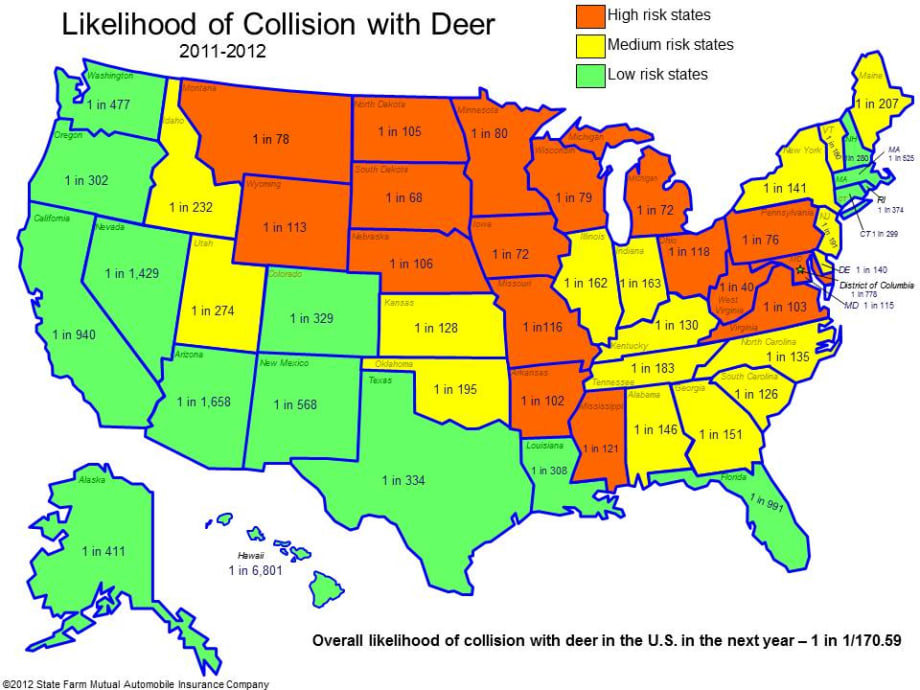
BLOOMINGTON, IL – The number of deer-related collisions in the U.S. has increased by 7.7% over the past year, State Farm reported this week. This jump comes after a three-year period during which these collisions dropped 2.2%.
The insurance company estimates that 1.23 million collisions caused by the presence of deer occurred in the U.S. between July 1, 2011 and June 30, 2012. The probability that any single licensed driver in the U.S. was behind the wheel during one of those 1.23 million crashes also increased from 1 in 183 to 1 in 171.
For the sixth year in a row, West Virginia tops the list of states where an individual driver is most likely to run into a deer, State Farm said. Using its claims data and state licensed driver counts from the Federal Highway Administration, the insurance company calculates the chances of a West Virginia motorist striking a deer over the next 12 months at 1 in 40, compared with 1 in 48 the year before.
South Dakota moved from third to second on the list. The likelihood of a licensed driver in that state hitting a deer within the next year is 1 in 68. Iowa (1 in 71.9) drops from second to third. Michigan (1 in 72.4) is a close fourth, jumping one position from fifth. Pennsylvania (1 in 76) drops one spot to fifth. In each of the top five states, the rate of deer-related collisions per driver went up from a year ago.
The state in which deer-vehicle mishaps are least likely is still Hawaii (1 in 6,801). The odds of a driver in Hawaii colliding with a deer between now and 12 months from now are approximately equal to the odds that any one person will be struck by lightning during his or her lifetime, State Farm said.
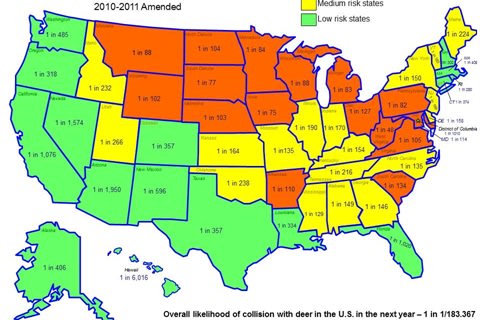
Over the past four years, the number of deer-related claims paid by State Farm has increased 7.9% while other similar auto claims have declined 8.5%.
“We have known for quite a while that the frequency of auto insurance claims has been declining,” said Chris Mullen, director of technology research. “But whatever is causing that trend is obviously not impacting deer-related crashes.”
For more detailed data by state, click here.
State Farm’s data shows that November is the month during which deer-vehicle encounters are most likely. More than 18% of all such mishaps take place during the 30 days of November. Deer-vehicle collisions are three times more likely to occur on a day in November than they are on any day between Feb. 1 and Aug. 31. October is the second most likely month for a crash involving a deer and a vehicle. December is third.
The average property damage cost of these incidents during the final half of 2011 and the first half of 2012 was $3,305, up 4.4% from the year before.
Here are tips from the Insurance Information Institute on how to reduce the odds of a deer-vehicle collision:
• Keep in mind that deer generally travel in herds – if you see one, there is a strong possibility others are nearby.
• Be aware of posted deer crossing signs. These are placed in active deer crossing areas.
• Remember that deer are most active between 6 and 9 p.m.
• Use high beam headlamps as much as possible at night to illuminate the areas from which deer will enter roadways.
• If a deer collision seems inevitable, attempting to swerve out of the way could cause you to lose control of your vehicle or place you in the path of an oncoming vehicle.
• Don’t rely on car-mounted deer whistles.
More Safety

Nexar-Nauto Merger Aims to Give Fleets Better Safety Intelligence Through Larger Driving Dataset
Stefan Heck tells Automotive Fleet that combining more than 10 billion miles of driving history with Nexar's AI models will give fleets deeper insights into driver risk and roadway conditions than either company could provide independently.
Read More →
Don't Wait for a Crisis: 5 Ways to Build Mental Health Into Your Fleet Safety Program
For Suicide Prevention Month, fleet and safety leaders have an opportunity to put mental health where it belongs: at the center of workplace safety.
Read More →
How Camera Data Can Strengthen a Fleet’s Insurance Renewal
Insights from a commercial insurance carrier and a broker show how fleets can turn video telematic data, driver coaching, and improved claims results into a stronger case at insurance renewal.
Read More →
The Safest Fleets Aren’t the Ones with the Most Technology
You’ve made the telematics investment. Here’s how to capture the other half of its value and build the safest fleet on the road.
Read More →
Hidden in Plain Sight: Fleet Compliance Risks
Fleet compliance isn't just about having policies — it's about consistently enforcing them. This practical guide reveals six hidden compliance risks common in public sector and shared fleet operations and outlines proven strategies to improve visibility, accountability, and audit readiness
Read More →
NETS Sets 2026 Fleet Safety Benchmark Conference for Indianapolis
The Sept. 15–17 program will feature fleet benchmarking data, case studies, emerging technologies, and implementation strategies while running alongside the NSC Safety Congress & Expo.
Read More →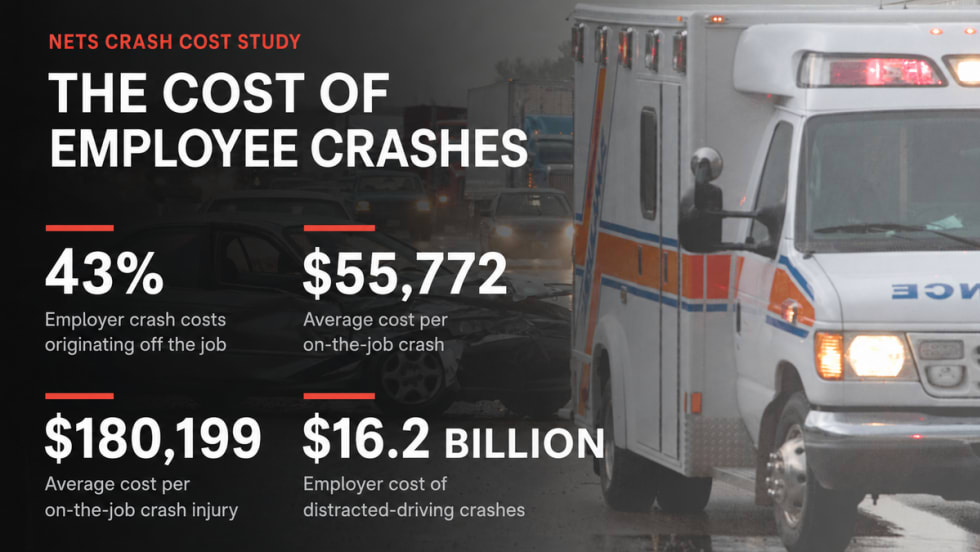
Off-the-Job Crashes Account for 43% of Employers’ $61.7 Billion Crash Burden
NETS quantifies costs dispersed across fleet, risk, HR, and other departments while providing new per-crash benchmarks for employers.
Read More →
Ram Recalls More Than 1.27 Million 1500 Pickups for Seat Belt Anchor Issue
The recall affects certain 2019-2026 Ram 1500 pickups that may have improperly attached second-row seat belt buckle anchors.
Read More →
How Better Visibility Cut Speeding Violations by 48%
Fleet leaders don't need more data, they need clearer visibility into what the data is saying. This case study explores how one utility replaced speeding-event counts with a single metric — miles driven in violation — to strengthen safety and significantly reduce speeding violations.
Read More →
Operation Safe Driver Week: Why the Industry's Oldest Safety Campaign Still Matters to Fleets
A look at how a 2007 enforcement initiative became one of the most consequential weeks on the fleet safety calendar, and what it means for your drivers in 2026.
Read More →