




Sprint and Enterprise Offer Mobile Resource Manager
OVERLAND PARK, KS - MRM is a Web-based solution that provides companies real-time visibility into the locations and activities of their mobile resources.
OVERLAND PARK, KS – Enterprise Fleet Management, a leader in fleet management services, has partnered with Sprint (NYSE:S) to offer Mobile Resource Manager (MRM), a cutting-edge machine-to-machine (M2M) solution.
MRM is a Web-based solution that provides companies real-time visibility into the locations and activities of their mobile resources. Enterprise Fleet Management’s MRM customers enjoy a higher level of vehicle tracking and reporting, wireless job dispatching and time tracking, and built-in navigation resulting in enhanced productivity, improved communications and a superior customer experience overall.
Enterprise Fleet Management (EFM) is owned by the Taylor Family of St. Louis, who, through regional subsidiaries, also own and operate Enterprise Rent-A-Car. EFM offers Mobile Resource Manager to its customers—companies spanning many industries from transportation to logistics to healthcare. Since MRM was rolled out in 2010, EFM has sold more than 4,500 MRM units to more than 400 customers.
Wireless Job Dispatching, Time Tracking and Reporting:
MRM offers real-time resource tracking so users can pinpoint vehicle location in an instant or via historical reports. Sophisticated, customizable reports enable fleet managers to customize exception reports, based on the specific business need.
Through 3G Sprint wireless network connectivity between the MRM units and the Web interface, real-time monitoring of any job status is seamless. Jobs are dispatched directly to MRM units and drivers can communicate directly with fleet managers.
Navigation:
Field workers access detailed driving directions, accurately guiding them to their destinations using the most optimal routes, thus decreasing drive time resulting in reduced fuel consumption and carbon emissions.
Messaging:
The key to effectively managing a large fleet operation is frequent and reliable communication between the office and fleet operators. With MRM, dispatchers can send text messages directly to individual drivers' MRM units, and drivers can respond by sending a text message back to the Web interface. This leads to fewer phone calls between fleet and office, saving time for both dispatchers and drivers.
“Enterprise Fleet Management chose Sprint as a partner for MRM because they share our commitment to provide technology solutions that help our customers operate more efficiently,” said Tom Chelew, vice president-EFM. “Our primary focus is on businesses with medium-size fleets, which often operate in a highly competitive environment where time is money and driver safety is a priority. For these customers, MRM can be a dream come true.”
“Companies are searching for fleet management solutions that increase operational efficiencies while improving safety and environmental benefits” said John Dupree, senior vice president-Business Sales for Sprint. “EFM has developed a simple yet robust solution that meets these demands and Sprint is proud to be the exclusive network provider for the Mobile Resource Manager Service.”
Sprint M2M solutions wirelessly connect a rapidly proliferating variety of electronic devices for business, as well as innovative new consumer and commercial services. Those devices are as varied as digital billboards, medical equipment, video surveillance and security solutions, remote sensors, utility meters, electric charging stations and appliances. For more information please visit www.sprint.com/m2m.
More Telematics
Element Expands Waymo Partnership to Support Toronto Robotaxi Fleet
As Waymo prepares to enter the Canadian market, Element Fleet Management will oversee the fleet operations supporting its planned Toronto launch. The partnership highlights the maintenance, charging, and infrastructure requirements behind operating autonomous vehicles at scale.
Read More →
GM Launches OnStar Fleet Intelligence Platform With AI Assistant
The new platform brings vehicle data, order tracking, connected services and fleet analytics into one system, with an AI assistant that can answer fleet questions using natural-language prompts.
Read More →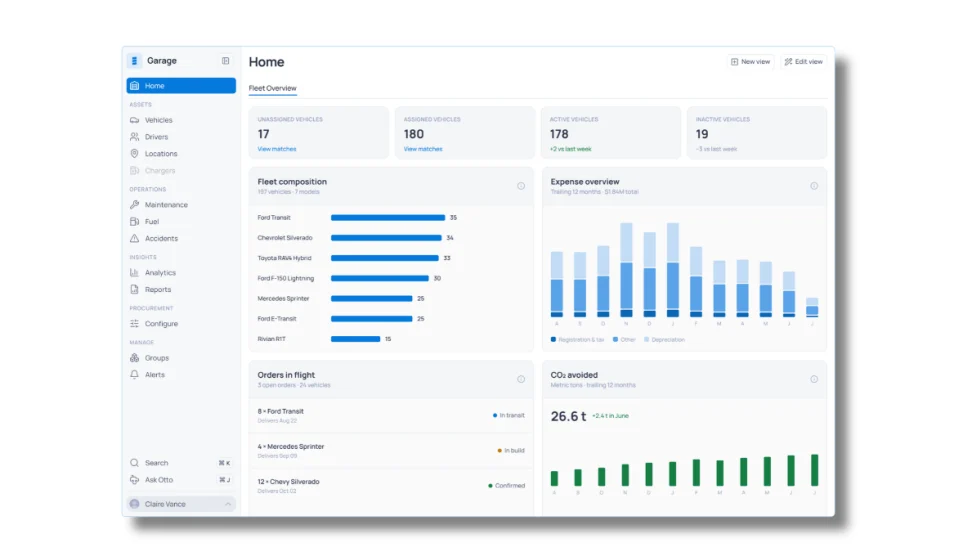
Inspiration Fleet Introduces Garage 2.0 Fleet Intelligence Platform
Fleet managers increasingly have access to data from vehicles, telematics, fuel, charging, and other systems, but those sources don't always communicate with one another. Inspiration Fleet's Garage 2.0 platform brings that information together while letting fleets keep working with different technology and service providers.
Read More →
Inside Inspiration Fleet’s New Platform for Connecting Fleet Data
Inspiration Fleet CTO Chris Getner explains how the new Garage 2.0 platform is designed to connect disparate fleet data and what that could mean for fleet managers in practice.
Read More →
Fleet Manager’s Ultimate Playbook: Navigating the New Standard in OEM Connectivity
Rising operating costs, driver safety concerns, and unplanned downtime are putting unprecedented pressure on modern fleets. Discover how fleet managers use embedded OEM connectivity and real-time vehicle data to cut TCO, prevent downtime, and protect drivers without aftermarket telematics hardware.
Read More →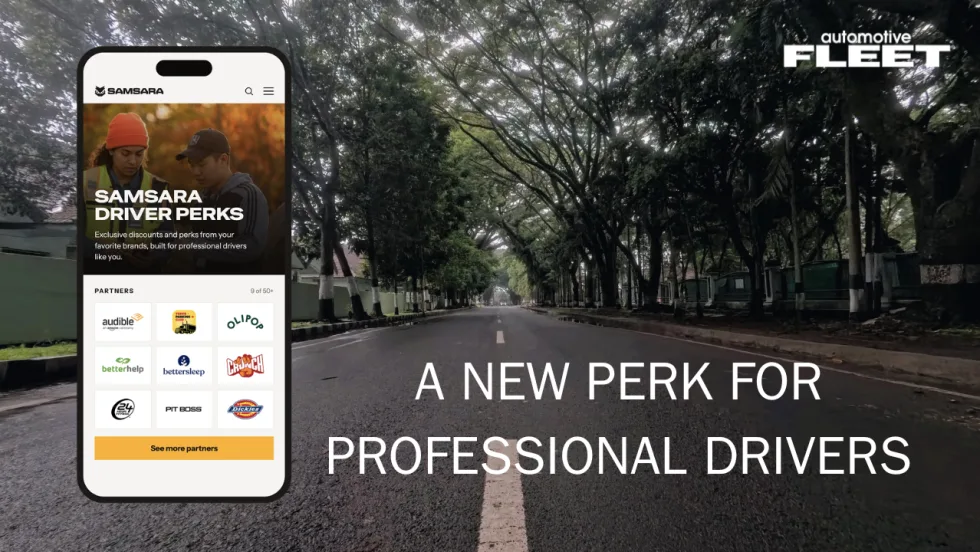
Samsara Driver Perks Adds New Benefit for Corporate Fleet Drivers
The rewards program gives eligible professional drivers access to discounts from more than 50 brands while giving fleets another way to support recruitment, retention, and the driver experience.
Read More →
Inside the Church of Jesus Christ of Latter-day Saints’ Two-Track Telematics Strategy
With 20,000 vehicles and two fundamentally different driver populations, the Church faced a fleet management problem that a single telematics program couldn't solve. How it responded offers a replicable framework for any fleet where one size doesn't fit every driver.
Read More →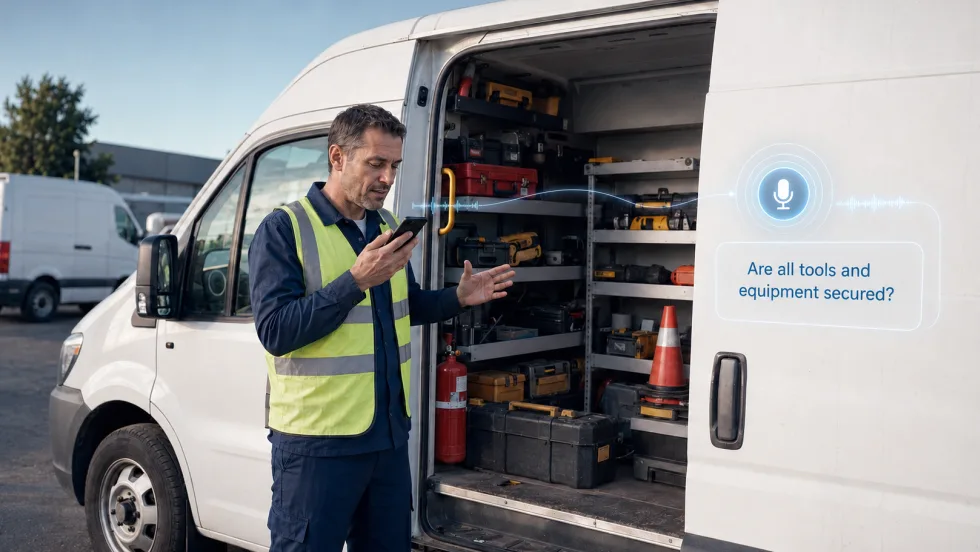
How Conversational AI Can Make Fleet Tasks Easier for Drivers
While most generative AI tools help fleet managers interpret data at their desks, Connex2X is applying voice interaction to tasks behind the wheel.
Read More →
Why Fleets Are Creating Dedicated Fleet Analyst Positions
Are fleet analyst positions the new norm? Listen here to find out.
Read More →
Teletrac Navman Begins Next Chapter as Standalone Private Company
What's new with Teletrac Navman and its new owner?
Read More →