





Related: 2019 Collision Investigation Highlights Continued Dangers of Distracted Driving
Some New Tech Ups the Chances for Distracted Driving
A new report from Progressive explores how certain in-vehicle technology can affect drivers’ focus — either mentally or physically — and therefore, roadway safety.
February 14, 2022
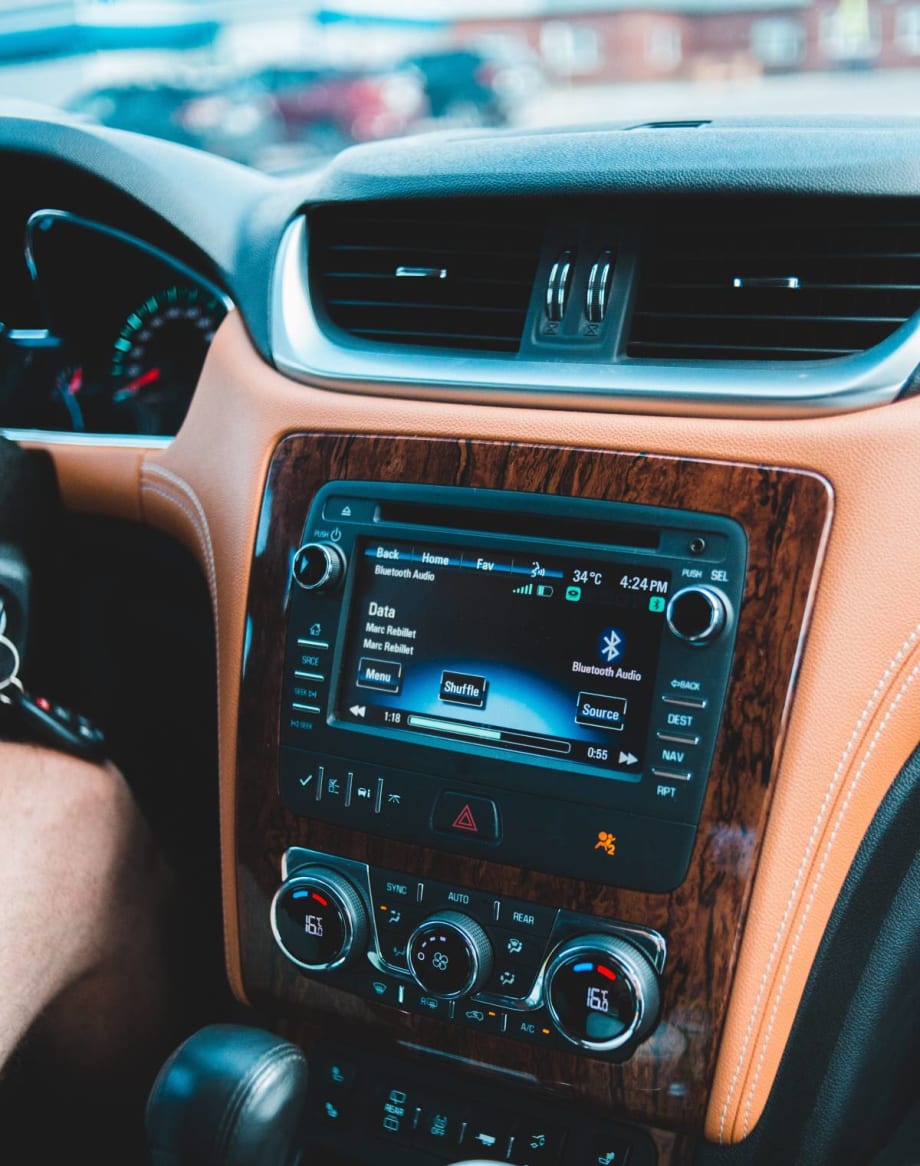
Some of today’s cars have over 200 multifunction buttons, one or more touchscreens, voice commands, and head-up displays — all of which can contribute to driver distraction, experts say.
Photo via pexels.com/Erik Mclean
2 min to read
The percentage of drivers talking on handheld phones decreased from 2.9% in 2019 to 2.6% in 2020, according to the National Highway Traffic Safety Administration (NHTSA). However, it’s more difficult to determine how many motorists are making Bluetooth-enabled hands-free phone calls while behind the wheel.
A recent report from Progressive points to Bluetooth and other new car technologies that may be convenient but aren’t necessarily safe. In fact, some new tech features can make drivers less safe.
Consider, for example, data from Progressive's Snapshot program, which uses an app or plug-in device to personalize car insurance rates based on driving habits. It found that 99% of enrolled drivers used their phone at least once while driving in 2020. The upshot: If studies show that only a small percentage of drivers are using handheld phones, many of them were likely making calls using hands-free technology.
That’s a problem, experts say, because even hands-free calls are a form of cognitive distracted driving.
Dr. David Strayer, a professor of cognition and neural science at the University of Utah who runs the Applied Cognition Lab and conducts distracted driving research for AAA, says a phone call is a phone call, and it takes the same amount of mental effort whether or not it’s hands-free.
But Bluetooth isn’t the only culprit that’s adding to distracted driving. For example, head-up display (HUD) systems project information, like speed and fuel, onto the windshield. Manufacturers claim that this tech reduces distraction and keeps drivers' eyes on the road.
Strayer says it depends on what's being displayed. Collision or blind-spot warnings about some potential hazard are useful. But the systems also allow for texts to pop up — which is just a dangerous distraction.
Finally, in-vehicle infotainment systems are flashier — and potentially more hazardous — than ever. These elaborate in-dash systems allow drivers to access navigation maps and phone operations. They also replace the knobs and dials used for radios, climate control, and other car features. In a vehicle with a touchscreen, changing the radio station or turning up the A/C can require more movements than just the turn of a knob.
Most recently, some vehicles — including several Tesla models — even allow drivers to play video games on the dashboard-mounted screen while the vehicle is in motion.
Some 3,142 people lost their lives to distracted driving on the nation’s roadways in 2019 alone, according to NHTSA.
More Safety

Sponsored•October 1, 2026
Fleet Manager’s Ultimate Playbook: Navigating the New Standard in OEM Connectivity
Rising operating costs, driver safety concerns, and unplanned downtime are putting unprecedented pressure on modern fleets. Discover how fleet managers use embedded OEM connectivity and real-time vehicle data to cut TCO, prevent downtime, and protect drivers without aftermarket telematics hardware.
Read More →
From Driver Well-Being to EV Charging | AF News Recap
Mental health belongs in the fleet safety conversation. This week, we’re looking at five ways fleets can support employee well-being before a crisis, plus Holman’s expansion in Mexico, new one-day Fleet Forward passes, and why EV charging demand is outpacing infrastructure growth.
Read More →
Nexar-Nauto Merger Aims to Give Fleets Better Safety Intelligence Through Larger Driving Dataset
Stefan Heck tells Automotive Fleet that combining more than 10 billion miles of driving history with Nexar's AI models will give fleets deeper insights into driver risk and roadway conditions than either company could provide independently.
Read More →
Don't Wait for a Crisis: 5 Ways to Build Mental Health Into Your Fleet Safety Program
For Suicide Prevention Month, fleet and safety leaders have an opportunity to put mental health where it belongs: at the center of workplace safety.
Read More →
How Camera Data Can Strengthen a Fleet’s Insurance Renewal
Insights from a commercial insurance carrier and a broker show how fleets can turn video telematic data, driver coaching, and improved claims results into a stronger case at insurance renewal.
Read More →
The Safest Fleets Aren’t the Ones with the Most Technology
You’ve made the telematics investment. Here’s how to capture the other half of its value and build the safest fleet on the road.
Read More →
Sponsored•August 7, 2026
Hidden in Plain Sight: Fleet Compliance Risks
Fleet compliance isn't just about having policies — it's about consistently enforcing them. This practical guide reveals six hidden compliance risks common in public sector and shared fleet operations and outlines proven strategies to improve visibility, accountability, and audit readiness
Read More →
NETS Sets 2026 Fleet Safety Benchmark Conference for Indianapolis
The Sept. 15–17 program will feature fleet benchmarking data, case studies, emerging technologies, and implementation strategies while running alongside the NSC Safety Congress & Expo.
Read More →
Off-the-Job Crashes Account for 43% of Employers’ $61.7 Billion Crash Burden
NETS quantifies costs dispersed across fleet, risk, HR, and other departments while providing new per-crash benchmarks for employers.
Read More →
Ram Recalls More Than 1.27 Million 1500 Pickups for Seat Belt Anchor Issue
The recall affects certain 2019-2026 Ram 1500 pickups that may have improperly attached second-row seat belt buckle anchors.
Read More →