




Slick Roads Aren’t the Only Winter Hazards
New data from Farmers Insurance indicate growing claims related to failure-to-yield crashes and vehicle theft during winter months, too.

Photo courtesy of Zion National Park via Wikimedia Commons.

Photo courtesy of Zion National Park via Wikimedia Commons.
While winter weather traditionally challenges drivers with ice- and snow-covered roads, new claims data from Farmers Insurance reveals a seasonal uptick in failure-to-yield crashes and vehicle theft as well.
Farmers Insurance auto claims filed between 2013 and 2016 show that 76% of collision claims caused by skidding on snow or ice occur between December and February. But the recent run of mild winters actually led to a 58% decrease in snow- and ice-related claims last winter (late 2015 into early 2016) compared to the 2013-2014 winter.
Drivers still need to be vigilant on the roads this winter, Farmers cautioned. La Niña is predicted to bring colder temperatures and heavy snowfall to much of the country.
Other hazards have been on the rise in recent winters, too. Claims from collisions resulting from one vehicle failing to yield to an oncoming vehicle climbed 14% since the 2013-2014 winter, and they represented 26% of all collision claims.
Additionally, vehicle theft increased by 9% during the same time period, which now accounts for 25% of all comprehensive claims in the winter.
“Dropping temperatures, especially this year thanks to La Niña, often mean an increase in the number of challenges drivers face due to slick roads, poor visibility, and other hazards,” said Paul Quinn, head of claims customer experience with Farmers Insurance. “However, the data points to the need for drivers to be aware of some hazards that the average person may not associate with the colder winter months but are occurring with an increased frequency.”
Quinn offers the following tips to help drivers navigate the upcoming winter hazards:
Prepare your vehicle for the winter. Check tires and windshield wipers to ensure they’re in good condition, and fill your wiper fluid reservoir with a no-freeze product. Keep extra wiper fluid in your car, along with an ice scraper, a blanket, jumper cables, and other emergency essentials. Finally, check to make sure your front and rear defrosters work before you end up needing them.
Don’t leave a running vehicle unattended. Everybody appreciates a warm car in the winter, but leaving your parked car running, unattended, could lead to vehicle theft — or a ticket. “Puffer” cars are illegal in some cities and states.
Create a clear line of sight. Don’t leave until you’ve cleared all snow and ice off your vehicle, including your windshield and windows. “Peephole driving” through a small cleared spot on your windshield reduces visibility and makes driving more dangerous, especially on icy or snow-packed roads.
Slow down. Tires lose their grip more easily on wet and icy roads, which increases your chances of skidding when braking, turning, or accelerating. Reducing your speed gives you more time to react in case you slide, potentially avoiding a collision.
Recognize the limits of four-wheel and all-wheel drive. All cars, no matter what type of drive they’re equipped with, will still skid on ice, potentially resulting in an accident. If you start skidding during a turn, gently let off on the accelerator and turn the steering wheel in the direction of the slide to help straighten out the car.
Watch out for unique winter hazards. During cold weather, bridges and overpasses are often the first areas to become icy, so use extra caution or plan a route that avoids them. Passing snow plows and sand trucks can also be dangerous. Their drivers’ visibility is often reduced, so their drivers may not see you.
Stopped or stalled in winter weather? Safely consider putting bright markers on your car, avoid overexertion, and don’t run your vehicle for a long time with the windows up. If you need the engine on to stay warm, clear the exhaust pipe of snow and turn the car on every few minutes — just long enough to provide a bit of heat.
More Safety

Nexar-Nauto Merger Aims to Give Fleets Better Safety Intelligence Through Larger Driving Dataset
Stefan Heck tells Automotive Fleet that combining more than 10 billion miles of driving history with Nexar's AI models will give fleets deeper insights into driver risk and roadway conditions than either company could provide independently.
Read More →
Don't Wait for a Crisis: 5 Ways to Build Mental Health Into Your Fleet Safety Program
For Suicide Prevention Month, fleet and safety leaders have an opportunity to put mental health where it belongs: at the center of workplace safety.
Read More →
How Camera Data Can Strengthen a Fleet’s Insurance Renewal
Insights from a commercial insurance carrier and a broker show how fleets can turn video telematic data, driver coaching, and improved claims results into a stronger case at insurance renewal.
Read More →
The Safest Fleets Aren’t the Ones with the Most Technology
You’ve made the telematics investment. Here’s how to capture the other half of its value and build the safest fleet on the road.
Read More →
Hidden in Plain Sight: Fleet Compliance Risks
Fleet compliance isn't just about having policies — it's about consistently enforcing them. This practical guide reveals six hidden compliance risks common in public sector and shared fleet operations and outlines proven strategies to improve visibility, accountability, and audit readiness
Read More →
NETS Sets 2026 Fleet Safety Benchmark Conference for Indianapolis
The Sept. 15–17 program will feature fleet benchmarking data, case studies, emerging technologies, and implementation strategies while running alongside the NSC Safety Congress & Expo.
Read More →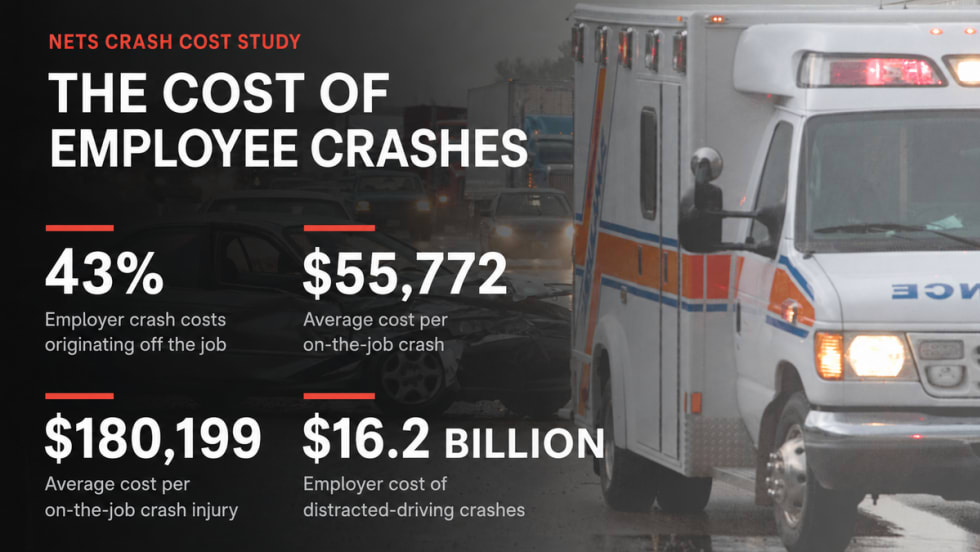
Off-the-Job Crashes Account for 43% of Employers’ $61.7 Billion Crash Burden
NETS quantifies costs dispersed across fleet, risk, HR, and other departments while providing new per-crash benchmarks for employers.
Read More →
Ram Recalls More Than 1.27 Million 1500 Pickups for Seat Belt Anchor Issue
The recall affects certain 2019-2026 Ram 1500 pickups that may have improperly attached second-row seat belt buckle anchors.
Read More →
How Better Visibility Cut Speeding Violations by 48%
Fleet leaders don't need more data, they need clearer visibility into what the data is saying. This case study explores how one utility replaced speeding-event counts with a single metric — miles driven in violation — to strengthen safety and significantly reduce speeding violations.
Read More →
Operation Safe Driver Week: Why the Industry's Oldest Safety Campaign Still Matters to Fleets
A look at how a 2007 enforcement initiative became one of the most consequential weeks on the fleet safety calendar, and what it means for your drivers in 2026.
Read More →