




Safety Tip: Parallel Parking Without Dings or Drama
Esurance breaks down parallel parking into eight simple steps.
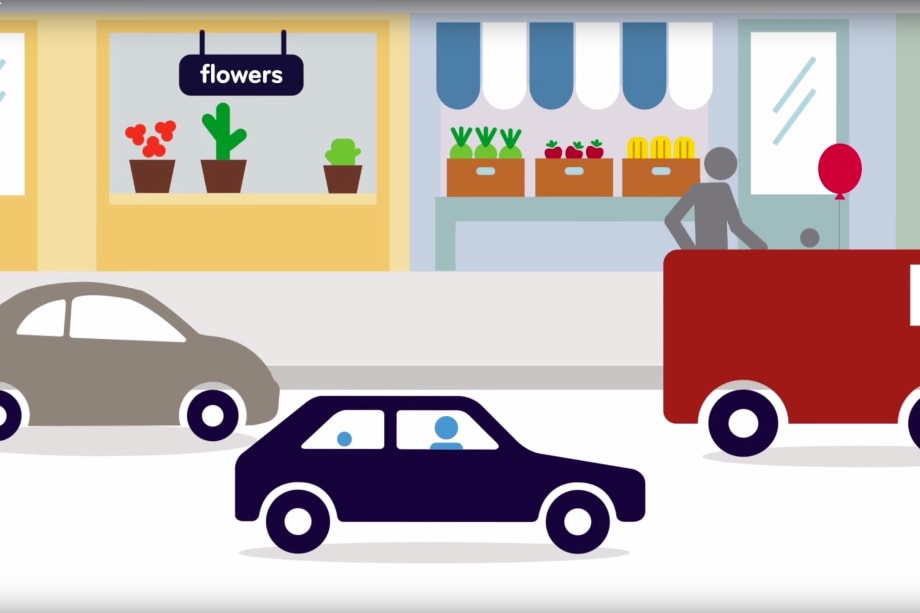

Parallel parking is one of those activities, like public speaking or visiting the dentist, which some people dread and avoid at all costs. But in busy urban environments, such avoidance might mean arriving late to an important business meeting or customer appointment.
For someone driving a vehicle equipped with park assist technology, this sort of phobia is no longer a concern. Technology has come to the rescue. But what if your parallel parking skills need work and your vehicle isn’t equipped with such driver assistance tech? The best approach then is to break down the parallel parking process into individual steps and practice in a stress-free environment. An industrial park on a Saturday or Sunday might be a good place for that.
Esurance recommends these eight steps:
Step 1: Find a space that’s at least 4 to 6 feet longer than your ride.
This will allow plenty of room for both your vehicle and those around you. By remembering these parallel parking dimensions, you’ll prevent dents and scrapes while you straighten out your vehicle (later in the process).
Step 2: Use your turn signal.
Turning on your signal lets the drivers behind you know what’s up, so they can give you plenty of space (and hopefully some patience). With parallel parking, distance matters. After all, it’s something you don't really want an audience for.
Step 3: Align your vehicle with the one in front of the space you want.
This is key in making sure your parallel park is on point. Since it’s hard to correct a parallel park once a mistake has been made, you need to start off on the right foot (or shall we say, wheel?).
Step 4: Double-check your blind spots.
Don’t just rely on your mirrors — turn your entire body and head to make sure there are no obstacles in your way.
Step 5: Start backing into the space.
Once you know your path is clear, begin slowly backing into the space and turn the wheel hard to the right. Be aware of your surroundings, including your proximity to the cars around you.
Step 6: Turn your steering wheel the opposite direction.
When your front seat lines up with the front car’s rear bumper, turn your wheel the other direction to start straightening out.
Step 7: Back into the space (slowly, now) and start straightening out your vehicle.
Allow yourself and other vehicles enough room to transition out of the space once it’s time to leave. Your vehicle should end up about 6 inches from the curb once your parallel park is complete.
Step 8: Give yourself a pat on the back.
To get a better feel for the process, you can watch an Esurance video that depicts and further explains the steps. Just click on the photo or link below the headline to access the video.
More Safety

Nexar-Nauto Merger Aims to Give Fleets Better Safety Intelligence Through Larger Driving Dataset
Stefan Heck tells Automotive Fleet that combining more than 10 billion miles of driving history with Nexar's AI models will give fleets deeper insights into driver risk and roadway conditions than either company could provide independently.
Read More →
Don't Wait for a Crisis: 5 Ways to Build Mental Health Into Your Fleet Safety Program
For Suicide Prevention Month, fleet and safety leaders have an opportunity to put mental health where it belongs: at the center of workplace safety.
Read More →
How Camera Data Can Strengthen a Fleet’s Insurance Renewal
Insights from a commercial insurance carrier and a broker show how fleets can turn video telematic data, driver coaching, and improved claims results into a stronger case at insurance renewal.
Read More →
The Safest Fleets Aren’t the Ones with the Most Technology
You’ve made the telematics investment. Here’s how to capture the other half of its value and build the safest fleet on the road.
Read More →
Hidden in Plain Sight: Fleet Compliance Risks
Fleet compliance isn't just about having policies — it's about consistently enforcing them. This practical guide reveals six hidden compliance risks common in public sector and shared fleet operations and outlines proven strategies to improve visibility, accountability, and audit readiness
Read More →
NETS Sets 2026 Fleet Safety Benchmark Conference for Indianapolis
The Sept. 15–17 program will feature fleet benchmarking data, case studies, emerging technologies, and implementation strategies while running alongside the NSC Safety Congress & Expo.
Read More →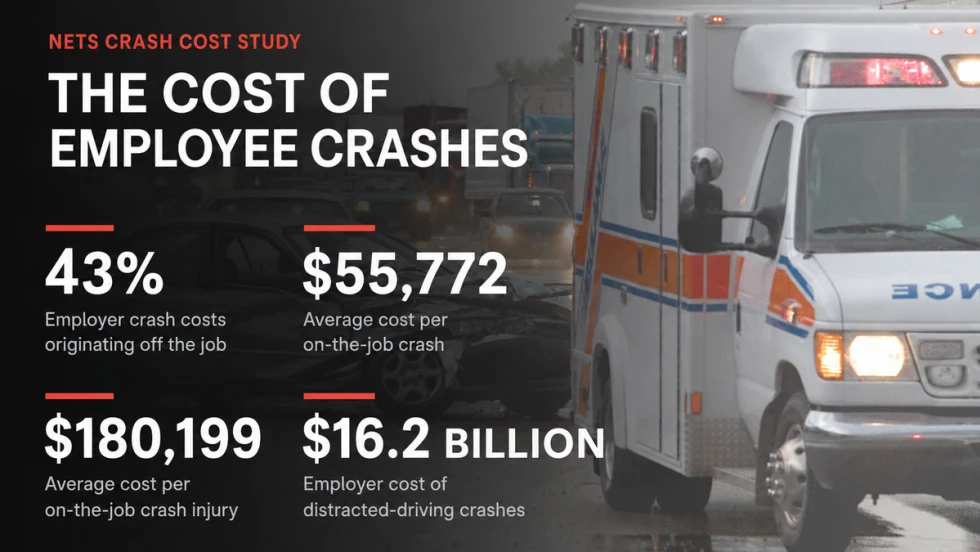
Off-the-Job Crashes Account for 43% of Employers’ $61.7 Billion Crash Burden
NETS quantifies costs dispersed across fleet, risk, HR, and other departments while providing new per-crash benchmarks for employers.
Read More →
Ram Recalls More Than 1.27 Million 1500 Pickups for Seat Belt Anchor Issue
The recall affects certain 2019-2026 Ram 1500 pickups that may have improperly attached second-row seat belt buckle anchors.
Read More →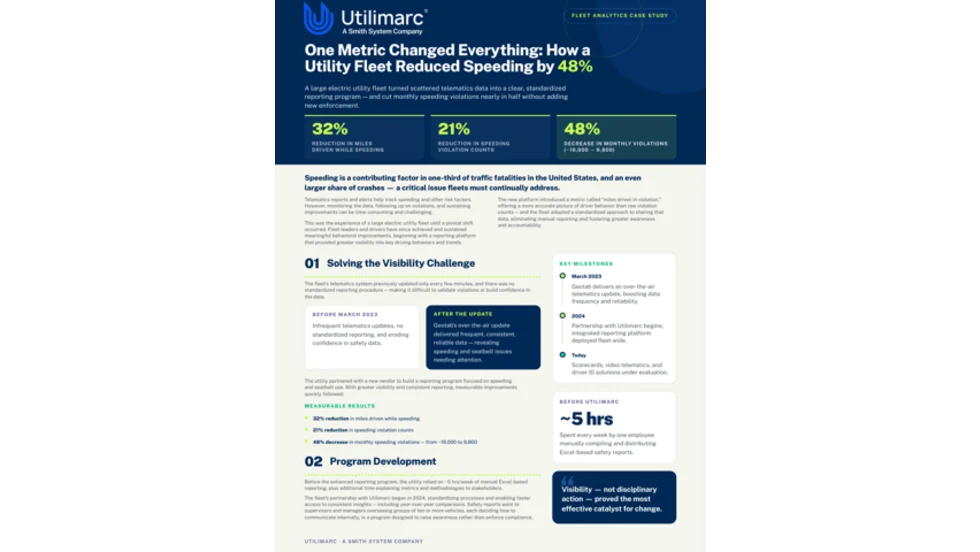
How Better Visibility Cut Speeding Violations by 48%
Fleet leaders don't need more data, they need clearer visibility into what the data is saying. This case study explores how one utility replaced speeding-event counts with a single metric — miles driven in violation — to strengthen safety and significantly reduce speeding violations.
Read More →
Operation Safe Driver Week: Why the Industry's Oldest Safety Campaign Still Matters to Fleets
A look at how a 2007 enforcement initiative became one of the most consequential weeks on the fleet safety calendar, and what it means for your drivers in 2026.
Read More →