




Safety Council Accepting Award Nominations
The 2016 Green Cross for Safety awards, honoring safety excellence, innovation and advocacy, will be handed out May 12 in Chicago.
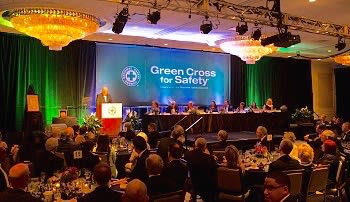
Photo courtesy of the National Safety Council.
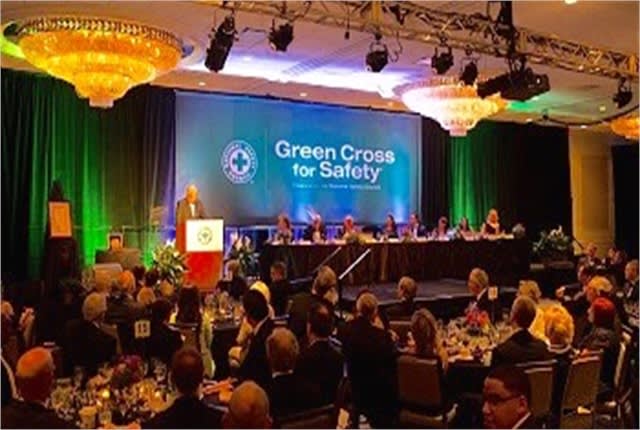
Photo courtesy of the National Safety Council.
The National Safety Council (NSC) is now accepting nominations for the 2016 Green Cross for Safety awards through Jan. 15.
Finalists and award winners will be notified no later than March 2016, the organization said. Awards will be presented in three categories: safety excellence, innovation and advocacy. The awards dinner and program is set for May 12 at Swissôtel in Chicago.
The Green Cross for Safety medal program has celebrated excellence in workplace safety since 2000. But beginning in 2016, the program is expanding to also encompass safety achievements in homes and communities and in transportation, NSC said.
The Safety Excellence Award recognizes an unrelenting pursuit of safety that results in a life-saving and injury-preventing solution. The Safety Innovation Award honors an innovative approach to solving a long-held safety challenge.
Corporations, coalitions and organizations are all eligible for the Safety Excellence Award and the Safety Innovation Award. However, individuals are also eligible for the Safety Innovation Award. The Safety Advocate Award will go to an individual who has made a significant personal impact on a safety issue to raise awareness and prevent further injuries and deaths.
Companies, organizations and individuals outside the U.S. are ineligible.
The nomination data submitted must demonstrate results that have made an impact in the past year, regardless of when the original safety initiative was launched, NSC said. The safety initiative must be relevant and address a safety challenge in society today.
Once submitted, all applications are considered final and ready for review. They will undergo a technical and media review by NSC staff. The top quartile of each award category will be forwarded to the Green Cross Review Committee for consideration. The committee will be composed of people representing all disciplines of safety, NSC said. Committee members will include business leaders, safety advocates, researchers and NSC volunteers such as board members and delegates.
For more information or to submit a nomination, click here.
More Safety

Nexar-Nauto Merger Aims to Give Fleets Better Safety Intelligence Through Larger Driving Dataset
Stefan Heck tells Automotive Fleet that combining more than 10 billion miles of driving history with Nexar's AI models will give fleets deeper insights into driver risk and roadway conditions than either company could provide independently.
Read More →
Don't Wait for a Crisis: 5 Ways to Build Mental Health Into Your Fleet Safety Program
For Suicide Prevention Month, fleet and safety leaders have an opportunity to put mental health where it belongs: at the center of workplace safety.
Read More →
How Camera Data Can Strengthen a Fleet’s Insurance Renewal
Insights from a commercial insurance carrier and a broker show how fleets can turn video telematic data, driver coaching, and improved claims results into a stronger case at insurance renewal.
Read More →
The Safest Fleets Aren’t the Ones with the Most Technology
You’ve made the telematics investment. Here’s how to capture the other half of its value and build the safest fleet on the road.
Read More →
Hidden in Plain Sight: Fleet Compliance Risks
Fleet compliance isn't just about having policies — it's about consistently enforcing them. This practical guide reveals six hidden compliance risks common in public sector and shared fleet operations and outlines proven strategies to improve visibility, accountability, and audit readiness
Read More →
NETS Sets 2026 Fleet Safety Benchmark Conference for Indianapolis
The Sept. 15–17 program will feature fleet benchmarking data, case studies, emerging technologies, and implementation strategies while running alongside the NSC Safety Congress & Expo.
Read More →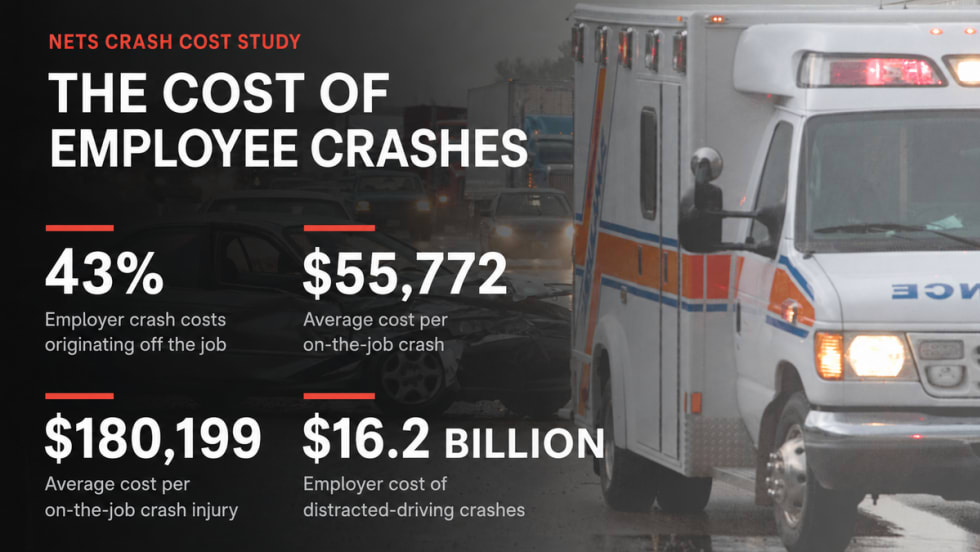
Off-the-Job Crashes Account for 43% of Employers’ $61.7 Billion Crash Burden
NETS quantifies costs dispersed across fleet, risk, HR, and other departments while providing new per-crash benchmarks for employers.
Read More →
Ram Recalls More Than 1.27 Million 1500 Pickups for Seat Belt Anchor Issue
The recall affects certain 2019-2026 Ram 1500 pickups that may have improperly attached second-row seat belt buckle anchors.
Read More →
How Better Visibility Cut Speeding Violations by 48%
Fleet leaders don't need more data, they need clearer visibility into what the data is saying. This case study explores how one utility replaced speeding-event counts with a single metric — miles driven in violation — to strengthen safety and significantly reduce speeding violations.
Read More →
Operation Safe Driver Week: Why the Industry's Oldest Safety Campaign Still Matters to Fleets
A look at how a 2007 enforcement initiative became one of the most consequential weeks on the fleet safety calendar, and what it means for your drivers in 2026.
Read More →