




Roadcheck 2010 Reveals Strong Safety Compliance
WASHINGTON - Results from the Commercial Vehicle Safety Alliance's (CVSA) Roadcheck 2010 reveal that the commercial motor vehicle (CMV) industry is hovering close to the record low out-of-service (OOS) rates set during 2009.
WASHINGTON - Results from the Commercial Vehicle Safety Alliance's (CVSA) Roadcheck 2010 reveal that the commercial motor vehicle (CMV) industry is hovering close to the record low out-of-service (OOS) rates set during 2009.
Additionally, while overall inspection totals are down from the previous year's records, more inspectors participated at more locations in this year's event, CVSA said. This seems to indicate that during 2010, there was a shift to an increasing focus on mobile roadside inspections.
In 2010, roadside inspectors focused on the North American Standard (NAS) Level I inspection, safety belt enforcement, and motorcoach inspections. More than 9,856 CVSA-certified inspectors at 2,482 locations across North America performed 65,327 truck and bus inspections. Of that total, there were 48,970 NAS Level I inspections, the most comprehensive roadside inspection. The total inspection output is a 10.2-percent decrease over the previous record total, and the NAS Level I output is a 14.1-percent decrease over the previous record, both of which occurred in 2009.
"The number of CMV inspections is an indicator that, even in these continued tough economic times, state, provincial, local and federal agencies are committed to enforcing truck and bus safety standards," said CVSA Interim Executive Director Stephen A. Keppler. "Roadside enforcement remains committed to this critically important role in saving lives on North America's highways and helping to provide all travelers a safe and secure place to travel."
[PAGEBREAK]
This year during Roadcheck, approximately 15 trucks or buses were inspected, on average, every minute. During the 72-hour inspection blitz, which took place from Canada to Mexico from June 8-10, drivers were pulled over, asked to show their commercial driver's license, medical examiner's certificate, and record of duty status. Brakes, tires, lights, and every major component of the truck or bus were also examined during Roadcheck.
"While Roadcheck has taken place every year since 1988, it is important to note that roadside inspections occur every day across North America, to the tune of more than 3.8 million in 2009," CVSA said.
CVSA sponsors Roadcheck each year with the Federal Motor Carrier Safety Administration (FMCSA), Canadian Council of Motor Transport Administrators (CCMTA), Transport Canada, and the Secretariat of Communications and Transportation (Mexico).
"Roadcheck has once again successfully reinforced the critical importance of safety, compliance, and crash prevention -- lives depend on both safe and well maintained trucks and safe and well trained drivers," said FMCSA Administrator Anne S. Ferro.
Data from 2010 show the overall vehicle compliance rate at 80.0 percent (80.4 percent in 2009), with an overall driver compliance rate of 95.6 percent (unchanged from last year).
For NAS Level I inspections, the compliance rates were 76.7 percent for vehicles (77.8 percent in 2009) and 96.3 percent for drivers (96.1 percent in 2009). In addition, there were 189 more safety belt violations in 2010 than there were last year (1,159 vs. 970), a 19.5 percent increase.
Inspections of passenger-carrying vehicles resulted in an increased vehicle compliance rate (91.0 percent in 2010 vs. 88.5 percent in 2009) and a driver compliance rate in 2010 that was unchanged from last year (96.4 percent). Hazardous materials inspections resulted in a vehicle compliance rate of 83.7 percent (83.0 percent in 2009) and driver compliance rate of 97.5 percent (97.0 percent). There were 26,605 CVSA decals issued to vehicles that passed the inspection, which was down from the number issued in 2009 (29,972).
[PAGEBREAK]
"Brake-related defects continue to account for half of all out-of-service violations," said CVSA Region V (Canada) President Steve Callahan. "As such, we strongly encourage governments, industry associations, owner-operators, motor carriers and drivers alike to take an active part in the upcoming 2010 Brake Safety Week, September 12-18. We need all industry players to continue working together to achieve a further sustained drop in the OOS rate in the years ahead."
"Every time an inspector checks the brakes, tires, tiedowns, a driver or other items while conducting an inspection, what's in the back of their minds is this -- what I'm doing will save a life. The people who we read about in the news are our family members and we are here to protect them," said CVSA President Buzzy France. "There is no one person, agency or organization that feels we can achieve zero fatalities alone. We need partners to solve this complex problem. All of us have an important role to play."
CVSA is an international not-for-profit organization comprising local, state, provincial, territorial, and federal motor carrier safety officials and industry representatives from the United States, Canada and Mexico.
More Safety

Fleet Manager’s Ultimate Playbook: Navigating the New Standard in OEM Connectivity
Rising operating costs, driver safety concerns, and unplanned downtime are putting unprecedented pressure on modern fleets. Discover how fleet managers use embedded OEM connectivity and real-time vehicle data to cut TCO, prevent downtime, and protect drivers without aftermarket telematics hardware.
Read More →
From Driver Well-Being to EV Charging | AF News Recap
Mental health belongs in the fleet safety conversation. This week, we’re looking at five ways fleets can support employee well-being before a crisis, plus Holman’s expansion in Mexico, new one-day Fleet Forward passes, and why EV charging demand is outpacing infrastructure growth.
Read More →
Nexar-Nauto Merger Aims to Give Fleets Better Safety Intelligence Through Larger Driving Dataset
Stefan Heck tells Automotive Fleet that combining more than 10 billion miles of driving history with Nexar's AI models will give fleets deeper insights into driver risk and roadway conditions than either company could provide independently.
Read More →
Don't Wait for a Crisis: 5 Ways to Build Mental Health Into Your Fleet Safety Program
For Suicide Prevention Month, fleet and safety leaders have an opportunity to put mental health where it belongs: at the center of workplace safety.
Read More →
How Camera Data Can Strengthen a Fleet’s Insurance Renewal
Insights from a commercial insurance carrier and a broker show how fleets can turn video telematic data, driver coaching, and improved claims results into a stronger case at insurance renewal.
Read More →
The Safest Fleets Aren’t the Ones with the Most Technology
You’ve made the telematics investment. Here’s how to capture the other half of its value and build the safest fleet on the road.
Read More →
Hidden in Plain Sight: Fleet Compliance Risks
Fleet compliance isn't just about having policies — it's about consistently enforcing them. This practical guide reveals six hidden compliance risks common in public sector and shared fleet operations and outlines proven strategies to improve visibility, accountability, and audit readiness
Read More →
NETS Sets 2026 Fleet Safety Benchmark Conference for Indianapolis
The Sept. 15–17 program will feature fleet benchmarking data, case studies, emerging technologies, and implementation strategies while running alongside the NSC Safety Congress & Expo.
Read More →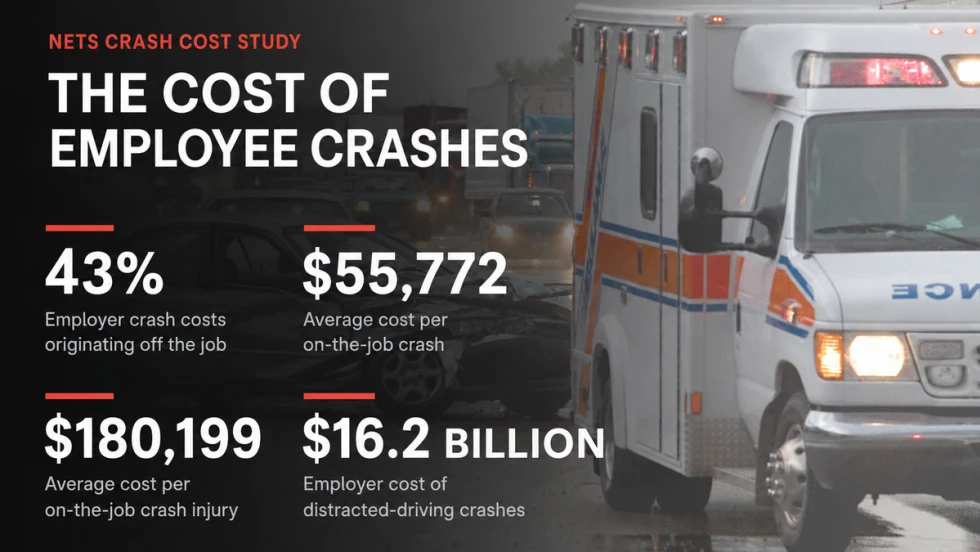
Off-the-Job Crashes Account for 43% of Employers’ $61.7 Billion Crash Burden
NETS quantifies costs dispersed across fleet, risk, HR, and other departments while providing new per-crash benchmarks for employers.
Read More →
Ram Recalls More Than 1.27 Million 1500 Pickups for Seat Belt Anchor Issue
The recall affects certain 2019-2026 Ram 1500 pickups that may have improperly attached second-row seat belt buckle anchors.
Read More →