




'Roadcheck 2009' Finds Better Safety Compliance
WASHINGTON, D.C. --- The Commercial Vehicle Safety Alliance (CVSA) said its Roadcheck 2009's record total of overall inspections and Level I inspections showed significant declines in vehicle and driver out-of-service rates, as well as a significant drop in safety belt violations.
WASHINGTON, D.C. --- The Commercial Vehicle Safety Alliance (CVSA) said its Roadcheck 2009's record total of overall inspections and Level I inspections showed significant declines in vehicle and driver out-of-service rates, as well as a significant drop in safety belt violations.
Roadcheck is the largest targeted enforcement program on commercial vehicles in the world. This year, approximately 17 trucks or buses were inspected, on average, every minute from Canada to Mexico during the 72-hour period from June 2-4, 2009. The roadside inspectors focused on the North American Standard (NAS) Level I Inspection, safety belt enforcement, motorcoach and bus safety compliance, and Unified Carrier Registration compliance.
A total of 9,700 CVSA- and Federal Motor Carrier Safety Administration-certified inspectors at 2,148 locations across North America performed a record 72,782 truck and bus inspections. Of that total, there were 57,013 NAS Level I inspections, the most comprehensive roadside inspection. Both of these outputs are significant increases over previous records for the 22-year event. The total inspection output is a 7.1 percent increase over the previous record (2008), and the NAS Level I output is an 8.9 percent increase (2008).
Data show the highest overall vehicle compliance rate -- 80.4 percent -- since 1996, and the highest overall driver compliance rate -- 95.7 percent -- ever. For NAS Level I inspections, the compliance rates of 77.8 percent (vehicles) and 96.1 percent (drivers) were both records for Roadcheck, and represented 7.1 and 20.4 percent improvements respectively over last year's totals.
In addition, safety belt violations were reduced in 2009 by 276 (1,246 to 970), a 22.2 percent improvement over last year. Inspections of passenger-carrying vehicles resulted in a vehicle compliance rate of 88.5 percent and a driver compliance rate of 96.4 percent, both improvements (5.7 percent for vehicles and 20 percent for drivers) over last year's totals. There were 29,972 CVSA Decals issued to vehicles that passed the inspection.
"The commercial motor vehicle industry is proving the old adage that it pays to be safe," said Darren Christle, CVSA's president. "If you look at the data it clearly shows when carriers prepare for safety they will benefit not only by avoiding fines but by saving lives. It can be said that Roadcheck 2009 saved 17 lives and helped to avoid 307 injuries. Over the course of an entire year that equals 2,068 lives saved and 37,352 injuries avoided. By any measure those are big numbers, and the enforcement community should be proud of its accomplishments in this regard."
"The positive results of this year's Roadcheck program reinforce the importance of federal, state and local enforcement partners working together to keep our roads safe and save lives," said FMCSA Acting Deputy Administrator Rose McMurray. "The data shows that on key measures of safety performance, such as driver and vehicle compliance with safety requirements and seat belt usage, the commercial motor carrier industry is demonstrating record improvements. FMCSA regards the annual CVSA Roadcheck invaluable as we together strive to ensure our highways and roads are safer for every traveler."
CVSA sponsors Roadcheck each year with the Federal Motor Carrier Safety Administration, Canadian Council of Motor Transport Administrators (CCMTA), Transport Canada, and the Secretariat of Communications and Transportation (Mexico).
CVSA is an international not-for-profit organization comprising local, state, provincial, territorial and federal motor carrier safety officials and industry representatives from the United States, Canada and Mexico.
More Safety

Fleet Manager’s Ultimate Playbook: Navigating the New Standard in OEM Connectivity
Rising operating costs, driver safety concerns, and unplanned downtime are putting unprecedented pressure on modern fleets. Discover how fleet managers use embedded OEM connectivity and real-time vehicle data to cut TCO, prevent downtime, and protect drivers without aftermarket telematics hardware.
Read More →
From Driver Well-Being to EV Charging | AF News Recap
Mental health belongs in the fleet safety conversation. This week, we’re looking at five ways fleets can support employee well-being before a crisis, plus Holman’s expansion in Mexico, new one-day Fleet Forward passes, and why EV charging demand is outpacing infrastructure growth.
Read More →
Nexar-Nauto Merger Aims to Give Fleets Better Safety Intelligence Through Larger Driving Dataset
Stefan Heck tells Automotive Fleet that combining more than 10 billion miles of driving history with Nexar's AI models will give fleets deeper insights into driver risk and roadway conditions than either company could provide independently.
Read More →
Don't Wait for a Crisis: 5 Ways to Build Mental Health Into Your Fleet Safety Program
For Suicide Prevention Month, fleet and safety leaders have an opportunity to put mental health where it belongs: at the center of workplace safety.
Read More →
How Camera Data Can Strengthen a Fleet’s Insurance Renewal
Insights from a commercial insurance carrier and a broker show how fleets can turn video telematic data, driver coaching, and improved claims results into a stronger case at insurance renewal.
Read More →
The Safest Fleets Aren’t the Ones with the Most Technology
You’ve made the telematics investment. Here’s how to capture the other half of its value and build the safest fleet on the road.
Read More →
Hidden in Plain Sight: Fleet Compliance Risks
Fleet compliance isn't just about having policies — it's about consistently enforcing them. This practical guide reveals six hidden compliance risks common in public sector and shared fleet operations and outlines proven strategies to improve visibility, accountability, and audit readiness
Read More →
NETS Sets 2026 Fleet Safety Benchmark Conference for Indianapolis
The Sept. 15–17 program will feature fleet benchmarking data, case studies, emerging technologies, and implementation strategies while running alongside the NSC Safety Congress & Expo.
Read More →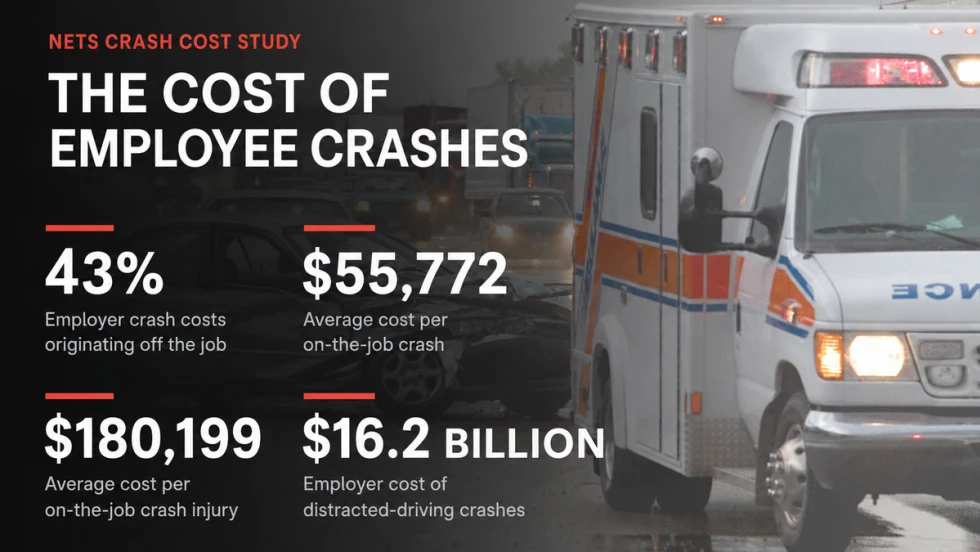
Off-the-Job Crashes Account for 43% of Employers’ $61.7 Billion Crash Burden
NETS quantifies costs dispersed across fleet, risk, HR, and other departments while providing new per-crash benchmarks for employers.
Read More →
Ram Recalls More Than 1.27 Million 1500 Pickups for Seat Belt Anchor Issue
The recall affects certain 2019-2026 Ram 1500 pickups that may have improperly attached second-row seat belt buckle anchors.
Read More →