





Want More? Busting Down Some Media Myths About EVs
Rivian and Volkswagen Group Announce Plans for Joint Venture
This partnership with Volkswagen is expected to build on Rivian's software and electrical architecture to create an SDV technology platform.
June 28, 2024
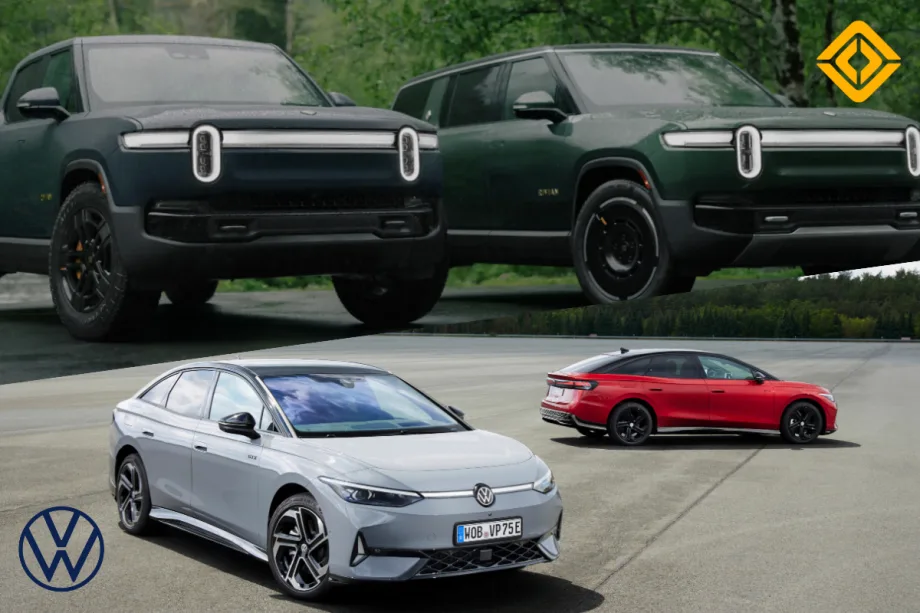
Rivian's in-market zonal hardware design and technology platform are expected to serve as the foundation for future SDV development, which will be applied to both companies' vehicles.
Photo: Rivian Newsroom/Volkswagen Newsroom/AF
3 min to read
Rivian Automotive and Volkswagen Group are joining forces. The two automakers announced their intention to form an equally controlled and owned joint venture to create software-defined vehicle (SDV) platforms for the companies' future electric vehicles. An SDV is any vehicle that enables new features and manages operations primarily through software.
The partnership, anticipated to accelerate software development for Rivian and Volkswagen, is expected to allow both companies to combine their complementary strengths and lower vehicle costs by increasing scale and innovation globally.
Both companies aim to launch vehicles benefiting from the technology created within the joint venture in the second half of the decade, which could help with integrating more electric vehicles into commercial fleets in the future. In the short term, the joint venture is expected to enable Volkswagen Group to utilize Rivian's existing electrical architecture and software platform
"Through our cooperation, we will bring the best solutions to our vehicles faster and at lower cost. [...] The partnership fits seamlessly with our existing software strategy, our products, and partnerships. We are strengthening our technology profile and our competitiveness," Olive Blume, CEO of Volkswagen Group, said.

Oliver Blume, CEO of Volkswagen Group, and RJ Scaringe, Founder and CEO of Rivian, announce joint venture plans.
Photo: Rivian Newsroom
Rivian's in-market zonal hardware design and technology platform are expected to serve as the foundation for future SDV development, which will be applied to both companies' electric vehicles. Rivian plans to contribute its electrical architecture expertise and license existing intellectual property rights to the joint venture.
"Since the earliest days of Rivian, we have been focused on developing highly differentiated technology, and it's exciting that one of the world's largest and most respected automotive companies has recognized this," RJ Scaringe, Founder and CEO of Rivian, said. "Rivian was created to help the world transition away from fossil fuels through compelling products and services, and this partnership is beautifully aligned with that mission."
Volkswagen Group to Invest in Rivian
Volkswagen Group plans to invest $5 billion in Rivian to support the strategic partnership's vision.
Initially, Volkswagen Group will invest $1 billion in Rivian through an unsecured convertible note that will convert into Rivian's common stock subject to certain conditions upon receiving regulatory approvals and reaching December 1, 2024. Volkswagen Group is expected to invest a further $4 billion in the transaction.
"Not only is this partnership expected to bring our software and associated zonal architecture to an even broader market through Volkswagen Group's global reach, but this partnership also is expected to help secure our capital needs for substantial growth," Scaringe said.
Joint Venture Plans for Q4 Formation
Over the past months, work has been done to test that Rivian's electrical architecture and software are compatible with Volkswagen Group's vehicles.
The partnership aims to accelerate Volkswagen Group's SDV plans and transition to a pure zonal architecture. Each company will continue to operate their respective vehicle businesses separately.
The companies expect the completion of the joint venture formation in the fourth quarter of 2024.
More Operations
Here's When You Should Make an Exception to Fleet Policy
Fleet policies are designed to create consistency, but not every driver or situation fits neatly within standard rules.
Read More →
AI-Native or AI-Acquired: What Should Fleet Managers Look for in an AI Platform?
Six questions can help fleet managers look beyond AI marketing claims to evaluate integration, data access, and real-world operational performance.
Read More →
Sponsored•October 14, 2026
A buyer's guide to fleet management software in 2027
Buying fleet management software in 2027 means looking beyond features and price. As fleet operations, technology and expectations evolve, this guide explores what today’s fleet professionals should consider when choosing a system that can deliver value now and adapt to what comes next.
Read More →

What Will Shape the Next Era of Fleet Management?
EVs, AI, and autonomous vehicles are reshaping fleet management. Discover what’s ahead—and how fleet leaders can prepare for the next era.
Read More →
How Fleets Can Recruit and Train Veterans for Technician Roles
Here's how the technician shortage has affected uptime for fleets, and what to do about it.
Read More →
Avis Budget Group Deploys Neology Toll Management Technology Across Major Brands
Neology’s neoFleet platform will manage toll transactions and toll-authority operations for vehicles across Avis, Budget, Payless, Budget Truck and Zipcar.
Read More →
Fleet Personal-Use Charges Edge Higher in 2026
Nearly eight in 10 surveyed fleets allow personal use of company vehicles, while just over half of respondents report charging employees for the privilege.
Read More →
The Future of Fleet + What’s Changing Right Now | AF News Recap
Could developments overseas offer a preview of what’s coming for U.S. fleets? This week, we’re looking at the future of AI, autonomy, and electrification, plus Ford Pro’s new certified pre-owned program, smarter vehicle offboarding, and a new way for fleets to manage toll expenses.
Read More →
How to Handle Vehicle Offboarding
What do fleet managers need to do when a driver leaves?
Read More →
Sponsored•October 1, 2026
Fleet Manager’s Ultimate Playbook: Navigating the New Standard in OEM Connectivity
Rising operating costs, driver safety concerns, and unplanned downtime are putting unprecedented pressure on modern fleets. Discover how fleet managers use embedded OEM connectivity and real-time vehicle data to cut TCO, prevent downtime, and protect drivers without aftermarket telematics hardware.
Read More →