




Rinspeed Concept Car Features Retractable Steering Wheel
The Rinspeed Etos self-driving concept car, on display at the Consumer Electronics Show, will feature ZF TRW’s latest automated driving and advanced occupant safety technologies.
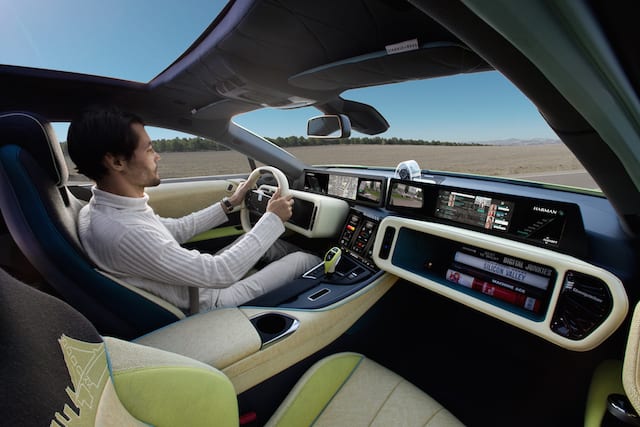
Image courtesy of Rinspeed.
Image courtesy of Rinspeed.
The Rinspeed Etos concept car, set to debut at the 2016 Consumer Electronics Show (CES) this week, is expected to highlight such automated driving and advanced occupant safety technologies as a retractable steering wheel and a roof air bag.
Rinspeed, a Swiss automotive company, chose a BMW i8 plug-in hybrid vehicle as the foundation for its self-driving concept car. The Etos is equipped with ZF TRW’s retractable steering wheel, which offers such functions as hands-on/hands-off detection to help support the driver during automated driving situations.
“The steering wheel system opens up a world of possibilities to the driver,” explained Guido Hirzmann, a ZF TRW group leader specializing in new technology and mechatronics. “By utilizing a driver mode manager (DMM) display located at the top of the steering wheel, the driver can choose whether to drive the vehicle himself or hand control over to the vehicle. In automated mode, the driver can simply fold the steering wheel and create more space for carrying out other activities or relaxation.”
During automated driving, the driver will no longer have to monitor the system. However, he or she will remain responsible for taking back control of the vehicle at any time when prompted. Driver monitoring is therefore a critical part of the development process. At CES, ZF TRW will demonstrate the multi-faceted interaction between human and machine, advancing new concepts in the realm of human-machine interface (HMI), the company said.
ZF TRW’s retractable steering wheel can provide more interior design options and permit a more customized environment for the driver, the company said. Additionally, the design and minimized space in the instrument panel allows the packaging of frontal air bags into the roof area.
“Our roof airbag, which is now in series production, is an effective solution which, in addition to offering enhanced styling flexibility, does not compromise occupant safety performance compared to conventional frontal airbag technologies,” said Dirk Schultz, engineering director of inflatable restraint systems for ZF TRW. “Upon deployment, the bag unfolds along the windscreen in front of the seat occupant, helping to restrain front seat passengers of varying shapes and sizes.”
In addition to the steering wheel and roof air bag, ZF TRW’s seat belt webbing is also fitted to the Etos.
“In the coming decade, our technologies will decisively shape the path towards autonomous driving,” said Stefan Sommer, ZF’s CEO. “Our goal is to enable automated driving functions across all vehicle segments. Only through high market penetration can we make a real difference to overall road safety.”
ZF TRW is the active and passive safety technology division of ZF Friedrichshafen AG. ZF completed its acquisition of TRW Automotive in May 2015.
CES 2016 will be held Jan. 6-9 in Las Vegas.
More Safety

Nexar-Nauto Merger Aims to Give Fleets Better Safety Intelligence Through Larger Driving Dataset
Stefan Heck tells Automotive Fleet that combining more than 10 billion miles of driving history with Nexar's AI models will give fleets deeper insights into driver risk and roadway conditions than either company could provide independently.
Read More →
Don't Wait for a Crisis: 5 Ways to Build Mental Health Into Your Fleet Safety Program
For Suicide Prevention Month, fleet and safety leaders have an opportunity to put mental health where it belongs: at the center of workplace safety.
Read More →
How Camera Data Can Strengthen a Fleet’s Insurance Renewal
Insights from a commercial insurance carrier and a broker show how fleets can turn video telematic data, driver coaching, and improved claims results into a stronger case at insurance renewal.
Read More →
The Safest Fleets Aren’t the Ones with the Most Technology
You’ve made the telematics investment. Here’s how to capture the other half of its value and build the safest fleet on the road.
Read More →
Hidden in Plain Sight: Fleet Compliance Risks
Fleet compliance isn't just about having policies — it's about consistently enforcing them. This practical guide reveals six hidden compliance risks common in public sector and shared fleet operations and outlines proven strategies to improve visibility, accountability, and audit readiness
Read More →
NETS Sets 2026 Fleet Safety Benchmark Conference for Indianapolis
The Sept. 15–17 program will feature fleet benchmarking data, case studies, emerging technologies, and implementation strategies while running alongside the NSC Safety Congress & Expo.
Read More →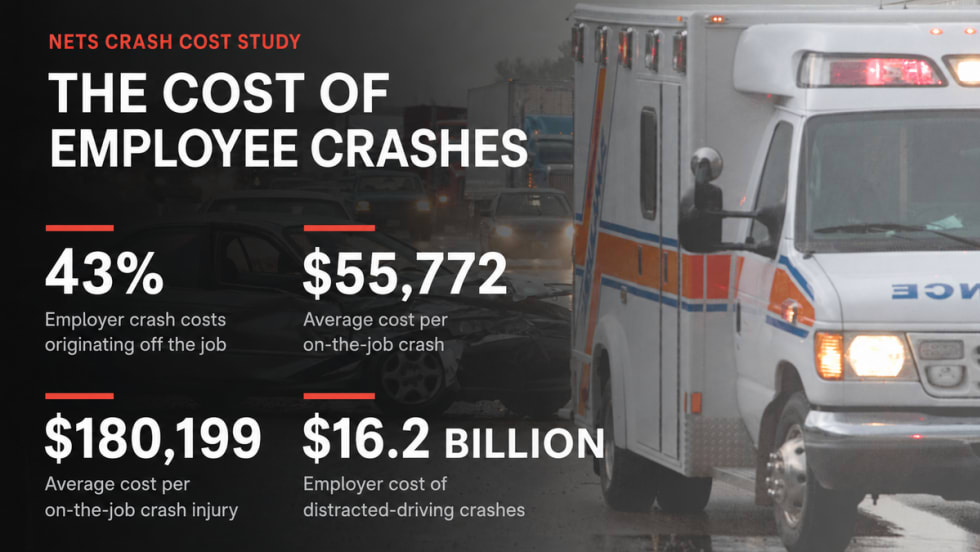
Off-the-Job Crashes Account for 43% of Employers’ $61.7 Billion Crash Burden
NETS quantifies costs dispersed across fleet, risk, HR, and other departments while providing new per-crash benchmarks for employers.
Read More →
Ram Recalls More Than 1.27 Million 1500 Pickups for Seat Belt Anchor Issue
The recall affects certain 2019-2026 Ram 1500 pickups that may have improperly attached second-row seat belt buckle anchors.
Read More →
How Better Visibility Cut Speeding Violations by 48%
Fleet leaders don't need more data, they need clearer visibility into what the data is saying. This case study explores how one utility replaced speeding-event counts with a single metric — miles driven in violation — to strengthen safety and significantly reduce speeding violations.
Read More →
Operation Safe Driver Week: Why the Industry's Oldest Safety Campaign Still Matters to Fleets
A look at how a 2007 enforcement initiative became one of the most consequential weeks on the fleet safety calendar, and what it means for your drivers in 2026.
Read More →