




Researchers Zero in on Self-Driving Car Interiors
Automotive supplier Faurecia and Stanford University join forces to explore innovative ways to keep autonomous vehicle occupants comfortable, confident and engaged.

Design illustration courtesy of Faurecia.
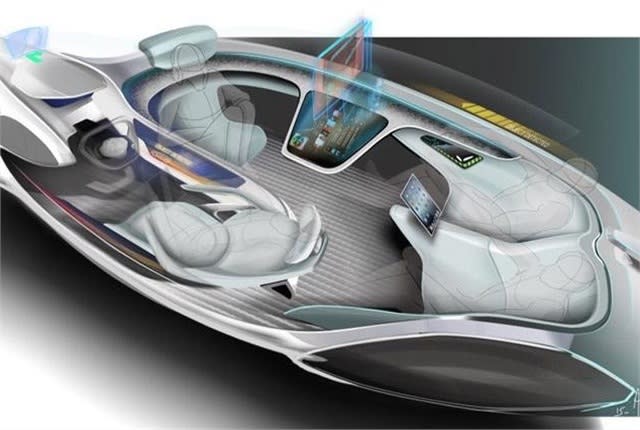
Design illustration courtesy of Faurecia.
Automotive supplier Faurecia is teaming with Stanford University to study potential behavioral changes in autonomous vehicle occupants and explore how technology and design can improve their travel experience.
Headquartered in France, Faurecia has operations in 34 countries. The company’s North American headquarters are in Auburn Hills, Mich.
Faurecia is already working with Stanford University’s Center for Design Research to identify ways to improve occupant confidence in autonomous vehicle technology and to allay potential apprehensions.
"In partnering with Faurecia, we are taking the industry's first steps toward anticipating and averting problems that autonomous car drivers may encounter in their transition from active controllers to multi-tasking occupants of vehicles," explained David Sirkin of the Stanford Center for Design Research. "While the industry often considers the new technologies required to keep autonomous cars safely on course, these physiological issues will require their own approaches to vehicle design and engineering."
Research suggests that advanced driver assistance system warnings can help keep drivers aware of what the vehicle is doing and help instill confidence – as long as those alert interfaces aren’t overly complicated. Such warnings are also critical to help keep the driver alert and prepared for a needed transfer of vehicle control.
“Providing information in new ways that easily attract attention and effectively increase the driver’s situation awareness must be explored,” Faurecia said.
Researchers are also exploring new vehicle interior designs that better lend themselves to driver reading, socializing and working while the vehicle is driving itself. Prevention of motion sickness is another topic of concern.
According to Faurecia, these and other considerations will take an increasingly important role in the future development of autonomous transportation, with more attention placed on what's happening inside the vehicle.
“As the automotive industry continues its march toward autonomous vehicles, most of its efforts have been focused on creating the technology that will enable auto-pilot functionality,” said Rob Huber, vice president of innovation for Faurecia. “While this is an essential foundation, Faurecia is prioritizing a parallel development track focused on how we enhance the mobility experience by improving life-on-board, making comfort, customization and connectivity a priority.”
At the Connected Car Expo in Los Angeles, Faurecia discussed potential technology approaches to autonomous vehicle interior systems. The company also demonstrated Active Wellness, a seating system developed to improve the comfort and well being of vehicle occupants.
Active Wellness can detect a driver’s stress levels and other physical responses by measuring heart and breathing patterns through sensors integrated into the seat. Based on these measurements, the system can initiate countermeasures – for example, employing a specific massage therapy or increasing seating ventilation – to improve the driver’s comfort level. Ultimately, Active Wellness may reduce stress among connected or autonomous car occupants, according to Faurecia.
“Active Wellness is one of the ways Faurecia is already pursuing new functionalities and designs in seating and interiors to address emerging issues related to driving connected/autonomous vehicles,” Huber said.
More Safety

Nexar-Nauto Merger Aims to Give Fleets Better Safety Intelligence Through Larger Driving Dataset
Stefan Heck tells Automotive Fleet that combining more than 10 billion miles of driving history with Nexar's AI models will give fleets deeper insights into driver risk and roadway conditions than either company could provide independently.
Read More →
Don't Wait for a Crisis: 5 Ways to Build Mental Health Into Your Fleet Safety Program
For Suicide Prevention Month, fleet and safety leaders have an opportunity to put mental health where it belongs: at the center of workplace safety.
Read More →
How Camera Data Can Strengthen a Fleet’s Insurance Renewal
Insights from a commercial insurance carrier and a broker show how fleets can turn video telematic data, driver coaching, and improved claims results into a stronger case at insurance renewal.
Read More →
The Safest Fleets Aren’t the Ones with the Most Technology
You’ve made the telematics investment. Here’s how to capture the other half of its value and build the safest fleet on the road.
Read More →
Hidden in Plain Sight: Fleet Compliance Risks
Fleet compliance isn't just about having policies — it's about consistently enforcing them. This practical guide reveals six hidden compliance risks common in public sector and shared fleet operations and outlines proven strategies to improve visibility, accountability, and audit readiness
Read More →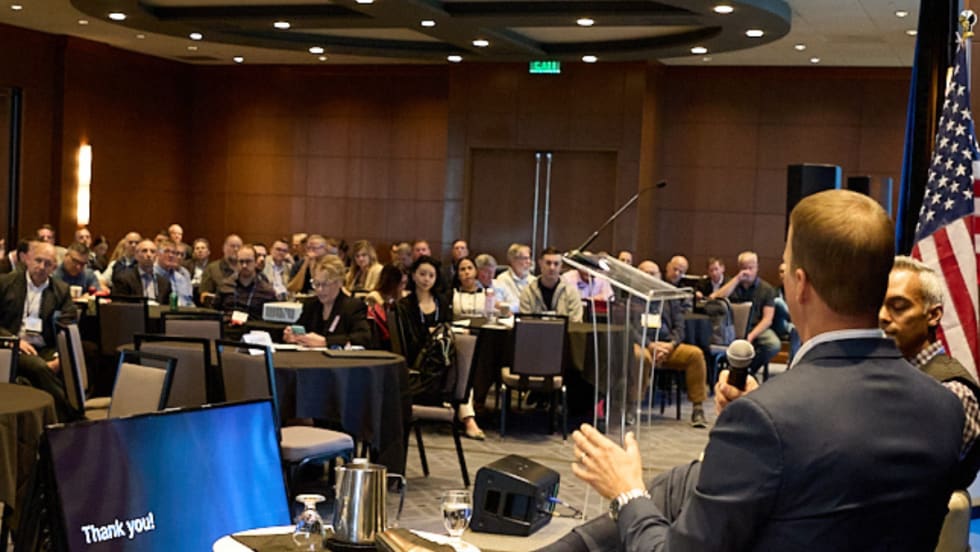
NETS Sets 2026 Fleet Safety Benchmark Conference for Indianapolis
The Sept. 15–17 program will feature fleet benchmarking data, case studies, emerging technologies, and implementation strategies while running alongside the NSC Safety Congress & Expo.
Read More →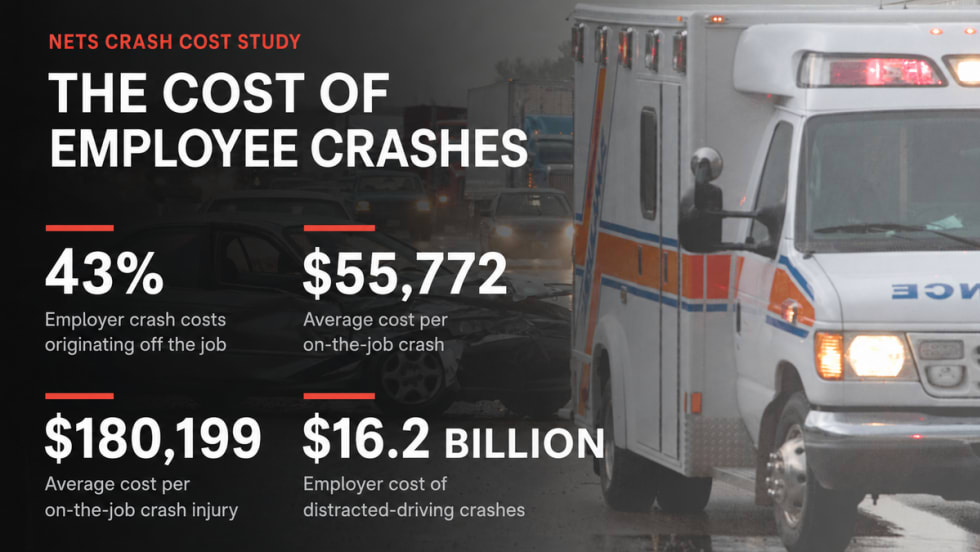
Off-the-Job Crashes Account for 43% of Employers’ $61.7 Billion Crash Burden
NETS quantifies costs dispersed across fleet, risk, HR, and other departments while providing new per-crash benchmarks for employers.
Read More →
Ram Recalls More Than 1.27 Million 1500 Pickups for Seat Belt Anchor Issue
The recall affects certain 2019-2026 Ram 1500 pickups that may have improperly attached second-row seat belt buckle anchors.
Read More →
How Better Visibility Cut Speeding Violations by 48%
Fleet leaders don't need more data, they need clearer visibility into what the data is saying. This case study explores how one utility replaced speeding-event counts with a single metric — miles driven in violation — to strengthen safety and significantly reduce speeding violations.
Read More →
Operation Safe Driver Week: Why the Industry's Oldest Safety Campaign Still Matters to Fleets
A look at how a 2007 enforcement initiative became one of the most consequential weeks on the fleet safety calendar, and what it means for your drivers in 2026.
Read More →