




Researchers Explore Use of Virtual Traffic Lights
Generated through connected vehicle technology, the virtual signals would display on windshields and take into account real-time traffic conditions to avert unnecessary delays.
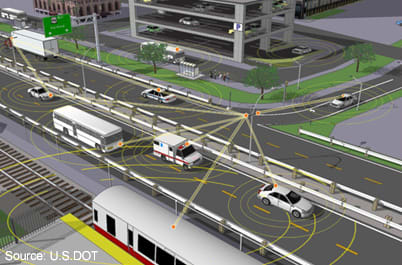
Connected vehicle technology image courtesy of U.S. Department of Transportation.
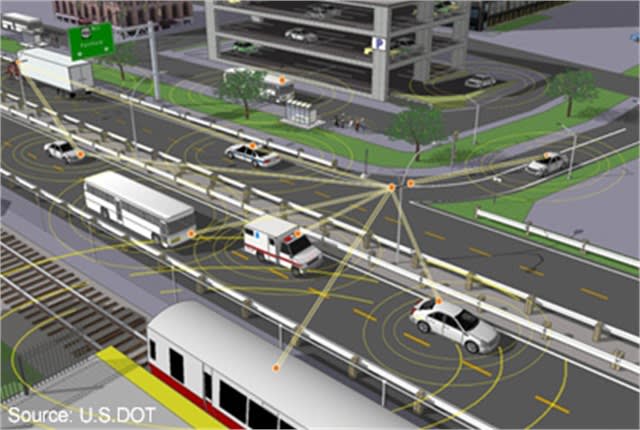
Connected vehicle technology image courtesy of U.S. Department of Transportation.
Researchers at Carnegie Mellon University are exploring the use of connected vehicle technology to generate virtual traffic lights that reduce traffic congestion.
Such a virtual traffic signal, reflecting real-time traffic conditions, would be electronically displayed on a vehicle’s windshield as the driver approaches the intersection.
“When the driver is looking through the windshield, they’ll see that going straight is a green light and turning right is a red light,” explains Ozan Tonguz, an electrical and computer engineering professor at the university. “It’s a seamless process; the driver does not get involved in this decision making.”
The virtual traffic light would turn off once the driver passed through the intersection. A Carnegie Mellon University start-up known as Virtual Traffic Lights LLC is working on commercializing this patented technology for large-scale deployment in major cities around the world.
Virtual traffic lights have the potential to mitigate traffic congestion, reduce commute times, decrease the carbon footprint of vehicles, and lead to a greener environment, according to researchers.
To view a CNN video report on the project, click here.
More Safety

Operation Safe Driver Week: Why the Industry's Oldest Safety Campaign Still Matters to Fleets
A look at how a 2007 enforcement initiative became one of the most consequential weeks on the fleet safety calendar, and what it means for your drivers in 2026.
Read More →
Nexar-Nauto Merger Aims to Give Fleets Better Safety Intelligence Through Larger Driving Dataset
Stefan Heck tells Automotive Fleet that combining more than 10 billion miles of driving history with Nexar's AI models will give fleets deeper insights into driver risk and roadway conditions than either company could provide independently.
Read More →
From Silos to Solutions: Relationship Management for Safer Fleets
From telematics adoption and driver accountability to policy consistency and risk mitigation, this episode breaks down what it really takes to build a safer fleet culture without slowing business down.
Read More →
IIHS Launches First Commercial Vehicle Safety Evaluations
The Insurance Institute for Highway Safety has begun evaluating heavy-duty pickups and cargo vans for driver protection. Which models earned top marks?
Read More →
Reducing Risk by Eliminating Phone Use Behind the Wheel
Hosted with the cofounder of Lifesaver Mobile, this episode addresses phone use behind the wheel and how to design a driving environment that actually helps prevents accidents.
Read More →
Cameras, Safety and Insurance: From Reactive Claims to Real-Time Prevention (Part 2 of 2)
Part Two: Commercial auto remains one of the most challenging and costly lines of coverage for fleet operators and insurers alike. Continue learning more about how to effectively address these issues from Onur Aksan, Enterprise Business Development Executive, Geotab
Read More →
How 5-Second Telematics Data Is Changing Fleet Safety
This episode connects with Steve Santostasi of Ford Pro and covers how a few seconds of data can make a difference in fleet safety.
Read More →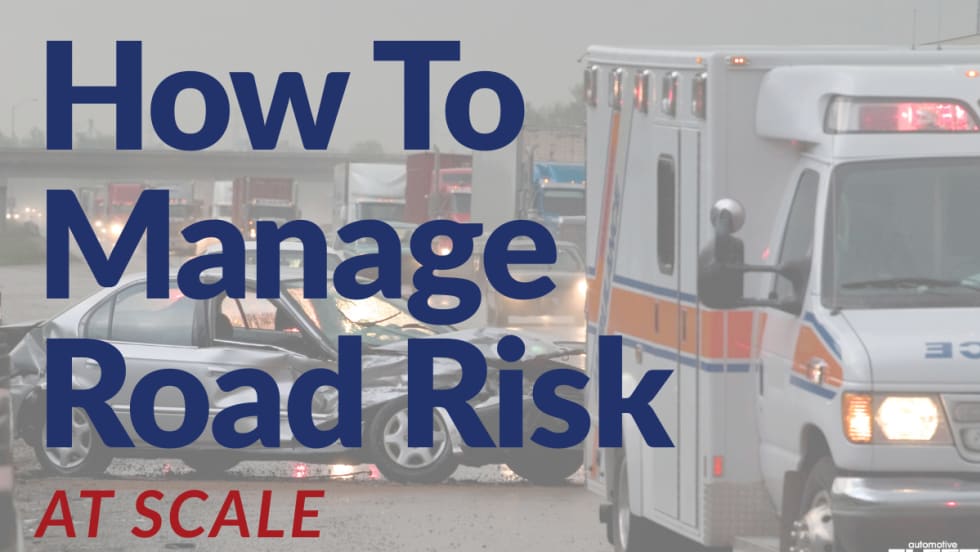
Managing Road Risk at Scale: Why Fleet Safety Needs a Data-Driven Framework
Insights from the FIA Road and Driver Safety Indexes reveal how to manage road risk on a larger scale.
Read More →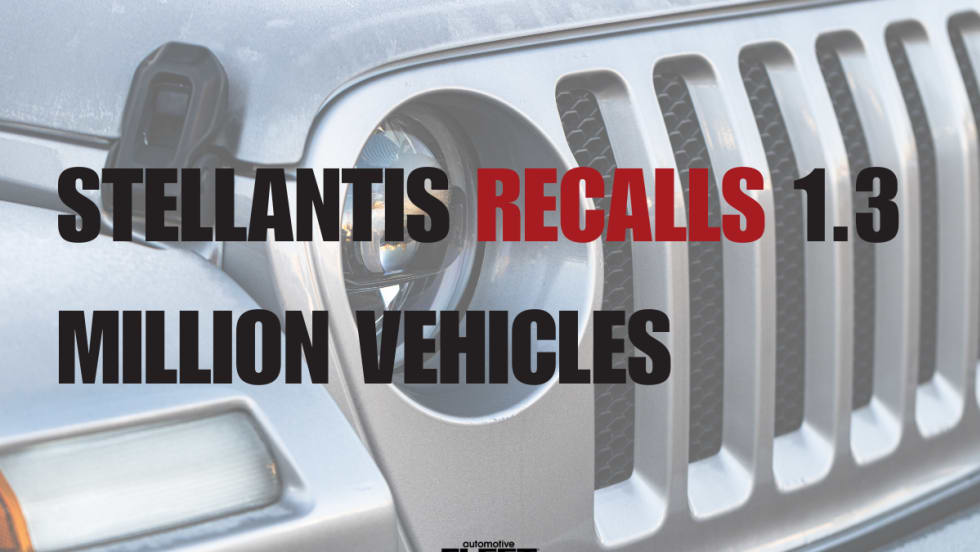
Stellantis Recalls 1.3 Million Jeep Vehicles Worldwide Over Fire Risk
Stellantis is recalling more than 1.3 million Jeep Wrangler and Gladiator models worldwide over a fire risk linked to power steering pump wiring.
Read More →
Coaching Is Not Training, Even When AI Is Doing It
AI-powered safety platforms can detect risky behaviors and deliver immediate feedback. But effective driver development still requires a foundation of training followed by coaching that reinforces those skills.
Read More →