




Report Says States Are Stepping Up Efforts to Combat Distracted Driving
The Governors Highway Safety Association releases a report examining how states are addressing the problem of distracted driving. Today, 47 states and the District of Columbia have specific laws aimed at preventing the problem.
A new report from the Governors Highway Safety Association concludes that since 2010 more states are taking action to fight distracted driving. They’re enacting and enforcing laws, leveraging new media to educate the motoring public, focusing on key constituency groups, and collecting data related to the problem.
“2013 Distracted Driving: Survey of the States” is GHSA’s second report on how states are dealing with the problem of distracted driving.
State highway safety agencies from every state as well as the District of Columbia participated in the survey. While all states report engaging in activities to address distracted driving, 39 states and the District of Columbia identify the problem as a priority issue -- a 43% increase from 28 states in 2010.
Other key findings include:
States continue to pass distracted driving laws. While no state fully bans all cell phone use while driving, 47 states and D.C. now have specific laws prohibiting various forms of distracted driving that impact most drivers. Of those states, 41 ban texting by all drivers, compared with only 28 states in 2010 (a 45% increase).
States are stepping up enforcement. Law enforcement officers in almost every state are actively enforcing distracted driving laws, a significant change since 2010. From routine traffic patrols that include distracted driving enforcement as standard protocol, to targeted efforts focused on specific events such as Distracted Driving Awareness Month, law enforcement is cracking down on violators. At the same time, states note that enforcement officers are challenged by age-specific (e.g., bans for teen drivers only) and secondary distracted driving laws, and the complexities involved in discerning whether a motorist is actually engaged in an illegal behavior (e.g., determining if a driver is texting or dialing a phone, as the latter is permitted in most states).
States are going social to educate motorists. Forty-seven states and D.C. are taking steps to educate the public about the threat of distracted driving, a 26% increase from 37 states in 2010. While most have developed campaign messaging unique to their state, the vast majority recognize the effectiveness of technology-based communication and are using social media including Twitter, YouTube and Facebook to get the message out about distracted driving. State use of these outreach channels has jumped 125% in the past three years.
States are focusing on teens. With teens being the earliest and strongest adopters of new technology and the age group with the highest crash risk, 22% more states (27 and D.C.) report developing educational materials targeting teen drivers and/or their parents. This outreach includes a variety of communication channels encompassing traditional and social media. States are emphasizing not only the dangers of cell phone use and texting, but also distraction caused by loud music and other teen passengers.
Public/private partnerships increase. States recognize the power of partnering with other entities to reinforce safety messages. While the number of states working with employers remains unchanged since 2010, four states -- California, Minnesota, Nebraska and Texas -- are working with state affiliates of the National Safety Council to provide education and technology-use policies to major employers. Additionally, Delaware and Kentucky have corporate outreach coordinators on staff in their highway safety offices that are responsible for working with employers.
Data collection continues to improve. Accurate data is critical for determining the magnitude of the distracted driving problem and developing effective solutions that prevent crashes and save lives. Currently, 47 states and D.C. (up from 43 in 2010) collect distracted driving-related data via police crash reports, a slight gain in the past three years. Many states recognize the need to keep pace with rapidly changing technology, and 18 states report that changes and/or upgrades to data collection efforts are planned for the coming year. Several states are also collaborating with colleges and universities to conduct observational surveys and analyze distracted driving crash data to better understand the problem.
“Developing effective programs and policies to keep all roadway users safe is a challenge, but it becomes even more daunting with the increase in the use of distracting technology,” said GHSA Deputy Executive Director Jonathan Adkins. “This latest report confirms that states recognize the threat posed by distraction and are working hard in several areas to address it.”
Adkins added, however: “States face major obstacles including a lack of funding for enforcement, media and education. That, coupled with the motoring public’s unwillingness to put down their phones, despite disapproving of and recognizing the danger of this behavior, makes for a challenging landscape.”
To continue building momentum on distracted driving countermeasures as well as share best practices on this and other highway safety issues, GHSA’s 2013 Annual Meeting theme is “Highway Safety and Technology: Safely Navigating the Road Ahead.” The conference is set for August 25-28 in San Diego.
The “2013 Distracted Driving: Survey of the States” was compiled for GHSA by The Sprattler Group. based in St. Paul, Minn. Electronic copies are available online.
More Safety

Nexar-Nauto Merger Aims to Give Fleets Better Safety Intelligence Through Larger Driving Dataset
Stefan Heck tells Automotive Fleet that combining more than 10 billion miles of driving history with Nexar's AI models will give fleets deeper insights into driver risk and roadway conditions than either company could provide independently.
Read More →
Don't Wait for a Crisis: 5 Ways to Build Mental Health Into Your Fleet Safety Program
For Suicide Prevention Month, fleet and safety leaders have an opportunity to put mental health where it belongs: at the center of workplace safety.
Read More →
How Camera Data Can Strengthen a Fleet’s Insurance Renewal
Insights from a commercial insurance carrier and a broker show how fleets can turn video telematic data, driver coaching, and improved claims results into a stronger case at insurance renewal.
Read More →
The Safest Fleets Aren’t the Ones with the Most Technology
You’ve made the telematics investment. Here’s how to capture the other half of its value and build the safest fleet on the road.
Read More →
Hidden in Plain Sight: Fleet Compliance Risks
Fleet compliance isn't just about having policies — it's about consistently enforcing them. This practical guide reveals six hidden compliance risks common in public sector and shared fleet operations and outlines proven strategies to improve visibility, accountability, and audit readiness
Read More →
NETS Sets 2026 Fleet Safety Benchmark Conference for Indianapolis
The Sept. 15–17 program will feature fleet benchmarking data, case studies, emerging technologies, and implementation strategies while running alongside the NSC Safety Congress & Expo.
Read More →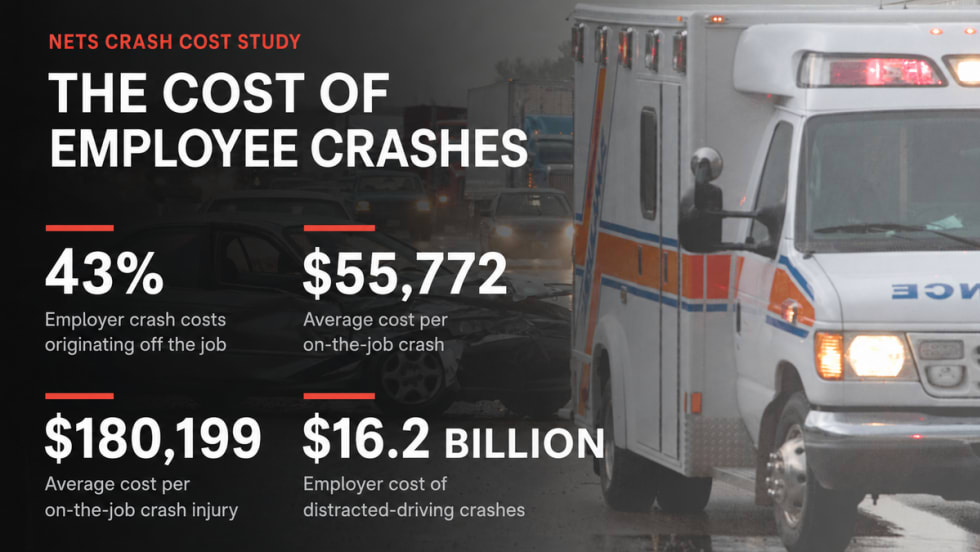
Off-the-Job Crashes Account for 43% of Employers’ $61.7 Billion Crash Burden
NETS quantifies costs dispersed across fleet, risk, HR, and other departments while providing new per-crash benchmarks for employers.
Read More →
Ram Recalls More Than 1.27 Million 1500 Pickups for Seat Belt Anchor Issue
The recall affects certain 2019-2026 Ram 1500 pickups that may have improperly attached second-row seat belt buckle anchors.
Read More →
How Better Visibility Cut Speeding Violations by 48%
Fleet leaders don't need more data, they need clearer visibility into what the data is saying. This case study explores how one utility replaced speeding-event counts with a single metric — miles driven in violation — to strengthen safety and significantly reduce speeding violations.
Read More →
Operation Safe Driver Week: Why the Industry's Oldest Safety Campaign Still Matters to Fleets
A look at how a 2007 enforcement initiative became one of the most consequential weeks on the fleet safety calendar, and what it means for your drivers in 2026.
Read More →