




Report Raises Concerns About Ethanol's Potential for Greenhouse Gas Emissions
ITHACA, NY --- An international team of scientists has released a report asserting that nitrous oxide emissions as a byproduct of ethanol production have been underestimated in the past and will increase greenhouse gas pollution.
ITHACA, NY --- An international team of scientists has released a report asserting that nitrous oxide emissions as a byproduct of ethanol production have been underestimated in the past and will increase greenhouse gas pollution.
The newly released report was produced by the Scientific Committee on Problems of the Environment (SCOPE), part of the International Council for Science (ICSU). More than 75 scientists from 21 countries took part in the project. The report is titled, "Biofuels: Environmental Consequences and Interactions with Changing Land Use."
The report says that "some biofuel systems can increase the release of greenhouse gases relative to the fossil fuels they replace, thus aggravating global warming. Greenhouse gas emissions from biofuels occur from farming practices, refining operations, and the conversion of ecosystems to cropland for biofuel production."
The report goes on to add that "the details of how and where crops are grown, how crops are transported before being processed into fuels, and how fuels are made are all important in determining the net effect on greenhouse gas emissions."
In assessing net effect on greenhouse gas emissions, the report noted that ethanol from corn fares considerably worse than ethanol made from sugar cane.
"Most recent studies based on life-cycle analysis conclude that when ethanol from sugar cane is used to replace fossil fuels in transportation, a substantial reduction in net greenhouse gas emissions may result: 80 percent to greater than 100 percent savings are recorded (when low emissions of nitrous oxide are assumed)," the report said. "On the other hand, using ethanol from corn is less favorable: 30 percent to a maximum of 50 percent savings or even an increase of greenhouse gas emissions relative to fossil fuels, depending on process-energy sources."
However, the report says, these same studies may be underestimating the release of one greenhouse gas -- nitrous oxide -- from biofuel production. The percentages listed above are likely too optimistic.
"Nitrous oxide is not as abundant as carbon dioxide in the atmosphere, and is not as important as a driver of global warming," the report says. "However, for an equivalent mass, it is almost 300-fold greater in its ability to warm the planet, and it is currently the third most important gas in causing global warming, after carbon dioxide and methane."
The report asserts that previous studies on biofuels and greenhouse gas emissions have used methods prone to underestimate nitrous oxide emissions.
The report also raises questions about the environmental impact of indirect land-use change.
"The rapidly growing production of biofuels requires additional cropland," the report explains. "In some cases, this additional land comes from agricultural land previously used to grow food or feed crops. In a hungry world, these diverted crops must be made up elsewhere, thus driving land conversion -- perhaps in different countries and on different continents -- to compensate for the loss of food-crop production. Additional land for food and feed production usually comes from the conversion of native ecosystems such as grasslands, savannahs, and forests, or by returning permanent fallow or abandoned croplands to production. These land conversions can have a substantial impact on the greenhouse-gas balances of biofuels."
More Green Fleet

EV Charging Use Is Outpacing Infrastructure Growth
ChargePoint’s 2026 Charging Forward Report points to rising charger use, higher-powered charging, commercial vehicle electrification, and energy-management technology. Here’s what fleets should know.
Read More →
Merchants Fleet Reports 290M EV Miles as Fleets Navigate Changing Electrification Market
From millions in operating savings to hundreds of millions of EV miles, Merchants Fleet’s latest report reveals what’s working and what’s changing in fleet electrification.
Read More →
The EV Breakdown Nobody's Talking About: Why Most Electric Vehicle Roadside Calls Aren't Mechanical Failures
Here's why EV breakdowns are widely misunderstood.
Read More →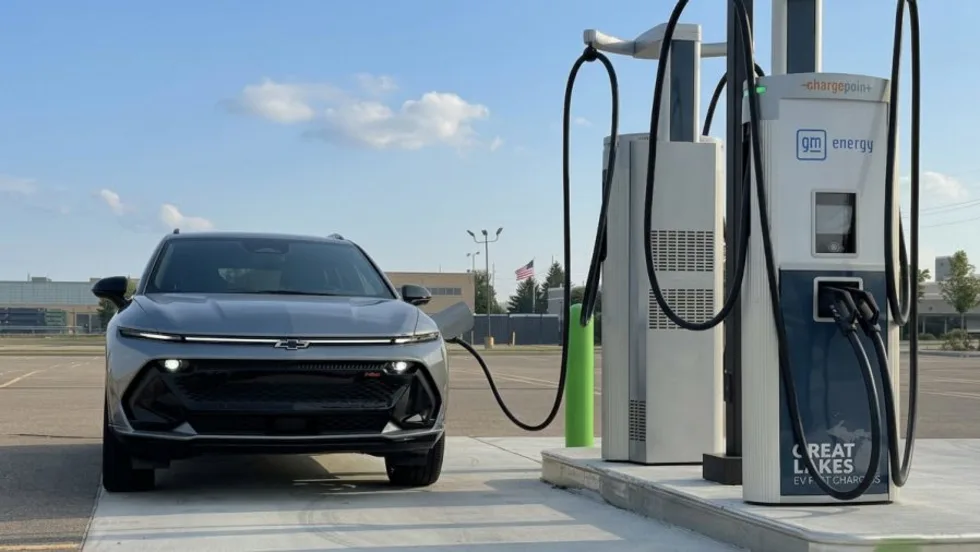
ChargePoint Now Available in Energy Pass
ChargePoint and additional planned charging network integrations were added to GM's Energy Pass.
Read More →

First Look: Slate Auto's Electric Fleet Pickup
Could an affordable, modular EV pickup make electrification more practical for fleets?
Read More →
Slate Debuts Colorful, Unique EV Models
A recent media and client event, studded with electric vehicles dressed up on platforms, planted a new position for the manufacturer in the wider EV market. Fleets will find cost-saving advantages.
Read More →
Slate Electric SUV, Pickup Switchable Model Aims For Light-Duty Fleets
Everything about this EV is counterintuitive and understated, making it stand out from the crowd.
Read More →
Inspiration Mobility Acquires Key Electrada Assets
Inspiration Mobility Group has acquired select assets of Electrada, adding the fleet electrification provider's team, technology, and charging infrastructure development capabilities to its energy management business.
Read More →
Why America’s Most Popular Vehicle is So Hard to Electrify
Turning America’s favorite workhorse electric means balancing range, payload, charging infrastructure, and price, an equation automakers are still trying to solve.
Read More →