





Want More on Safety? Fleet Forward NJ: Safety & Sustainability Lessons Learned
Recent Study Questions Safety of Partial Automation in Vehicles
Research from the IIHS shows partial automated driving systems do not improve vehicle safety due to a lack of crash avoidance tech.
July 16, 2024
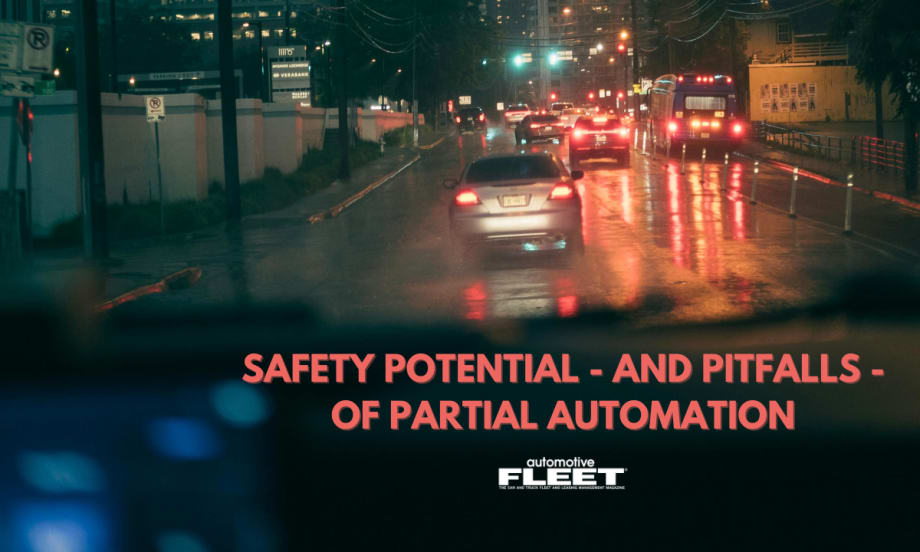
More than half the new models for sale in 2023 were available with partial automation systems as an optional or standard feature, despite mounting concern over a series of high-profile crashes that occurred while drivers were using the technology.
Photo: Pexels/Erik Mclean/Automotive Fleet
7 min to read
Findings from the research conducted by the Insurance Institute for Highway Safety (IIHS) and the Highway Loss Data Institute (HLDI) indicate that partial automation systems are ineffective in preventing collisions.
The most apparent evidence comes from studies of BMW and Nissan vehicles that have been on the road for several years. HLDI studied these vehicles in 2021.
A new study of the same vehicles from IIHS confirms that partial automation in these vehicles doesn't confer additional safety benefits beyond crash avoidance features like front automatic emergency braking (AEB).
"Everything we're seeing tells us that partial automation is a convenience feature like power windows or heated seats rather than a safety technology," IIHS President David Harkey said.
Several pickup cars, SUVs, and pickup trucks that commercial fleets use offer these capabilities, including the Nissan Rogue SUV and the Ford F-150 pickup truck.
What is Partial Automation in Vehicles?
Partial automation systems use cameras and other sensors to keep your car moving down the road in the center of the lane, navigating curves, slowing down to avoid other vehicles, and then accelerating again when the way is clear. More than half the new models for sale in 2023 were available with partial automation systems as an optional or standard feature, despite mounting concern over a series of high-profile crashes that occurred while drivers were using the technology.
Even so, vehicles equipped with these systems are far from self-driving. They can't manage many routine roadway features and traffic situations, so drivers must stay alert to what's happening and be ready to take over at any time. That's a big challenge because the technology can encourage distractions and boredom, causing drivers to tune out.
However, there's a critical difference between partial automation systems and crash avoidance features that are often included or sold separately.
Crash avoidance features like automatic emergency braking AEB, blind spot warning, and lane departure prevention only come into play when a potential danger is detected, like suddenly braking to avoid rear-ending another vehicle. Since this feature is unobtrusive under normal circumstances, most drivers who use them leave them switched on all the time.
In contrast, a partial automation system works constantly to keep the vehicle on the road and is intended for use on highways and other limited-access roads. The driver must switch this feature on manually, which is only used occasionally.
Analyzing Automated Features Through Insurance Claims
Using insurance claims data, HLDI has conducted multiple investigations into the potential safety benefits of crash avoidance features. The studies have all shown that features that warn or intervene in an emergency reduce the frequency of insurance claims, and the reductions increase incrementally as one feature is stacked on another.
Partial automation could also help prevent crashes. One of its component features, adaptive cruise control (ACC), keeps the vehicle traveling at a driver-selected speed when the road is clear and slows. It accelerates to maintain a set distance from cars ahead. ACC is associated with longer following distances, less tailgating, and fewer lane changes, which are positive driving behaviors that could reduce risk.
The other main component of partial automation, lane centering, could better prevent side-swipe and run-off-road crashes than lane departure prevention since lane centering theoretically preempts such departures rather than intervening as they occur.
So far, there's little evidence that's happening, as shown by the studies of BMW and Nissan vehicles.
HLDI found that property damage liability claims — for damage to other vehicles hit by the insured driver — were 8% lower for 2017-19 Nissan Rogues equipped with forward collision warning and AEB. However, no additional benefit was associated with ACC or Nissan's ProPILOT Assist partial automation system, which adds lane centering on top of ACC. Changes in claim rates under collision coverage — for damage to the insured driver's vehicle — were small for all the technologies.
Similarly, forward collision warning and AEB were associated with a 7% reduction in collision claim rates and a 13% reduction in property damage liability claim rates for 2013-17 BMW and Mini vehicles.
BMWs and Minis, also equipped with ACC, showed a more considerable 25% reduction in property damage claims and no greater change in collision claims. As with the Nissan vehicles, no additional statistically significant decreases were associated with BMW's Driving Assistant Plus partial automation system.
The Impact of Partial Automation on Crash Rates
HLDI's claims data, collected from insurers representing 85% of the private passenger vehicles in the U.S., don't show whether the partial automation system was switched on during a crash, nor do they include the type of road where the insurance claims occurred. The outcome shows potential benefits from partial automation, which is generally designed to be used on high-speed roads, may be overlooked by the large volume of insurance claims for low-speed fender benders.
Jessica Cicchino, senior vice president for research at IIHS, tried to determine if such safety benefits might be hiding in the HLDI data. She compared police-reported crash rates for the same BMW and Nissan vehicles HLDI studied in 17 U.S. states during 2013-22.
Although Cicchino also could not know whether the features were switched on during the crash, she could restrict her study to the front-to-rear and lane departure crashes that partial automation could prevent. She looked at crashes on limited-access interstates, freeways, and expressways and then looked separately at crashes on other roads.
Like HLDI, Cicchino found substantial reductions in crash rates associated with crash avoidance features. Front-to-rear crash rates were 49% lower for Rogues with forward collision warning and AEB and 54% lower for Rogues with forward collision warning, AEB, and ACC than for vehicles with no crash avoidance features. Still, lane departure prevention did not significantly impact lane departure crash rates.
In contrast to HLDI, Cicchino found more considerable reductions associated with partial automation. Front-to-rear crash rates were 62% lower for Rogues with ProPILOT Assist than for vehicles without crash avoidance systems. Lane departure crash rates were 44% lower for Rogues with ProPILOT Assist and lane departure prevention than for unequipped vehicles.
After looking into those numbers more deeply, Cicchino found that the apparent benefits from ProPILOT Assist were the same on high-speed roads where IIHS research shows partial automation is most likely to be switched on and low-speed roads where the added convenience it provides is minimal at best.
Below 37 mph, ProPILOT Assist's lane-centering feature only works if you are following another vehicle. That suggests that other characteristics of the equipped vehicles or their drivers were responsible for the reduction.
Quality of Vehicle Features Shed More Light on Findings
A vehicle's headlights may need more attention. Research shows that older Nissan Rogue models had poor-rated headlights unless the buyer opted for a premium package. Cicchino returned to the crash records and discovered that the rate differences were greatest in the dark.
Cicchino found that according to Nissan's promotional materials, the 2018 and 2019 Rogues equipped with ProPILOT Assist were more likely to feature headlights with an acceptable rating. Research conducted by IIHS shows headlights rated as acceptable lowered the risk of single-vehicle crashes at night by approximately 15% compared to those rated as poor.
For the BMW vehicles, Cicchino examined only lane departure crashes because the cars with partial automation came with a more advanced front crash prevention system than those without partial automation, making it impossible to isolate the effect of the partial automation system on front-to-rear crashes.
It was observed that neither lane departure prevention nor the same feature combined with partial automation significantly affected crash rates, either on limited-access highways or on roads with lower speed limits.
The vehicles in these studies range from five to 11 years old, and newer partial automation systems may be more effective from a safety perspective. The many years of accumulated data for these vehicles make the findings more compelling.
"With no clear evidence that partial automation is preventing crashes, users and regulators alike should not confuse it for a safety feature," Cicchino said. "At a minimum, safeguards like those IIHS promotes through its rating program are essential to reduce the risks that drivers will zone out or engage in other distracting activities while partial automation is switched on."
More Safety

Sponsored•October 1, 2026
Fleet Manager’s Ultimate Playbook: Navigating the New Standard in OEM Connectivity
Rising operating costs, driver safety concerns, and unplanned downtime are putting unprecedented pressure on modern fleets. Discover how fleet managers use embedded OEM connectivity and real-time vehicle data to cut TCO, prevent downtime, and protect drivers without aftermarket telematics hardware.
Read More →
From Driver Well-Being to EV Charging | AF News Recap
Mental health belongs in the fleet safety conversation. This week, we’re looking at five ways fleets can support employee well-being before a crisis, plus Holman’s expansion in Mexico, new one-day Fleet Forward passes, and why EV charging demand is outpacing infrastructure growth.
Read More →
Nexar-Nauto Merger Aims to Give Fleets Better Safety Intelligence Through Larger Driving Dataset
Stefan Heck tells Automotive Fleet that combining more than 10 billion miles of driving history with Nexar's AI models will give fleets deeper insights into driver risk and roadway conditions than either company could provide independently.
Read More →
Don't Wait for a Crisis: 5 Ways to Build Mental Health Into Your Fleet Safety Program
For Suicide Prevention Month, fleet and safety leaders have an opportunity to put mental health where it belongs: at the center of workplace safety.
Read More →
How Camera Data Can Strengthen a Fleet’s Insurance Renewal
Insights from a commercial insurance carrier and a broker show how fleets can turn video telematic data, driver coaching, and improved claims results into a stronger case at insurance renewal.
Read More →
The Safest Fleets Aren’t the Ones with the Most Technology
You’ve made the telematics investment. Here’s how to capture the other half of its value and build the safest fleet on the road.
Read More →
Sponsored•August 7, 2026
Hidden in Plain Sight: Fleet Compliance Risks
Fleet compliance isn't just about having policies — it's about consistently enforcing them. This practical guide reveals six hidden compliance risks common in public sector and shared fleet operations and outlines proven strategies to improve visibility, accountability, and audit readiness
Read More →
NETS Sets 2026 Fleet Safety Benchmark Conference for Indianapolis
The Sept. 15–17 program will feature fleet benchmarking data, case studies, emerging technologies, and implementation strategies while running alongside the NSC Safety Congress & Expo.
Read More →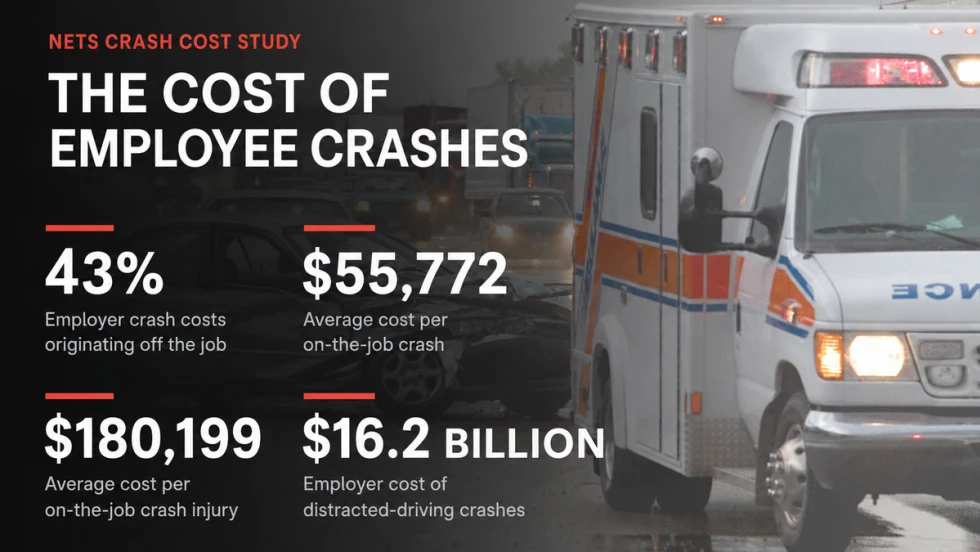
Off-the-Job Crashes Account for 43% of Employers’ $61.7 Billion Crash Burden
NETS quantifies costs dispersed across fleet, risk, HR, and other departments while providing new per-crash benchmarks for employers.
Read More →
Ram Recalls More Than 1.27 Million 1500 Pickups for Seat Belt Anchor Issue
The recall affects certain 2019-2026 Ram 1500 pickups that may have improperly attached second-row seat belt buckle anchors.
Read More →