




Public Still Wary of Self-Driving Tech, Survey Finds
New survey results from research firm Gartner find that 55% of respondents would decline an opportunity to take a ride in a fully autonomous vehicle.
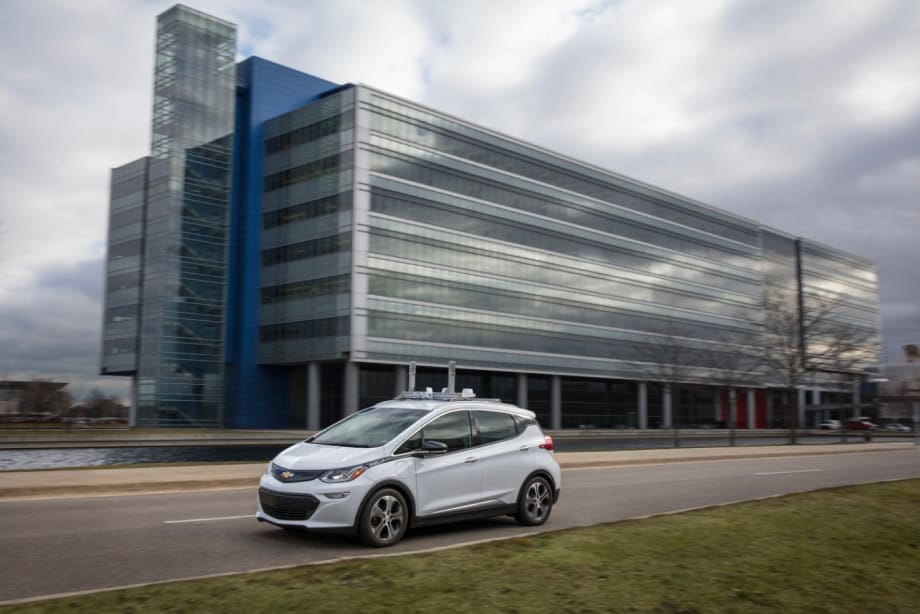
General Motors is among the automakers now testing fully autonomous vehicles. Photo courtesy of GM.
General Motors is among the automakers now testing fully autonomous vehicles. Photo courtesy of GM.
A new survey of people in the U.S. and Germany found that 55% of respondents wouldn’t consider riding in a fully autonomous vehicle, but 71% might consider riding in a vehicle that’s partially autonomous.
Survey participants primarily cited concerns about technology failures and security to explain their reluctance to trust self-driving cars. Technology research firm Gartner conducted the online survey, which polled 1,519 Americans and Germans from April through May of this year.
Though multiple launches of autonomous vehicles are expected around 2020, the full impact of autonomous vehicle technology on society and the economy will not begin to emerge until about 2025, Gartner projected in its report of the survey results. Consumer and social acceptance will be crucial to widespread adoption.
“Fear of autonomous vehicles getting confused by unexpected situations, safety concerns around equipment and system failures, and vehicle and system security are top concerns around using fully autonomous vehicles,” said Mike Ramsey, research director at Gartner.
Survey respondents acknowledged, however, that fully autonomous vehicles offer many advantages, including improved fuel economy and a reduction in the number and severity of crashes. Additional benefits they identified included having a safe transportation option when drivers are tired and using travel time for entertainment and work, Gartner reported.
The survey found that consumers who currently embrace on-demand car services are more likely to ride in and purchase partially and fully autonomous vehicles.
“This signifies that these more evolved users of transportation methods are more open toward the concept of autonomous cars,” Ramsey said.
The percentage of people who used a mobility service, such as Uber or Car2Go, in the past 12 months rose to 23% — up from 19% in a similar survey conducted two years earlier. But the transition to dropping a personally owned vehicle will be challenging outside of dense urban areas, Gartner found.
Among surveyed automobile owners who have a driveway or other easily accessed parking, nearly half of them said they would not consider giving up their own vehicle — even if they saved 75% over the cost of owning their own car. The ability to leave at any moment was the most cited reason for not replacing personal vehicles with on-demand car services. Trust and personal safety are also top concerns.
“The automotive industry is investing in new safety and convenience technology at a rate not seen since the dawn of the automobile,” Ramsey said. “The experience of owning and operating a car will be dramatically different in 10 years.”
Dozens of companies are currently developing sensors and other technologies required to enable vehicles to detect and understand their surroundings. As of mid-2017, more than 46 companies are building artificial intelligence (AI)-based software to control an autonomous vehicle and make it operate in the world, according to Gartner.
“Autonomous driving technology will fundamentally transform the automotive industry, changing the way vehicles are built, operated, sold, used and serviced,” Ramsey said.
More Safety

Nexar-Nauto Merger Aims to Give Fleets Better Safety Intelligence Through Larger Driving Dataset
Stefan Heck tells Automotive Fleet that combining more than 10 billion miles of driving history with Nexar's AI models will give fleets deeper insights into driver risk and roadway conditions than either company could provide independently.
Read More →
Don't Wait for a Crisis: 5 Ways to Build Mental Health Into Your Fleet Safety Program
For Suicide Prevention Month, fleet and safety leaders have an opportunity to put mental health where it belongs: at the center of workplace safety.
Read More →
How Camera Data Can Strengthen a Fleet’s Insurance Renewal
Insights from a commercial insurance carrier and a broker show how fleets can turn video telematic data, driver coaching, and improved claims results into a stronger case at insurance renewal.
Read More →
The Safest Fleets Aren’t the Ones with the Most Technology
You’ve made the telematics investment. Here’s how to capture the other half of its value and build the safest fleet on the road.
Read More →
Hidden in Plain Sight: Fleet Compliance Risks
Fleet compliance isn't just about having policies — it's about consistently enforcing them. This practical guide reveals six hidden compliance risks common in public sector and shared fleet operations and outlines proven strategies to improve visibility, accountability, and audit readiness
Read More →
NETS Sets 2026 Fleet Safety Benchmark Conference for Indianapolis
The Sept. 15–17 program will feature fleet benchmarking data, case studies, emerging technologies, and implementation strategies while running alongside the NSC Safety Congress & Expo.
Read More →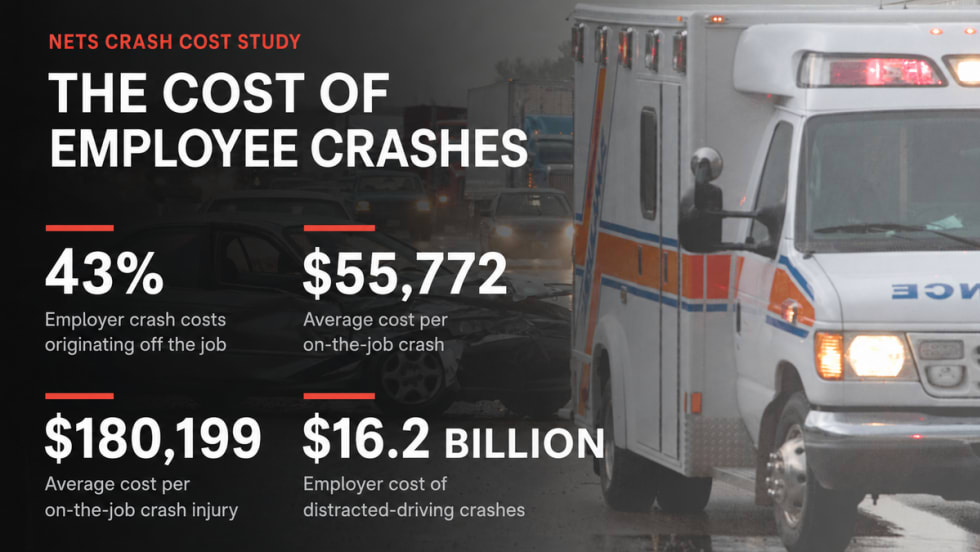
Off-the-Job Crashes Account for 43% of Employers’ $61.7 Billion Crash Burden
NETS quantifies costs dispersed across fleet, risk, HR, and other departments while providing new per-crash benchmarks for employers.
Read More →
Ram Recalls More Than 1.27 Million 1500 Pickups for Seat Belt Anchor Issue
The recall affects certain 2019-2026 Ram 1500 pickups that may have improperly attached second-row seat belt buckle anchors.
Read More →
How Better Visibility Cut Speeding Violations by 48%
Fleet leaders don't need more data, they need clearer visibility into what the data is saying. This case study explores how one utility replaced speeding-event counts with a single metric — miles driven in violation — to strengthen safety and significantly reduce speeding violations.
Read More →
Operation Safe Driver Week: Why the Industry's Oldest Safety Campaign Still Matters to Fleets
A look at how a 2007 enforcement initiative became one of the most consequential weeks on the fleet safety calendar, and what it means for your drivers in 2026.
Read More →