




Prius Celebrates 10-Year Anniversary
TORRANCE, CA - Ten years ago Toyota launched the Prius, an affordable car with a hybrid gas/electric powertrain.
TORRANCE, CA - Ten years ago Toyota launched the Prius, an affordable car with a hybrid gas/electric powertrain.
The car with the signature wedge shape proved to be an agent of change, and a catalyst for innovative ideas. Over 1.8 million units have been sold in the world to date, with nearly 900,000 in the U.S. alone.
"Toyota recognized in the 1990s that sustainable transportation would become a huge challenge in the coming decades," said Jim Lentz, president and COO of Toyota Motor Sales USA Inc. "Those realizations proved accurate, and if anything, even more profound considering what we know today."
The first Prius came to North America in July of 2000. That year, the hit of the North American International Auto Show in Detroit was the Hummer H2, and national gasoline prices averaged about $1.50 per gallon. Modest Prius sales goals of 12,000 units a year were set.
Not all early reviews were flattering. One car magazine said, "With a real-world 35 mpg, this is a car that neither enthusiasts nor greenies can fully embrace." Competing manufacturers announced that hybrids were "not an economical or practical solution" to America's future needs. Many insisted that Toyota had provided the solution to a problem that did not exist.
Prius owners, however, felt otherwise. Widely characterized as extreme environmentalists, early Prius adopters were actually more likely to be tech-savvy professionals, Toyota said.
Those first owners became advocates for the technology. Soon, demand outstripped supply, and production had to be stepped up as waiting lists became months long.
Today, the Prius is a mainstream vehicle. It is the third-best selling car in the Toyota line. Owner loyalty figures are among the highest in the automotive industry.
Each generation of the Prius has moved the bar higher. When the first-generation compact Prius was launched in 2000, buyers got 97 combined horsepower and were told to expect 41 mpg. Ten years later, the midsize Prius has 134 horsepower and delivers an EPA rating of 50 mpg overall.
Improvements have been continuous. While the first generation was classified as a Super Ultra Low Emissions Vehicle (SULEV), the current Prius is a SULEV/AT-PZEV, meaning that it meets super-ultra-low-emissions-vehicle requirements, and emits zero emissions at rest. Further innovations, like the solar powered ventilation system on the 2010 model, contribute to the car's reputation as a harbinger of future trends and technologies.
[PAGEBREAK]
Creating the vehicle that became the Prius was accomplished in a relatively short amount of time through use of computer models to design and prove ideas. By minimizing the use of prototypes, Toyota engineers changed the way cars are designed and built.
Many of the components had to be invented from scratch. Those that had already been invented, such as regenerative brakes and electronic power steering, needed to be improved and adapted for mass production. Global standards for electronic components had to be set, and new software written.
A total of nine on-board processors were needed to manage the power delivery between engine, battery, brakes and motor/generator. Many motors and batteries were developed, tested and discarded before they could be proven. Engines had to be converted to run on the more efficient Atkinson Cycle to power a new, unique transaxle.
A completely new type of instrumentation had to be developed. With the Prius, there was a need to monitor the interplay between the engine and the battery, leading to a display that kept the driver informed of his status on both counts. The new instrumentation allowed the drivers to improve mileage by altering their technique, turning driving into an interactive game. Today, mileage feedback displays are in use on almost every new vehicle on the market.
Unprecedented quality-control standards had to be instituted as motors and batteries that had been reliable enough for stationary use proved vulnerable to heat, cold and vibration. Multi-million-dollar joint ventures were established in order to assure the G21 Project, as it was called, could one day lead to a mass-produced vehicle.
Through it all, Toyota said, management remained convinced that their goal of combining fuel efficiency with environmental performance would one day be appreciated.
Today there are nearly 30 hybrid models on the road from 12 brands, with more on the drawing boards. Many of the patents filed during the development of the original Prius are now licensed to manufacturers who also take advantage of Toyota's initial R&D investment. Nevertheless, one out of every two hybrids on American roads is a Prius.
A fleet of Prius Plug-In cars is now in a global-demonstration program aimed at proving the capabilities of the cars and fine-tuning the design to meet customer expectations. The car is designed with small lithium-ion battery packs that will help the PHV produce even less greenhouse gas emissions than conventional hybrid vehicles. A commercial PHV is scheduled to go on sale in 2012.
More Green Fleet

EV Charging Use Is Outpacing Infrastructure Growth
ChargePoint’s 2026 Charging Forward Report points to rising charger use, higher-powered charging, commercial vehicle electrification, and energy-management technology. Here’s what fleets should know.
Read More →
Merchants Fleet Reports 290M EV Miles as Fleets Navigate Changing Electrification Market
From millions in operating savings to hundreds of millions of EV miles, Merchants Fleet’s latest report reveals what’s working and what’s changing in fleet electrification.
Read More →
The EV Breakdown Nobody's Talking About: Why Most Electric Vehicle Roadside Calls Aren't Mechanical Failures
Here's why EV breakdowns are widely misunderstood.
Read More →
ChargePoint Now Available in Energy Pass
ChargePoint and additional planned charging network integrations were added to GM's Energy Pass.
Read More →

First Look: Slate Auto's Electric Fleet Pickup
Could an affordable, modular EV pickup make electrification more practical for fleets?
Read More →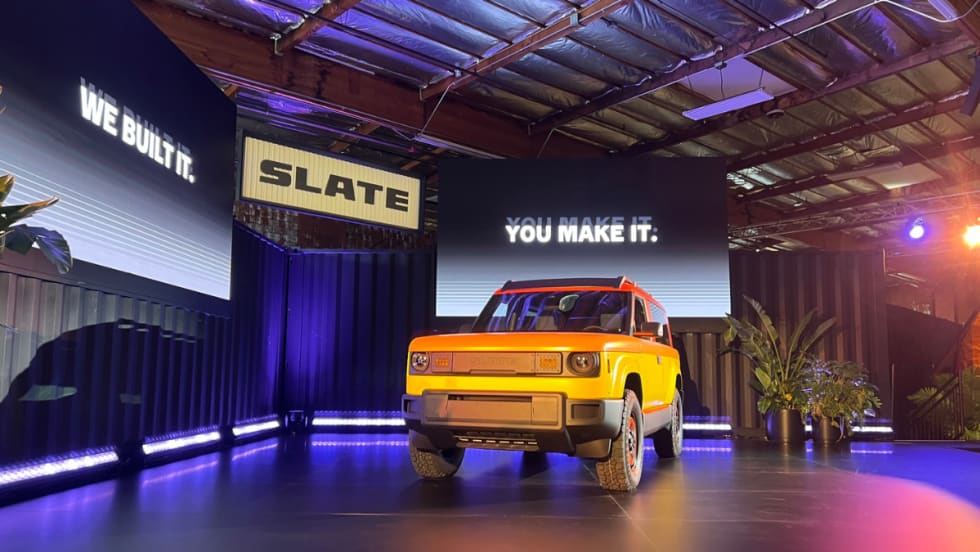
Slate Debuts Colorful, Unique EV Models
A recent media and client event, studded with electric vehicles dressed up on platforms, planted a new position for the manufacturer in the wider EV market. Fleets will find cost-saving advantages.
Read More →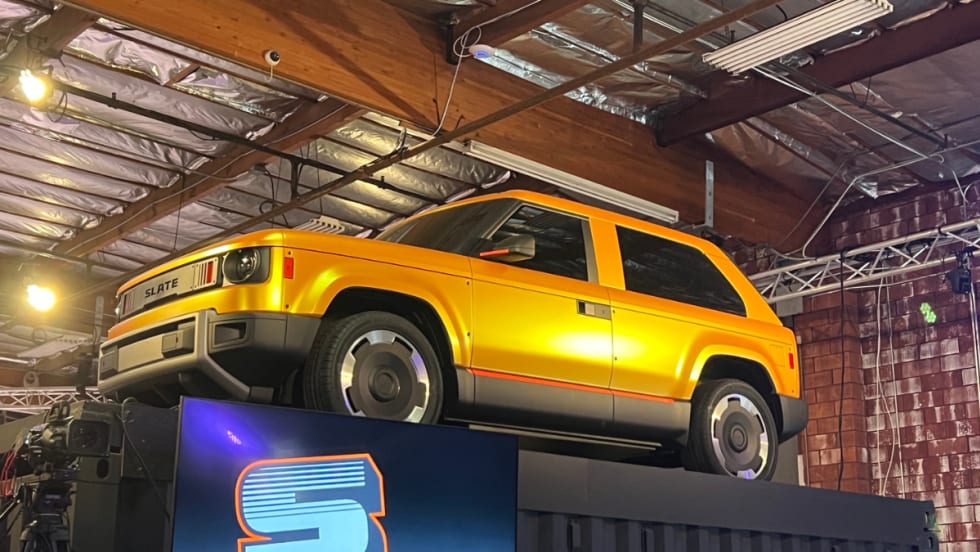
Slate Electric SUV, Pickup Switchable Model Aims For Light-Duty Fleets
Everything about this EV is counterintuitive and understated, making it stand out from the crowd.
Read More →
Inspiration Mobility Acquires Key Electrada Assets
Inspiration Mobility Group has acquired select assets of Electrada, adding the fleet electrification provider's team, technology, and charging infrastructure development capabilities to its energy management business.
Read More →
Turning Connected Vehicle Data Into Decisions That Matter
Fleet leaders have more data than ever, but turning that data into clear, actionable decisions remains a challenge. This white paper shows how leading organizations are using connected vehicle data to improve safety, reduce costs, and optimize fleet performance. Learn how to turn insight into action across your fleet.
Read More →