




Popular Science Magazine Awards Volvo Cars for Innovative Child Booster Cushion System
IRVINE, CA – Volvo Cars new booster seat helps protect children who have outgrown their toddler seat.

IRVINE, CA – Volvo Cars new booster seat helps protect children who have outgrown their toddler seat. In combination with an extended Inflatable Curtain and new, stronger side body structure, and load limiting seat belts this world's first two-step integrated booster cushion recently received international acknowledgement as a unique engineering solution to give children a safe and comfortable travel experience.
Chosen from thousands of new products and innovations, and selected as 1 of 100 best new technologies for 2007, Volvo Car Corporation, LLC, received Popular Science's annual Best of What's New award for this child protection system. This design was first shown in 2001 aboard Volvo's Safety Concept Car as a concept that would provide better seat belt positioning for children. Subsequent refinements to the seat, vehicle side body structure, seat belt attributes, and inflatable side curtain culminated with launching Volvo's newest crossover wagon, XC70 in Geneva Motor Show in Switzerland this past March.
Earlier this year, Volvo Cars received an award from the World Traffic Safety Symposium at this year's New York International Auto Show. The award was for best new safety feature in an automobile.
Volvo's prides itself in finding innovative ways to advance automobile safety. "Our goal is to help protect occupants. This award acknowledges our efforts to help protect our smallest passengers, our children," commented Thomas Broberg, Senior Safety Advisor, Volvo Car Corporation, Sweden. "This new seat, in conjunction with our refinements in side body structure and the inflatable curtain will have a significant reduction in child injuries."
More Safety

From Driver Well-Being to EV Charging | AF News Recap
Mental health belongs in the fleet safety conversation. This week, we’re looking at five ways fleets can support employee well-being before a crisis, plus Holman’s expansion in Mexico, new one-day Fleet Forward passes, and why EV charging demand is outpacing infrastructure growth.
Read More →
Nexar-Nauto Merger Aims to Give Fleets Better Safety Intelligence Through Larger Driving Dataset
Stefan Heck tells Automotive Fleet that combining more than 10 billion miles of driving history with Nexar's AI models will give fleets deeper insights into driver risk and roadway conditions than either company could provide independently.
Read More →
Don't Wait for a Crisis: 5 Ways to Build Mental Health Into Your Fleet Safety Program
For Suicide Prevention Month, fleet and safety leaders have an opportunity to put mental health where it belongs: at the center of workplace safety.
Read More →
How Camera Data Can Strengthen a Fleet’s Insurance Renewal
Insights from a commercial insurance carrier and a broker show how fleets can turn video telematic data, driver coaching, and improved claims results into a stronger case at insurance renewal.
Read More →
The Safest Fleets Aren’t the Ones with the Most Technology
You’ve made the telematics investment. Here’s how to capture the other half of its value and build the safest fleet on the road.
Read More →
Hidden in Plain Sight: Fleet Compliance Risks
Fleet compliance isn't just about having policies — it's about consistently enforcing them. This practical guide reveals six hidden compliance risks common in public sector and shared fleet operations and outlines proven strategies to improve visibility, accountability, and audit readiness
Read More →
NETS Sets 2026 Fleet Safety Benchmark Conference for Indianapolis
The Sept. 15–17 program will feature fleet benchmarking data, case studies, emerging technologies, and implementation strategies while running alongside the NSC Safety Congress & Expo.
Read More →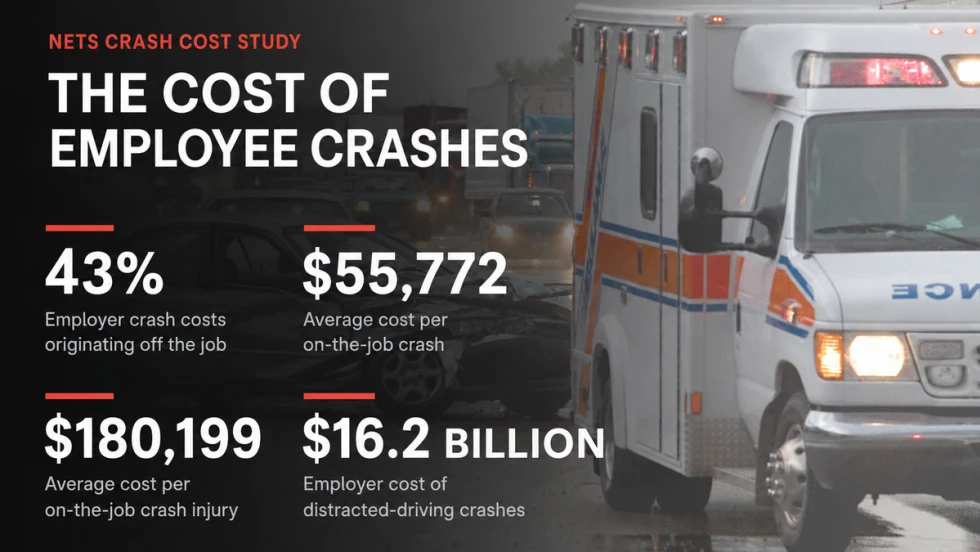
Off-the-Job Crashes Account for 43% of Employers’ $61.7 Billion Crash Burden
NETS quantifies costs dispersed across fleet, risk, HR, and other departments while providing new per-crash benchmarks for employers.
Read More →
Ram Recalls More Than 1.27 Million 1500 Pickups for Seat Belt Anchor Issue
The recall affects certain 2019-2026 Ram 1500 pickups that may have improperly attached second-row seat belt buckle anchors.
Read More →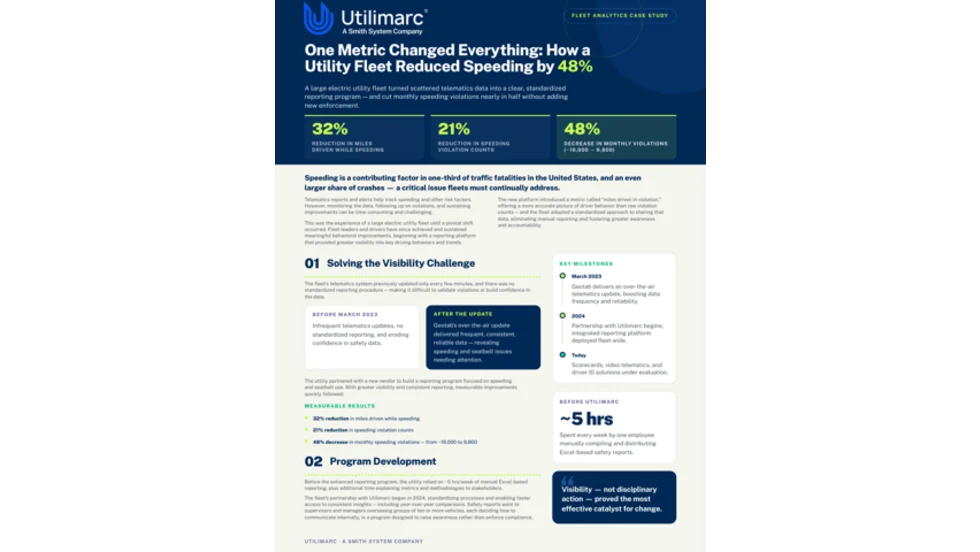
How Better Visibility Cut Speeding Violations by 48%
Fleet leaders don't need more data, they need clearer visibility into what the data is saying. This case study explores how one utility replaced speeding-event counts with a single metric — miles driven in violation — to strengthen safety and significantly reduce speeding violations.
Read More →