




Polestar: 2025 To Be Strongest in History
See how Polestar’s strategy revamps operations, boosts EV sales, and drives sustainable growth with innovative technology and market expansion.
January 17, 2025

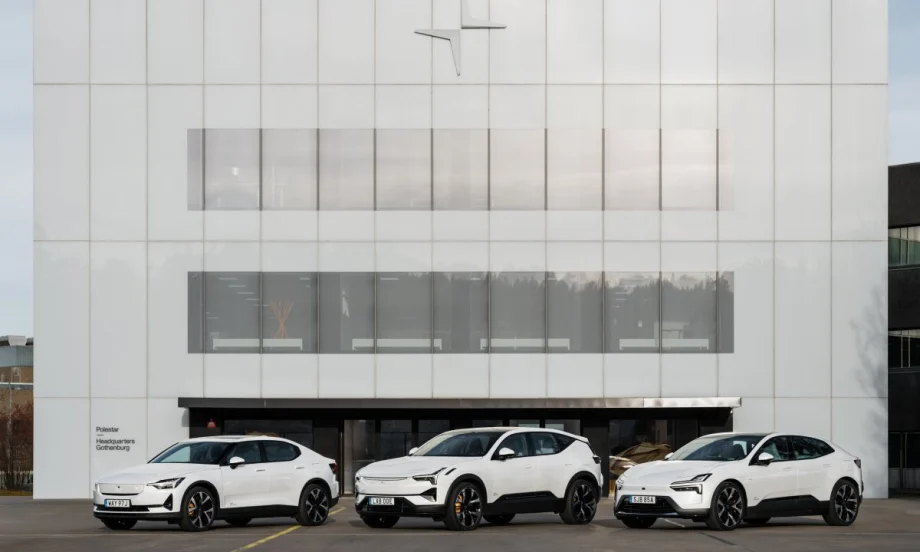
Polestar expects to gain commercial and operational momentum, further margin, fixed costs, and working capital improvements in 2026 onwards, with a positive free cash flow after investments expected in 2027.
Photo: Polestar
4 min to read
Polestar recently presented an updated strategy as the company starts its next chapter, with significant changes being made to improve operational, commercial, and financial performance.
The updated business plan targets a compound annual retail sales volume growth of 30-35% for 2025 to 2027 and a positive adjusted EBITDA in 2025.
“We expect 2025 to be the strongest year in Polestar’s history,” Polestar CEO Michael Lohscheller said.
Polestar expects to gain commercial and operational momentum, further margin, fixed costs, and working capital improvements in 2026 onwards, with a positive free cash flow after investments expected in 2027.
“We are building on the strong Polestar brand with design and performance at its core. But significant changes are needed to make this well-respected progressive brand a successful and viable business,” Lohscheller said.
The company aims to accelerate retail expansion and commercial transformation while adjusting future model lineups and significantly reducing its cost base.
“Geely will continue to support Polestar’s development and strategy implementation, including working with Polestar to secure additional equity and debt funding,” Daniel Donghui Li, Geely Holding Group CEO and Polestar board member, said.
Polestar 5 to Arrive in 2025, Polestar 7 to be produced in Europe
After the global success of the Polestar 2 and the ramp-up of deliveries of Polestar 3 and Polestar 4, the second half of 2025 will see the planned start of sales of the Polestar 5.
The Polestar 5 is a four-seat grand tourer based on Polestar’s in-house developed bonded-aluminum platform. It will also be the first Polestar to use 800-Volt technology.
Polestar also announced that the Polestar 7 will be a premium compact SUV and is planned to be manufactured in Europe, with production already in place in the USA, South Korea, and China.
Over time, from Polestar 7 onwards, the company will gradually move from a multi-platform approach to one single architecture, reducing complexity, costs, and investments.
“It is incredibly exciting to bring Polestar’s design ethos to a new segment. Polestar 7 will be everything our customers expect from us, both in terms of design and performance,” Philipp Römers, Polestar’s head of design, said.
Polestar’s Active Sales Model and Commercial Expansion
Polestar is accelerating its shift to an active selling model, with new retail partners and more retail spaces.
Together with its partners, Polestar plans to expand from 70 to 130 and from 36 to 57 retail spaces in Europe and North America. The established direct-to-consumer online sales channel will remain, giving customers and commercial fleets a choice in how they want to buy a Polestar.
The changes being made to Polestar’s commercial operations are already seeing an impact, with a 5.3% increase in retail sales in Q4 2024 and a 37.2% increase in order intake in Q4 2024 compared to the same quarter last year. The Polestar 3 and 4 represent 56% of order intake in Q4 2024.
Polestar’s new market expansion will focus on France, with sales starting in 2025. Additional expansion across Eastern Europe, Asia, and Latin America is planned from 2026 onwards.
Increasing Sales of CO2 credits and New Charging Offers
Moving forward, Polestar expects significantly increased revenue contribution from the sales of CO2 credits.
With traditional OEMs struggling to transition to electric vehicles, the demand for these credits is expected to increase to a three-digit million-dollar amount per year from 2025. Polestar has already created an EU CO2 pool with four OEMs for 2025.
Polestar is also launching Polestar Energy in several European markets. Through the service, customers can reduce their home charging costs by up to 30% using the Polestar Energy app. The more Polestar customers charge and support the grid through Polestar Energy, the more benefits they get.
The service will be launched in several additional markets during the second half of the year, with the launch of bidirectional charging capabilities in Polestar’s line-up making the offer even more attractive.
With Polestar Charge, European customers can access over 850,000 charging points, including Tesla Superchargers. In North America, customers can access over 17,800 Tesla Superchargers with a NACS adaptor.
More Operations

How Fleets Can Recruit and Train Veterans for Technician Roles
Here's how the technician shortage has affected uptime for fleets, and what to do about it.
Read More →
Avis Budget Group Deploys Neology Toll Management Technology Across Major Brands
Neology’s neoFleet platform will manage toll transactions and toll-authority operations for vehicles across Avis, Budget, Payless, Budget Truck and Zipcar.
Read More →
Fleet Personal-Use Charges Edge Higher in 2026
Nearly eight in 10 surveyed fleets allow personal use of company vehicles, while just over half of respondents report charging employees for the privilege.
Read More →
The Future of Fleet + What’s Changing Right Now | AF News Recap
Could developments overseas offer a preview of what’s coming for U.S. fleets? This week, we’re looking at the future of AI, autonomy, and electrification, plus Ford Pro’s new certified pre-owned program, smarter vehicle offboarding, and a new way for fleets to manage toll expenses.
Read More →
How to Handle Vehicle Offboarding
What do fleet managers need to do when a driver leaves?
Read More →
Sponsored•October 1, 2026
Fleet Manager’s Ultimate Playbook: Navigating the New Standard in OEM Connectivity
Rising operating costs, driver safety concerns, and unplanned downtime are putting unprecedented pressure on modern fleets. Discover how fleet managers use embedded OEM connectivity and real-time vehicle data to cut TCO, prevent downtime, and protect drivers without aftermarket telematics hardware.
Read More →
U.S. Bank Adds Verra Mobility Toll Management to Voyager Fleet Platform
The integration allows U.S. Bank Voyager fleet customers to manage toll payments and violations alongside fuel, EV charging and maintenance expenses.
Read More →
ADAS Prevents Crashes. But Repairs Cost More | AF News Recap
ADAS-equipped vehicles may crash less often, but they can cost more when they do. This week, we’re breaking down what that tradeoff means for fleets, plus Subaru’s first Forester Wilderness Hybrid, Nissan’s new e-POWER Rogue, and why Calstart has become Catalyst Mobility.
Read More →
Moventum Fleet Management Names Mark Iorillo Head of Sales
Iorillo brings nearly 20 years of fleet management and sales experience to the role, including previous positions at Element Fleet Management, CEI, Donlen and Ryder.
Read More →
Fleet Has a Talent Pipeline Problem. What Comes Next? | AF News Recap
Where will fleet’s next generation of leaders come from? This week, we’re looking at the industry’s talent pipeline, what certification can add to a fleet career, how to build an award-worthy track record, and the return of Automotive Fleet’s Personal Use Survey.
Read More →