




Overview: Australian Fleet Market
TORRANCE, CA – The fleet market in Australia has hovered around the 1-million unit mark for a number of years.


TORRANCE, CA – The fleet market in Australia has hovered around the 1-million unit mark for a number of years. Delays in vehicle supply incurred during 2011 as a result of the various worldwide natural disasters have largely dissipated and, assuming no re-occurrence, the market should be back to what would be considered normal production. As with most years, there are a large number of new model releases planned for the year and the market continues to see a wider range of vehicle choice as OEMs seek to respond to the changing demands of the purchaser.
“Fleet management practices are relatively advanced with a heightened focus on issues such as sustainability, health and safety, and total cost of ownership. More recent advances in telematics and data management, along with an ever-improving standard of vehicle, have seen the face of the national fleet car park evolve over time in response to the increasing demands placed on any fleet manager,” according to Peter Robb, general manager, Custom Fleet Australia, GE Capital.
The fleet market is relatively strong, both in new sales and used-vehicle values. “Remarketing of vehicles has been supported by a lack in availability of quality vehicles (impacted largely by vehicles being damaged by hail storms and flooding as well as an average lengthening in the holding time of fleet vehicles) as well as utilization of non-traditional disposal channels,” Robb said.
One key component of the Australian fleet market is tool-of-the-trade vehicles, known elsewhere in the world as utility vehicles.
“The key focus of fleet managers in Australia and New Zealand is total cost of ownership, CO2 reduction, and compliance with government-mandated occupational, health, and safety regulations,” said George Georgiou, general manager, fleet for ORIX Australia.
Robb of Custom Fleet Australia, GE Capital added delivery of services, fleet makeup and utilization, consultancy, and cost containment to the list.
The 2011 calendar-year witnessed greater emphasis by Australian fleets on lifecycle costs. “The biggest challenge in the Australian market is the total cost of ownership, which is now viewed as the No. 1 challenge, compared to being ranked No. 6 the year before,” said Georgiou of ORIX Australia.
One recent trend in the Australian fleet market is silent leasebacks. Companies will sell their vehicles to such companies as ORIX and then lease them back. “This is becoming more popular,” Georgiou said.
In addition, driver safety has become a greater concern to Australian fleet managers and is now viewed as their second-highest challenge.
“ORIX has implemented a driver training program with ExxonMobil in Australia,” said Georgiou.
The most dramatic change during the past year in the Australian fleet market has been the decline in concern about meeting CO2 emissions reductions. “In 2010, Australian fleet managers ranked this their No. 2 concern; however, in 2011 it dropped to No. 7,” Georgiou said.
Telematics use within fleets has not been well received in Australia. “ORIX tried to introduce telematics in Australia, but it went nowhere due to price and privacy issues,” said Carter of ORIX. “There was huge pushback.” However, telematics is extremely well received in Japan, according to Carter.
However, other types of e-solutions have done well, but Australian fleets still demand a decidedly high level of traditional customer service. “While ‘e-business-type’ solutions such as website functionality, SMS, and iPhone applications have evolved, there is still an underlying demand for fleet management companies to provide real solutions delivered by real people with the necessary expertise to effectively manage often complex fleets,” said Robb of Custom Fleet Australia, GE Capital. “Fleet management services have continued to evolve in response to the requirements of fleet clients — more consultancy and recommendations, greater transparency, and sharing of risks as well as taking on board a greater degree of responsibility over tasks normally retained by the fleet client.”
An ongoing fleet trend in Australia is engine downsizing from V-8 to six- or four-cylinder engines.
“Six-cylinder cars are rapidly disappearing in Australia,” said Georgiou. “The reason is because of the fleet focus on cost reduction and CO2 emissions. Six-cylinder tool-of-the-trade vehicles are now limited to fleet buyers who have a ‘towing’ requirement.”
Sole-sourcing from a single OEM supplier is another ongoing trend among Australian fleets.
“With the incentives offered by all manufacturers to fleet buyers, in particular the huge incentives for ‘conquest’ business, it makes commercial sense to standardize to one manufacturer,” Georgiou said.
Auto manufacturers operating in Australia are seeking to stimulate fleet sales by offering incentives to large fleet customers. Korean OEMs, in particular, are aggressively in trying to expand fleet market share through the use of robust fleet incentives.
“The Korean auto manufacturers are very aggressive with fleet incentives and are making inroads in the fleet market,” Georgiou said. “The Korean impact on the Australian fleet market in the past few years with higher quality controls, extended warranty, as well as robust fleet incentives, has changed the whole look of the Australian and New Zealand fleet market.”
Korean OEMs, along with Subaru and Volkswagen, have been experiencing dramatic increases in fleet market share in Australia over the past two years. “Traditional players, such as Ford, Holden, Toyota, and Mitsubishi have lost huge market share to the Koreans, Subaru, and VW. Honda and Mazda are also planning to enter the Australian fleet market in the near future,” Georgiou said.
The entry of these new OEMs into the fleet market, along with dramatic market share shifts, has complicated the Australian fleet marketplace.
Another recent OEM entry in the Australian fleet market is Great Wall, a Chinese OEM; however, fleet market reaction has been lukewarm. “Great Wall has only a two-star safety rating in Australia,” Georgiou said. “The Chinese-produced Great Wall cars will take a few more years to gain acceptance.”
From a vehicle perspective, perhaps the biggest question mark is how electric vehicles will fit into Australian fleets. “While still in their infancy, electric vehicles will have a growing impact across the fleet landscape as supporting infrastructure comes on-stream. The challenge for Australia, in particular, is around geographical constraints combined with how the government will respond. As range capacity of electric vehicles and vehicle availability/costs improve, we foresee a growing demand in this vehicle category. Additionally, we see a growing trend in alternative fuels, such as diesel and liquefied petroleum gas (LPG), and a gradual reduction in vehicle size (physical dimensions and engine capacity),” said Robb of Custom Fleet Australia, GE Capital.
Another trend Robb has observed is the changing way fleet management companies are interacting with customers at both the corporate and driver level. “Outside of delivering the services contracted, the requirements for providing information at a strategic level, as well as that required in order for the driver to effectively maintain the vehicle, are growing. Increased use of communication methods such as SMS, online chat, and Web-delivered reporting will continue. Combined with the rich functionality delivered through telematics, we will see improvements,” Robb said.
The primary fleet lease in Australia is an operating lease with services, known in the U.S. as a closed-end lease.
Another type of lease in Australia is the novated lease, where the employee chooses a vehicle and lease option, either an operating or finance lease. The employer assumes all lease obligations and pays the lease rentals (and maintenance if included) to the lessor. Monthly lease rentals are deducted from the employee’s gross salary, which may lead to lower income tax and higher net salary. If the employee leaves the company, responsibility to make lease rental payments reverts to the employee. (A novated lease product was recently introduced in India by ORIX.)
“Novated leases now have a wider base of customers,” Georgiou said. “Employers traditionally only offered this product to their middle to senior managers. Now, the trend is to include all staff. Some employers are using novated leases as an employee recruitment tool.”
In 2011, Veolia signed up with ORIX for its novated lease program. Veolia has 2,000 employees in Australia.
“The Australian motor vehicle market is a car park of more than 15.2 million vehicles, of which 6.2 million are less than seven years old. More than 3.1 million of these vehicles are operated as ‘business’ vehicles and 16 percent (509,000 units) are provided by the Australian fleet management industry — 70 percent of these vehicles are funded and 30 percent are managed,” said Adam Trevaskus, managing director, corporate for FleetPartners. “The level of total new-vehicle registrations remains steady at 1-million units per annum and is not anticipated to grow in 2012 due to economic uncertainty and consumer sentiment being influenced by the patchwork nature of the Australian economy.”
The used-vehicle market in Australia has been very strong during the past 18 months; however, it has recently started to see some softening. Key remarketing channels in Australia are auctions, wholesale tender, retail yards, and novated lease remarketing.
“In 2010, there was a 4-percent decline in vehicles under operating leases with no services. But, there was a 2-percent increase in 2010 of services offered with vehicles on operating leases. Similarly, there was a 12-percent increase in fleet-managed only services. The biggest growth in the past year has been a 32-percent jump in finance leases. Novated leases have remained static,” Georgiou said.
The March 2011 earthquake and subsequent tsunami resulted in a major disruption of the Japanese automotive industry, which had a ripple effect impacting Australian fleet operations.
“There was a disruption to the supply chain as a result of the Japanese tsunami right up until September [2011], with delays for components affecting availability across a broad range of manufacturers. This resulted in many lease contracts being extended beyond their original terms and policies to be reviewed in light of supply,” Trevaskus said.
Other changes impacting the Australian fleet market are tax-related.
“Changes to the fringe benefit tax (FBT) regime, which occurred in May 2011, have seen the multiple tax levels being reduced to just one flat rate aimed at reducing the number of drivers trying to hit the higher mileage thresholds to reduce their FBT liability on personal leases,” Trevaskus said. “This has created a lot of activity from employers looking to reduce the impact of the change on their tool-of-the-trade vehicles where the employer is liable to pay the FBT cost on corporate leases. The net effect of having one flat rate will mean most tool-of-the-trade cars will see an increase in their FBT cost and many employers are choosing to adopt a method of calculating FBT that will see them change car policies to reduce their operating cost and subsequently their tax bill.”
Some fleets are turning to technological solutions to be in compliance with FBT liability on personal leases.
“GPS and GSM technology are now playing a growing part in collecting mileage data and then collating the output to submit as part of an annual tax return that optimizes the FBT cost for employers,” Trevaskus said. “This same technology is being linked to the provision of safety-related data. The new Federal Work Health Safety Bill came into effect at the end of January 2012, which is stimulating a lot of discussion around how employers can meet their obligations under this new legislation.”
Australian fleets are also adopting GPS technology as part of their driver safety and risk management programs.
“The call for more comprehensive driver safety and risk management programs has increased since the new legislation was announced in July, and, again, technology is seen as potentially playing a bigger role in tracking vehicle usage than it has in the past,” Trevaskus said.
—by Mike Antich
More Global Fleet
Holman Takes Full Ownership of ARIZA in Mexico
Holman is bringing its Mexican fleet management operation fully under its own brand after more than 30 years as a joint venture. The change gives multinational fleet customers a single Holman operation across the U.S., Canada, and Mexico.
Read More →
Proven Ways to Reduce Work Truck Downtime
The age-old problem of downtime will always be a reality, but with new strategies at hand, fleets have more ways to keep trucks on the road longer.
Read More →
The Top 300 Commercial Fleets
The Top 300 Commercial Fleets: See the List
Read More →

Cameras, Safety and Insurance: From Reactive Claims to Real-Time Prevention (Part 2 of 2)
Part Two: Commercial auto remains one of the most challenging and costly lines of coverage for fleet operators and insurers alike. Continue learning more about how to effectively address these issues from Onur Aksan, Enterprise Business Development Executive, Geotab
Read More →
Cameras, Safety and Insurance: From Reactive Claims to Real-time Prevention
Commercial auto remains one of the most challenging and costly lines of coverage for fleet operators and insurers alike. Learn more about how to effectively address these issues from Onur Aksan, Enterprise Business Development Executive, Geotab.
Read More →
Fleet Costs Are Rising: Here’s How Leaders Are Responding
Fleet leaders are under pressure to reduce costs, adapt to economic uncertainty, and make smarter decisions. See how peers across North America are responding with real data, proven strategies, and forward-looking insights. Download the 2026 Market Pulse Report to benchmark your strategy and uncover where you can gain an edge.
Read More →
Enterprise Fleet Management Surpasses 900,000 Vehicles in U.S. & Canada
Enterprise Mobility connects with mobility solutions around the globe
Read More →
Automotive Fleet's Guide to Fleet Electrification
Unlock the secrets to a successful transition to electric fleets with Automotive Fleet's comprehensive Fleet Electrification Guide!
Read More →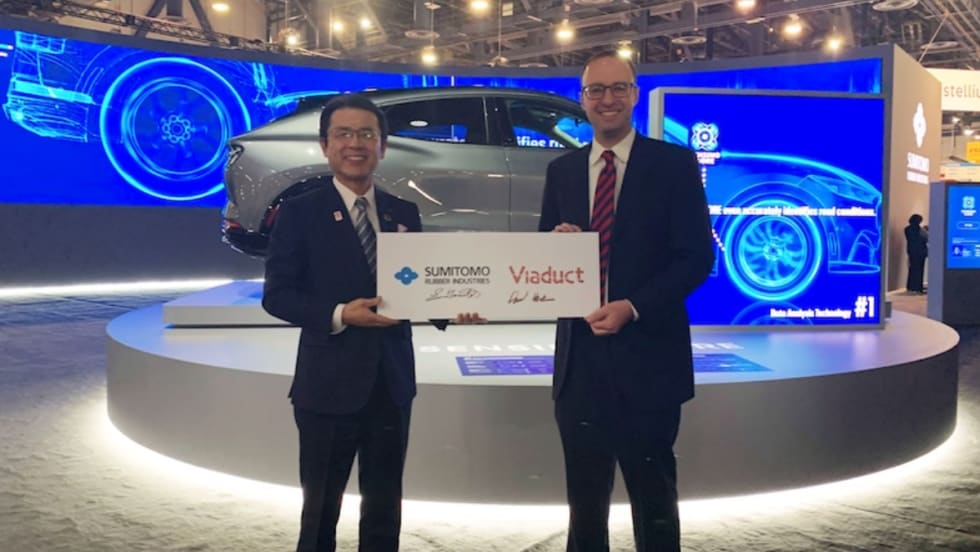
Sumitomo Rubber Industries to Acquire Viaduct
Viaduct will join Sumitomo as an independent subsidiary. Partnership strengthens global reach and accelerates AI-driven innovation for fleets and manufacturing.
Read More →