




Oregon and Washington Draw Best Scores in Study Assessing Traffic Safety Efforts
DES PLAINES, IL --- The Emergency Nurses Association has released its latest scorecard assessing state roadway laws, and the report concludes that Oregon and Washington have performed best in promoting traffic safety through legislation.
DES PLAINES, IL --- The Emergency Nurses Association (ENA) has released its latest scorecard assessing state roadway laws, and the report concludes that Oregon and Washington have performed best in promoting traffic safety through legislation.
The report's intent is to "motivate policy-makers, opinion-leaders and the general public to take a more active role in advocating for effective vehicle safety programs and regulations," ENA President Denise King writes in the report's introduction.
The states of Oregon and Washington are the only jurisdictions to receive the best possible score of 13 points on the 2008 ENA National Scorecard. California, Delaware, District of Columbia, Georgia, Illinois, Maine, Maryland, Massachusetts, Missouri, New Jersey, New Mexico and Tennessee meet 10 of the 13 ENA roadway and injury prevention criteria.
"This 2008 ENA National Scorecard on State Roadway Laws illustrates the evidence-based prevention measures that can help prevent the needless death and injures we see every day in our work," King said.
The criteria for the scorecard are based on these questions:
1. Does the state have a primary enforcement seat belt law?
2. Does the state's primary enforcement seat belt law apply to all seating positions?
3. Does the state have a booster seat law?
4. Does the booster seat law cover children up to age 8 years?
5. Does the state have a child passenger safety law covering all children up to age 16 years in all seating positions?
6. Does the state have a graduated driver licensing (GDL) law with a six-month holding period provision at the learner's stage?
7. Does the state have a GDL law with a provision requiring 30-50 hours of supervised driving at the learner's stage?
8. Does the state have a GDL law with a nighttime restriction provision at the intermediate stage?
9. Does the state have a GDL law limiting drivers in the intermediate stage from carrying more than one passenger under age 20 years?
10. Does the state have a universal motorcycle helmet law requiring all riders to wear a helmet?
11. Does the state’s universal motorcycle helmet law require that all riders' helmets meet federal protection standards?
12. Does the state mandate installation of an ignition interlock device as a vehicle sanction to restrict or separate hard-core drinking drivers from their vehicles?
13. Does the state have enabling legislation that provides appropriate officials the authority to develop, maintain and evaluate a state trauma system and its components?
The states with the fewest traffic safety and injury prevention laws meeting ENA criteria are Arkansas, Idaho, Minnesota, North Dakota, Ohio and South Dakota.
Four states -- Alabama, Idaho, Rhode Island and Vermont -- currently do not have the legislative capacity to establish a statewide trauma system, the report concluded. Of the 50 states and the District of Columbia, seven states show no progress from 2006 to 2008 in meeting ENA criteria: Alabama, Arkansas, Montana, North Carolina, North Dakota, Wisconsin and Wyoming.
Arizona and Massachusetts increased their scores by five points over their 2006 scores by passing or by already having in their respective statutes additional laws consistent with ENA criteria. Oregon added four points to its 2006 score. The next tier of most-improved scores from 2006 to 2008 includes Kentucky, Maine, Nebraska, Utah and Washington. These states increased their scores by passing three more laws that meet ENA criteria, according to the report.
More Safety
Which Fleet Types Have the Highest Severe Speeding Rates?
New research from SambaSafety finds significant differences in speeding rates across fleet industries, even as nearly 90% of surveyed fleets report using telematics.
Read More →
When a Cyberattack Hits Your Fleet: What Happens Next?
“You have two opportunities to test your plans: when you choose or when the threat actor chooses.” A cybersecurity expert reveals what fleet managers need to know before a cyberattack puts their operations at risk — and why the decisions made in the first moments can shape the entire recovery.
Read More →
Tips for Driving Safely on Halloween Night
This video features a reminder from the Connecticut Department of Transportation (DOT) and the Connecticut Police Chiefs Association, urging drivers to prioritize safety this Halloween.
Read More →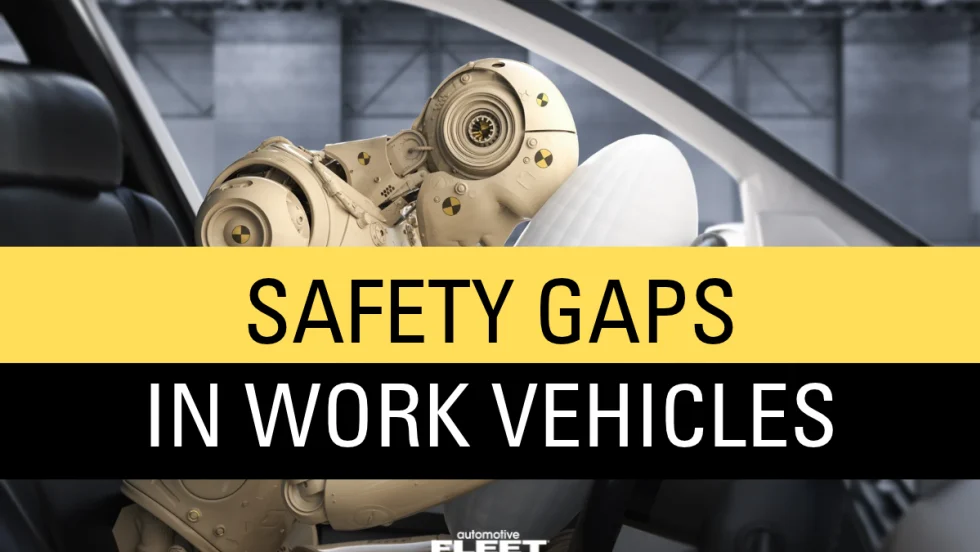
IIHS Crash Avoidance Tests Reveal Safety Gaps in Cargo Vans and Work Trucks
New IIHS crash avoidance ratings show uneven performance among cargo vans and heavy-duty pickups, with most struggling to avoid vehicle-to-vehicle collisions.
Read More →
What’s Next for Fleet? Safety, AI & Industry Recognition | AF News Recap
Could your company's culture be encouraging distracted driving? This week, we're exploring how workplace expectations affect driver safety, what AI, EVs, and autonomous vehicles could mean for the future of fleet management, and how fleet professionals can strengthen their award nominations.
Read More →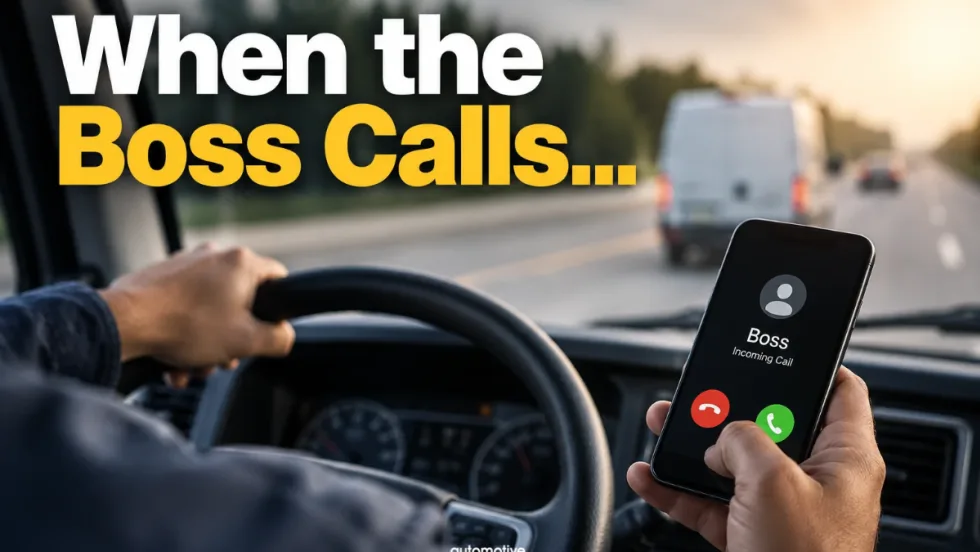
Does Your Fleet's Culture Encourage Distracted Driving?
What happens when the people responsible for enforcing safety rules are the ones setting the wrong example? The answer may reveal why some of the biggest risks to fleet drivers have little to do with what's written in the employee handbook.
Read More →
Fleet Manager’s Ultimate Playbook: Navigating the New Standard in OEM Connectivity
Rising operating costs, driver safety concerns, and unplanned downtime are putting unprecedented pressure on modern fleets. Discover how fleet managers use embedded OEM connectivity and real-time vehicle data to cut TCO, prevent downtime, and protect drivers without aftermarket telematics hardware.
Read More →
From Driver Well-Being to EV Charging | AF News Recap
Mental health belongs in the fleet safety conversation. This week, we’re looking at five ways fleets can support employee well-being before a crisis, plus Holman’s expansion in Mexico, new one-day Fleet Forward passes, and why EV charging demand is outpacing infrastructure growth.
Read More →
Nexar-Nauto Merger Aims to Give Fleets Better Safety Intelligence Through Larger Driving Dataset
Stefan Heck tells Automotive Fleet that combining more than 10 billion miles of driving history with Nexar's AI models will give fleets deeper insights into driver risk and roadway conditions than either company could provide independently.
Read More →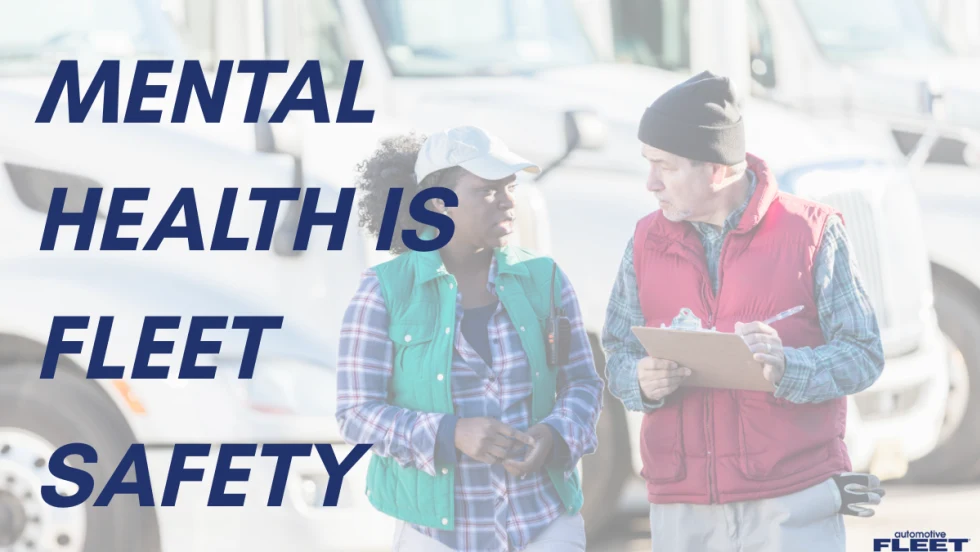
Don't Wait for a Crisis: 5 Ways to Build Mental Health Into Your Fleet Safety Program
For Suicide Prevention Month, fleet and safety leaders have an opportunity to put mental health where it belongs: at the center of workplace safety.
Read More →