




Operation Lifesaver Addresses Railroad Crossing Safety
WASHINGTON, D.C. --- Operation Lifesaver Inc. said it is promoting awareness of rail safety for motorists with two new video public service announcements (PSAs) targeted to younger drivers.
WASHINGTON, D.C. --- Operation Lifesaver Inc. said it is promoting awareness of rail safety for motorists with two new video public service announcements (PSAs) targeted to younger drivers.
The 30-second spots illustrate how distracted drivers can fail to notice that they are approaching highway-rail grade crossings. (You can view one of the PSAs on the Operation Lifesaver homepage at www.oli.org.)
"Cell phones, texting and other distractions can cause people to pay inadequate attention to the road and at highway-rail intersections," noted Operation Lifesaver President Helen M. Sramek. "Our new PSAs remind drivers to stay focused, especially near train tracks. These days, drivers face multiple sources of distraction both inside their vehicles -- like satellite radios, DVD players and navigation systems -- as well as outside their vehicles. All can have deadly consequences, because there is no second chance if you meet a train at a crossing."
Collisions at railroad crossings continue to be a major problem across the nation. This week, a Metrolink commuter train collided with a vehicle that had been pushed onto the tracks after being rear-ended by another vehicle in Los Angeles' San Fernando Valley. Six people were injured, including two critically. One of the critically injured people is an infant, Fire Department spokesman Brian Humphrey told the Associated Press.
Earlier this month, in eastern Durham, N.C., two children were killed and a woman was injured when a train slammed into an Explorer SUV sitting on the tracks because it was pinned in by traffic. The boys, ages 9 and 6, were thrown from the SUV and pronounced dead at the scene.
Last year there were more than 2,400 vehicle-train collisions nationwide at highway-rail grade crossings, resulting in more than 1,200 deaths or injuries. Federal statistics also show that inattentive drivers contribute to approximately 3 percent of all vehicle-train crashes at highway-rail grade crossings; another 20 percent of grade crossing collisions involve motor vehicles striking trains at a crossing.
The PSAs will launch in seven states: Alabama, Georgia, Idaho, Oklahoma, Oregon, Texas and Washington. They will air on cable systems and local television stations in December and January. Funding for the spots comes through a grant from the Federal Railroad Administration and the Department of Transportation.
Here are five reminders and driving-safety tips aimed at preventing such collisions. You may want to pass these along to your fleet drivers.
1. Always expect a train at any crossing -- avoid all distractions.
2. Do not get trapped on the tracks: only proceed through the crossing if you are sure you can completely clear the crossing without stopping.
3. Because of their size and weight, trains can't stop quickly -- they can take up to a mile or more to stop.
4. If you see a train approaching, stop. It is actually closer and moving faster than what appears. At multiple track crossings, watch out for a second train approaching from either direction.
5. If your vehicle stalls on the tracks, get out immediately and move quickly away from the tracks. Look for an emergency number at the crossing to notify authorities to stop any on-coming trains, or call 911 or your local law enforcement agency for assistance.
Operation Lifesaver Inc. is a national, non-profit safety education group whose goal is to eliminate deaths and injuries at railroad crossings and along railroad rights of way.
Operation Lifesaver has programs in all 50 states and the District of Columbia, with trained and certified presenters. They provide free safety talks to community groups, school bus drivers, truck drivers and student drivers to raise awareness around railroad tracks and trains. For more information, and to request a free safety presentation, visit www.oli.org.
More Safety

Nexar-Nauto Merger Aims to Give Fleets Better Safety Intelligence Through Larger Driving Dataset
Stefan Heck tells Automotive Fleet that combining more than 10 billion miles of driving history with Nexar's AI models will give fleets deeper insights into driver risk and roadway conditions than either company could provide independently.
Read More →
Don't Wait for a Crisis: 5 Ways to Build Mental Health Into Your Fleet Safety Program
For Suicide Prevention Month, fleet and safety leaders have an opportunity to put mental health where it belongs: at the center of workplace safety.
Read More →
How Camera Data Can Strengthen a Fleet’s Insurance Renewal
Insights from a commercial insurance carrier and a broker show how fleets can turn video telematic data, driver coaching, and improved claims results into a stronger case at insurance renewal.
Read More →
The Safest Fleets Aren’t the Ones with the Most Technology
You’ve made the telematics investment. Here’s how to capture the other half of its value and build the safest fleet on the road.
Read More →
Hidden in Plain Sight: Fleet Compliance Risks
Fleet compliance isn't just about having policies — it's about consistently enforcing them. This practical guide reveals six hidden compliance risks common in public sector and shared fleet operations and outlines proven strategies to improve visibility, accountability, and audit readiness
Read More →
NETS Sets 2026 Fleet Safety Benchmark Conference for Indianapolis
The Sept. 15–17 program will feature fleet benchmarking data, case studies, emerging technologies, and implementation strategies while running alongside the NSC Safety Congress & Expo.
Read More →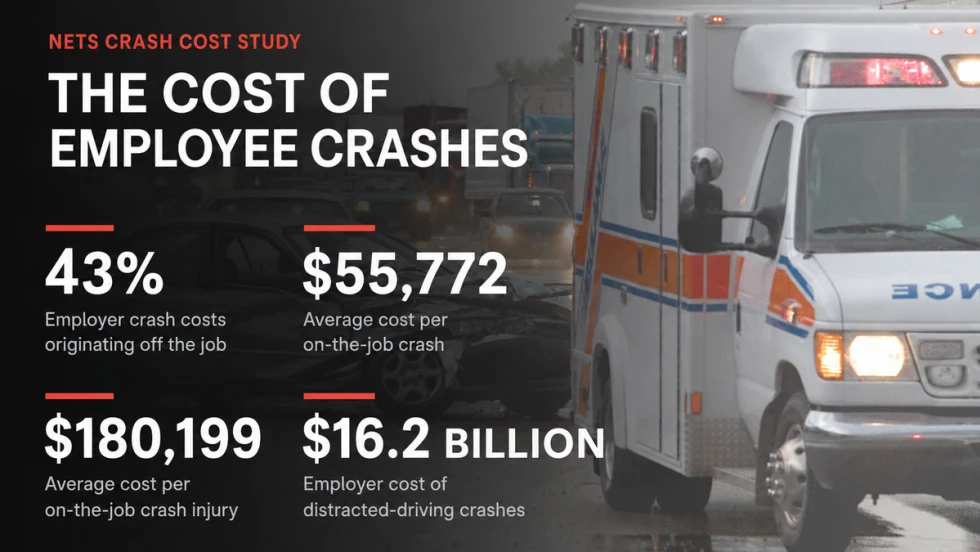
Off-the-Job Crashes Account for 43% of Employers’ $61.7 Billion Crash Burden
NETS quantifies costs dispersed across fleet, risk, HR, and other departments while providing new per-crash benchmarks for employers.
Read More →
Ram Recalls More Than 1.27 Million 1500 Pickups for Seat Belt Anchor Issue
The recall affects certain 2019-2026 Ram 1500 pickups that may have improperly attached second-row seat belt buckle anchors.
Read More →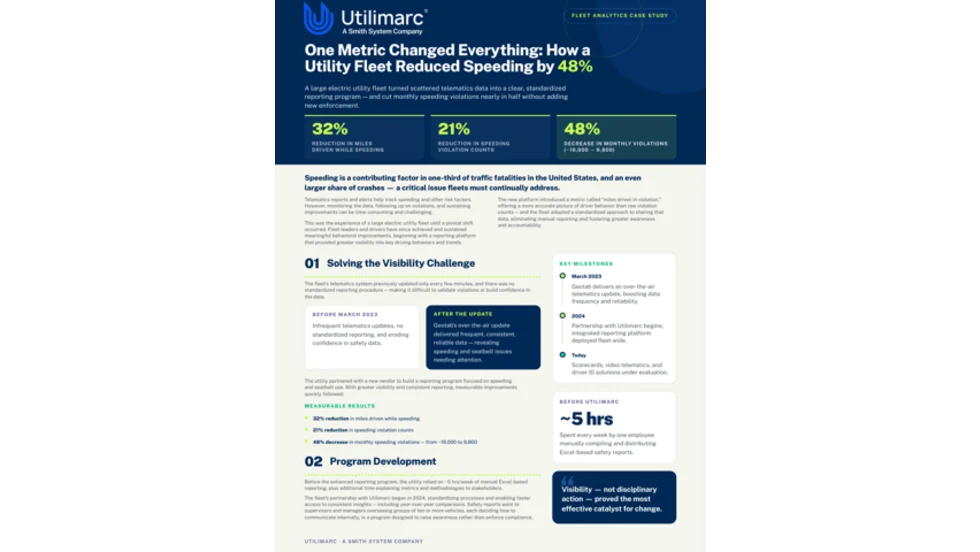
How Better Visibility Cut Speeding Violations by 48%
Fleet leaders don't need more data, they need clearer visibility into what the data is saying. This case study explores how one utility replaced speeding-event counts with a single metric — miles driven in violation — to strengthen safety and significantly reduce speeding violations.
Read More →
Operation Safe Driver Week: Why the Industry's Oldest Safety Campaign Still Matters to Fleets
A look at how a 2007 enforcement initiative became one of the most consequential weeks on the fleet safety calendar, and what it means for your drivers in 2026.
Read More →