




Okla., Dallas Order 321 Bi-Fuel F-150 Pickups
The State of Oklahoma, its agencies and the City of Dallas have ordered a total of 321 Ford F-150 pickups that can run on compressed natural gas or gasoline, according to Ford Motor Co., which also said that demand for gas is growing strongly.
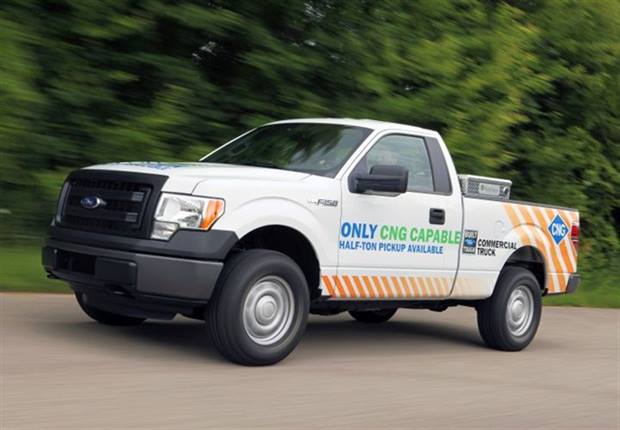
Photo courtesy of Ford.
The State of Oklahoma, its agencies and the City of Dallas have ordered a total of 321 Ford F-150 pickups that can run on compressed natural gas or gasoline, according to Ford Motor Co., which also said that demand for gas is growing strongly.
Since 2010, Ford CNG-prepped truck sales have increased more than 250 percent, and the company expects demand for CNG-prepped vehicles to continue growing as more fleet customers recognize the economic and environmental benefits of the fuel, said Jon Coleman, Ford fleet sales manager. Cumulative sales are expected to exceed 50,000 trucks by the end of the year.
Oklahoma Gov. Mary Fallin is leading a coalition of 22 states seeking to use more CNG vehicles in their fleets, the Ford announcement said.
Fallin announced the CNG project at her inaugural Governor's Energy Conference in 2011. Since then, she has worked with other Oklahoma officials and governors from other states, met with Ford and other automobile manufacturers, and received bids to add more CNG vehicles to the state’s fleets.
"I am excited about Oklahoma's partnership with Ford Motor Company as we work to support energy efficiency, cost savings and the use of clean-burning American-made energy," Fallin said in a Ford-issued statement. "Ultimately, converting our state fleets to CNG will save millions in taxpayer dollars."
CNG prices in Oklahoma vary from $1.07 to $2.49 per gasoline-gallon equivalent. The average statewide price for a gallon of regular gas is $3.43. Fuel bills could be reduced as much as 67 percent with CNG vehicles, said Coleman at Ford, even allowing for driving range lost due to the density of CNG.
Arkansas, Colorado, Louisiana, Mississippi and Texas have expressed interest in Ford CNG-capable vehicles, he said.
The specially equipped bi-fuel F-150 model purchased by Oklahoma features two storage tanks — the standard gasoline reservoir and a supplementary CNG tank. Combined, this gives the light-duty truck a range of up to 750 miles, depending on the size of the tanks. The most common configuration allows fleet operators to go 450 miles on CNG alone and another 300 miles on regular gas.
"For fleet customers in Oklahoma, Texas and other states, a CNG F-150 really makes sense," Coleman said. "The fuel is more affordable and widely available, and it reduces greenhouse gases and pollutants that cause smog."
The 2014 F-150 is available with a gaseous-fuel prep option for the 3.7-liter V-6 that can run on CNG or liquefied petroleum gas (propane). CNG/LPG engine prep from the factory costs $315. The customer then chooses a Ford Qualified Vehicle Modifier to supply fuel tanks, fuel lines and unique fuel injectors. Upfits run approximately $6,000 to $9,500, depending on tank capacity.
For fleet managers, CNG conversions can provide stability against fluctuating fuel prices, lower vehicle operating costs and reduce pollutants. CNG sells for a national average $2.11 per gallon of gasoline equivalent, and is as low as $1 in parts of the country. By comparison, the national average for unleaded regular gas is $3.67 per gallon.
Customers can also accelerate the payback period by taking advantage of a growing number of incentives issued by states such as Oklahoma. By this summer, Ford will offer the gaseous prep package on eight truck series, including the F-150.
By Tom Berg
More Green Fleet
EV Charging Use Is Outpacing Infrastructure Growth
ChargePoint’s 2026 Charging Forward Report points to rising charger use, higher-powered charging, commercial vehicle electrification, and energy-management technology. Here’s what fleets should know.
Read More →
Merchants Fleet Reports 290M EV Miles as Fleets Navigate Changing Electrification Market
From millions in operating savings to hundreds of millions of EV miles, Merchants Fleet’s latest report reveals what’s working and what’s changing in fleet electrification.
Read More →
The EV Breakdown Nobody's Talking About: Why Most Electric Vehicle Roadside Calls Aren't Mechanical Failures
Here's why EV breakdowns are widely misunderstood.
Read More →
ChargePoint Now Available in Energy Pass
ChargePoint and additional planned charging network integrations were added to GM's Energy Pass.
Read More →

First Look: Slate Auto's Electric Fleet Pickup
Could an affordable, modular EV pickup make electrification more practical for fleets?
Read More →
Slate Debuts Colorful, Unique EV Models
A recent media and client event, studded with electric vehicles dressed up on platforms, planted a new position for the manufacturer in the wider EV market. Fleets will find cost-saving advantages.
Read More →
Slate Electric SUV, Pickup Switchable Model Aims For Light-Duty Fleets
Everything about this EV is counterintuitive and understated, making it stand out from the crowd.
Read More →
Inspiration Mobility Acquires Key Electrada Assets
Inspiration Mobility Group has acquired select assets of Electrada, adding the fleet electrification provider's team, technology, and charging infrastructure development capabilities to its energy management business.
Read More →
Turning Connected Vehicle Data Into Decisions That Matter
Fleet leaders have more data than ever, but turning that data into clear, actionable decisions remains a challenge. This white paper shows how leading organizations are using connected vehicle data to improve safety, reduce costs, and optimize fleet performance. Learn how to turn insight into action across your fleet.
Read More →