





Related: The Reality of Autonomous Trucks
Obama Aims to Invest $4B in Automated Vehicle Technology
The Obama administration wants to spend nearly $4 billion over ten years to fund pilot to projects aimed at accelerating the development of connected and automated vehicles.
January 14, 2016
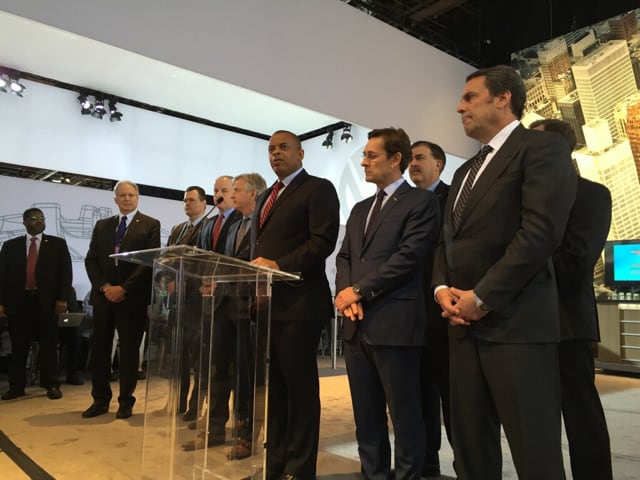
Transportation Secretary Foxx announcing autonomous vehicle proposal at auto show in Detroit. Photo: DOT
2 min to read
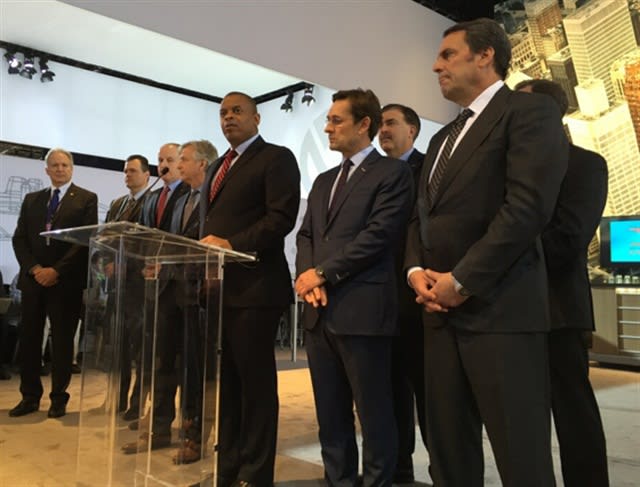
Transportation Secretary Foxx announcing autonomous vehicle proposal at auto show in Detroit.Photo: DOT
The Obama administration wants to spend nearly $4 billion over 10 years to fund pilot to projects aimed at accelerating the development of connected and automated vehicles.
The fiscal year 2017 budget proposal was outlined by Secretary of Transportation Anthony Foxx on Jan. 14 at the North American International Auto Show in Detroit.
"Meeting the challenge of a transformation to a cleaner and more modern transportation sector requires infrastructure that reduces congestion not by just paving new lanes, but by making better use of the lanes and capacity we have," Foxx said during a media briefing at the auto show. "Autonomous vehicles offer us a realistic way of doing that."
Foxx said the administration's proposal will "allow testing automated and connected vehicle systems in different corridors and different states and to work with industry to ensure effective interoperability."
He noted that the effort is intended to involve a "combination of public and private effort" to drive innovation, just as the Smart City Challenge that DOT launched last month "gives medium-sized cities an incentive to embrace automation and connected vehicles. The president is proposing more of this type of funding to equip our cities and states for tomorrow’s transportation challenges, and we think it's a great way to move forward."
Foxx added that, “In plain English, this [proposal] means we are going to do everything we can to advance safe, smart and sustainable transportation innovations like vehicle automation.”
Following Foxx's announcement, General Motors issued a statement of support.
"General Motors supports the government/industry collaboration to advance principles for autonomous vehicles given our shared goals for consumer safety and satisfaction," the automaker said. "We see automation and autonomous technology leading to large advances in convenience, mobility and safety, since most crashes are caused by driver error. We are committed to working with the government and the rest of the industry on standards."
Further, GM noted, advanced safety features already in use in GM vehicles will provide the building blocks for further progress in autonomous vehicle development.
More Safety
IIHS Crash Avoidance Tests Reveal Safety Gaps in Cargo Vans and Work Trucks
New crash-avoidance ratings from the Insurance Institute for Highway Safety reveal inconsistent performance among commercial vehicles, with several popular cargo vans and heavy-duty pickups struggling to avoid collisions with other vehicles and pedestrians.
Read More →
What’s Next for Fleet? Safety, AI & Industry Recognition | AF News Recap
Could your company's culture be encouraging distracted driving? This week, we're exploring how workplace expectations affect driver safety, what AI, EVs, and autonomous vehicles could mean for the future of fleet management, and how fleet professionals can strengthen their award nominations.
Read More →
Does Your Fleet's Culture Encourage Distracted Driving?
What happens when the people responsible for enforcing safety rules are the ones setting the wrong example? The answer may reveal why some of the biggest risks to fleet drivers have little to do with what's written in the employee handbook.
Read More →
Sponsored•October 1, 2026
Fleet Manager’s Ultimate Playbook: Navigating the New Standard in OEM Connectivity
Rising operating costs, driver safety concerns, and unplanned downtime are putting unprecedented pressure on modern fleets. Discover how fleet managers use embedded OEM connectivity and real-time vehicle data to cut TCO, prevent downtime, and protect drivers without aftermarket telematics hardware.
Read More →
From Driver Well-Being to EV Charging | AF News Recap
Mental health belongs in the fleet safety conversation. This week, we’re looking at five ways fleets can support employee well-being before a crisis, plus Holman’s expansion in Mexico, new one-day Fleet Forward passes, and why EV charging demand is outpacing infrastructure growth.
Read More →
Nexar-Nauto Merger Aims to Give Fleets Better Safety Intelligence Through Larger Driving Dataset
Stefan Heck tells Automotive Fleet that combining more than 10 billion miles of driving history with Nexar's AI models will give fleets deeper insights into driver risk and roadway conditions than either company could provide independently.
Read More →
Don't Wait for a Crisis: 5 Ways to Build Mental Health Into Your Fleet Safety Program
For Suicide Prevention Month, fleet and safety leaders have an opportunity to put mental health where it belongs: at the center of workplace safety.
Read More →
How Camera Data Can Strengthen a Fleet’s Insurance Renewal
Insights from a commercial insurance carrier and a broker show how fleets can turn video telematic data, driver coaching, and improved claims results into a stronger case at insurance renewal.
Read More →
The Safest Fleets Aren’t the Ones with the Most Technology
You’ve made the telematics investment. Here’s how to capture the other half of its value and build the safest fleet on the road.
Read More →
Sponsored•August 7, 2026
Hidden in Plain Sight: Fleet Compliance Risks
Fleet compliance isn't just about having policies — it's about consistently enforcing them. This practical guide reveals six hidden compliance risks common in public sector and shared fleet operations and outlines proven strategies to improve visibility, accountability, and audit readiness
Read More →