




NTSB Crash Investigation Underscores Dangers of Panic-Like Steering
WASHINGTON - A recent finding by the National Transportation Safety Board drives home one of the tenets of fleet safety: At highway speeds, overcorrecting or excessive steering can cause the driver to lose control, forcing the vehicle to slide sideways or roll over.
WASHINGTON - A recent finding by the National Transportation Safety Board (NTSB) drives home one of the tenets of fleet safety: At highway speeds, overcorrecting or excessive steering can cause the driver to lose control, forcing the vehicle to slide sideways or roll over.
The NTSB determined July 26 that the probable cause of a 2009 rollover accident in Indiana, which involved a truck-tractor and cargo tank semitrailer, was the driver's excessive and rapid evasive steering maneuver after he began to encroach upon the occupied left lane. Contributing factors included the driver quickly steering the combination unit from the right shoulder to the right lane; the reduced cross slope of the paved right shoulder; and the susceptibility of the combination unit to rollover because of its high center of gravity, NTSB concluded.
The crash in question occurred Oct. 22, 2009, at about 10:38 a.m. EDT. A 2006 Navistar International truck-tractor in combination with a 1994 Mississippi Tank Co. MC331 specification cargo tank semitrailer operated by AmeriGas Propane rolled over about 10 miles northeast of downtown Indianapolis.
The tanker was loaded with 9,001 gallons of liquefied petroleum gas, which escaped, formed a vapor cloud and ignited. The rollover occurred on a connection ramp at the junction of I-69 south and I-465 south.
"The NTSB has been concerned about the integrity of cargo tanks carrying hazardous materials for more than 40 years," said NTSB Chairman Deborah A. P. Hersman. "There are more than 1,300 rollovers a year involving cargo tank motor vehicles. These accidents pose a significant safety risk to both the vehicle driver and to the motoring public."
The NTSB investigation revealed that the truck driver, who was negotiating a left curve from the right lane of the connection ramp, began to encroach upon the left lane that was occupied by a passenger car. The truck driver responded to the car's presence by over-steering his vehicle, which caused it to veer to the right and onto the paved right shoulder. Moments later, the truck driver steered counterclockwise to redirect the truck from the right shoulder and back to the right lane.
This series of driver actions -- steering hard to the right and then back to the left -- led to the cargo tank rolling over, detaching from the truck, penetrating a steel guardrail, and colliding with and entirely displacing a bridge pier column that supported the I-465 overpass.
As a result of the accident and subsequent fire, the truck driver and the driver of the passenger car sustained serious injuries. Three occupants from other passenger vehicles traveling on I-465 received minor injuries from the post-accident fire.
The NTSB issued 20 safety recommendations including the following:
To the Federal Motor Carrier Safety Administration and the Pipeline and Hazardous Materials Safety Administration -- Implement a comprehensive rollover prevention program.
To the Pipeline and Hazardous Materials Administration -- Analyze available accident data to identify cargo tank designs that are susceptible to failure for developing accident performance standards for newly manufactured cargo tanks.
To the National Highway Traffic Safety Administration -- Develop stability control system performance standards for all commercial motor vehicles and buses that have a gross vehicle weight rating greater than 10,000 pounds as well as to establish comprehensive minimum performance standards for all newly manufactured cargo tank motor vehicles.
To the Federal Highway Administration and the American Association of State Highway and Transportation Officials -- Develop guidelines for identifying and protecting bridges that are vulnerable to collapse if struck by errant heavy commercial vehicles.
More Safety

Nexar-Nauto Merger Aims to Give Fleets Better Safety Intelligence Through Larger Driving Dataset
Stefan Heck tells Automotive Fleet that combining more than 10 billion miles of driving history with Nexar's AI models will give fleets deeper insights into driver risk and roadway conditions than either company could provide independently.
Read More →
Don't Wait for a Crisis: 5 Ways to Build Mental Health Into Your Fleet Safety Program
For Suicide Prevention Month, fleet and safety leaders have an opportunity to put mental health where it belongs: at the center of workplace safety.
Read More →
How Camera Data Can Strengthen a Fleet’s Insurance Renewal
Insights from a commercial insurance carrier and a broker show how fleets can turn video telematic data, driver coaching, and improved claims results into a stronger case at insurance renewal.
Read More →
The Safest Fleets Aren’t the Ones with the Most Technology
You’ve made the telematics investment. Here’s how to capture the other half of its value and build the safest fleet on the road.
Read More →
Hidden in Plain Sight: Fleet Compliance Risks
Fleet compliance isn't just about having policies — it's about consistently enforcing them. This practical guide reveals six hidden compliance risks common in public sector and shared fleet operations and outlines proven strategies to improve visibility, accountability, and audit readiness
Read More →
NETS Sets 2026 Fleet Safety Benchmark Conference for Indianapolis
The Sept. 15–17 program will feature fleet benchmarking data, case studies, emerging technologies, and implementation strategies while running alongside the NSC Safety Congress & Expo.
Read More →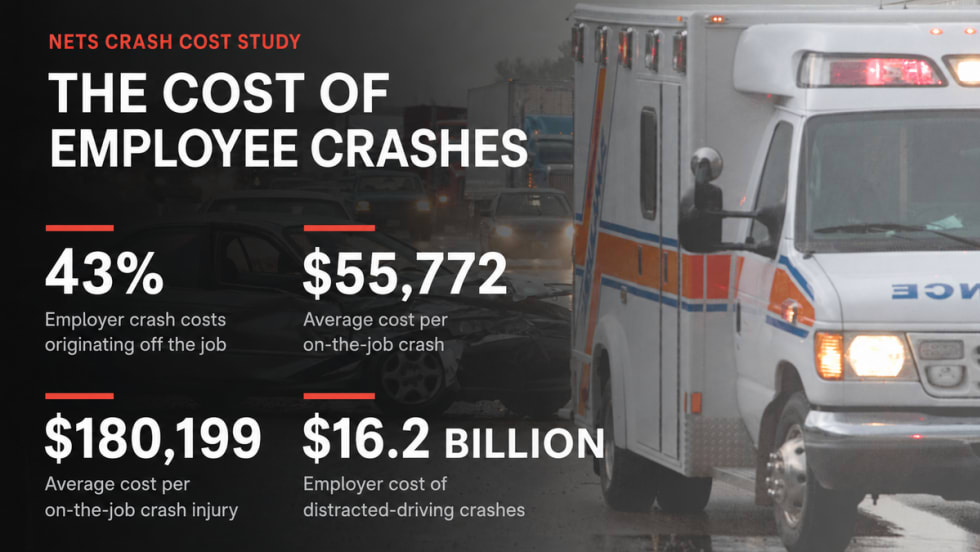
Off-the-Job Crashes Account for 43% of Employers’ $61.7 Billion Crash Burden
NETS quantifies costs dispersed across fleet, risk, HR, and other departments while providing new per-crash benchmarks for employers.
Read More →
Ram Recalls More Than 1.27 Million 1500 Pickups for Seat Belt Anchor Issue
The recall affects certain 2019-2026 Ram 1500 pickups that may have improperly attached second-row seat belt buckle anchors.
Read More →
How Better Visibility Cut Speeding Violations by 48%
Fleet leaders don't need more data, they need clearer visibility into what the data is saying. This case study explores how one utility replaced speeding-event counts with a single metric — miles driven in violation — to strengthen safety and significantly reduce speeding violations.
Read More →
Operation Safe Driver Week: Why the Industry's Oldest Safety Campaign Still Matters to Fleets
A look at how a 2007 enforcement initiative became one of the most consequential weeks on the fleet safety calendar, and what it means for your drivers in 2026.
Read More →