




NREL and DOE Launch New Online Alternative Fuel Tools for Fleet Managers
WASHINGTON - The U.S. Department of Energy’s (DOE) National Renewable Energy Laboratory (NREL) launched a new online tool, and redesigned the DOE’s Alternative Fuels Data Center Web site, to allow fleet managers to determine the best alternative-fuel vehicle strategies.
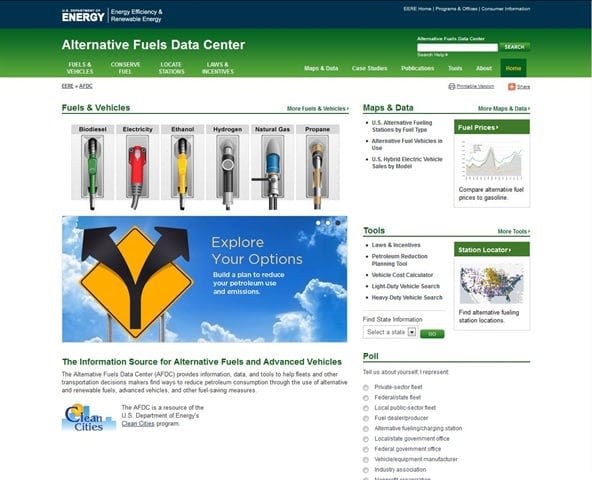
WASHINGTON - The U.S. Department of Energy’s (DOE) National Renewable Energy Laboratory (NREL) launched a new online tool, and redesigned the DOE’s Alternative Fuels Data Center Web site, to allow fleet managers to determine the best alternative-fuel vehicle strategies. The new Petroleum Reduction Planning Tool allows fleet managers to evaluate the benefits associated with five alternative fuels, including biodiesel, electricity, ethanol, natural gas, and propane. The tool also allows fleet managers to evaluate the benefits of other efficiency approaches, such as idle reduction and simply improving the fuel economy of gasoline or diesel vehicles.
“Fleets across the country are trying to reduce their vulnerability to spikes in oil prices and are finding themselves increasingly subject to greenhouse gas emissions limitations at the federal, state and local levels,” NREL Project Manager Witt Sparks said. “This tool provides valuable information on a variety of strategies that can help them reach their desired and even required outcomes. From a single web page, a fleet manager can explore multiple strategies and know what the energy and environmental impacts will likely be before making any substantial investments.”
The tool allows fleet managers to set objectives for a plan, save the plan, make changes to it, and to evaluate different alternative-fuel fleet scenarios. Each area of the site also links to informational resources on each efficiency strategy and alternative fuel type.
In addition to the new tool, the redesigned Alternative Fuels Data Center (AFDC) now features a library of maps and data, which users can customize via interactive charts and graphs. Data sets available for viewing include alternative fuel use trends, driving habits, hybrid vehicle availability, biofuels production, transportation regulations, incentives, and vehicle greenhouse gas emissions.
The site also offers an updated version of the Alternative Fueling Station Locator, which allows fleet managers and drivers to find stations that offer electric vehicle charging, E85, biodiesel, natural gas, propane, and hydrogen. The tool also details the number of available fueling stations by state and by technology across the U.S. Fleet organizations with websites can also embed the fuel site locator on their own sites.
For more information, visit the new site at www.afdc.energy.gov.
More Green Fleet

EV Charging Use Is Outpacing Infrastructure Growth
ChargePoint’s 2026 Charging Forward Report points to rising charger use, higher-powered charging, commercial vehicle electrification, and energy-management technology. Here’s what fleets should know.
Read More →
Merchants Fleet Reports 290M EV Miles as Fleets Navigate Changing Electrification Market
From millions in operating savings to hundreds of millions of EV miles, Merchants Fleet’s latest report reveals what’s working and what’s changing in fleet electrification.
Read More →
The EV Breakdown Nobody's Talking About: Why Most Electric Vehicle Roadside Calls Aren't Mechanical Failures
Here's why EV breakdowns are widely misunderstood.
Read More →
ChargePoint Now Available in Energy Pass
ChargePoint and additional planned charging network integrations were added to GM's Energy Pass.
Read More →

First Look: Slate Auto's Electric Fleet Pickup
Could an affordable, modular EV pickup make electrification more practical for fleets?
Read More →
Slate Debuts Colorful, Unique EV Models
A recent media and client event, studded with electric vehicles dressed up on platforms, planted a new position for the manufacturer in the wider EV market. Fleets will find cost-saving advantages.
Read More →
Slate Electric SUV, Pickup Switchable Model Aims For Light-Duty Fleets
Everything about this EV is counterintuitive and understated, making it stand out from the crowd.
Read More →
Inspiration Mobility Acquires Key Electrada Assets
Inspiration Mobility Group has acquired select assets of Electrada, adding the fleet electrification provider's team, technology, and charging infrastructure development capabilities to its energy management business.
Read More →
Turning Connected Vehicle Data Into Decisions That Matter
Fleet leaders have more data than ever, but turning that data into clear, actionable decisions remains a challenge. This white paper shows how leading organizations are using connected vehicle data to improve safety, reduce costs, and optimize fleet performance. Learn how to turn insight into action across your fleet.
Read More →