





Read More: Nissan Enhancing Headlight Technology to Protect Drivers
Nissan's History with Video Games Goes Further Back Than You Think
The similarity between a Nissan vehicle and video games? Every millimeter is the result of countless decisions made by dedicated employees around the world.
January 19, 2024
Much like video game developers, Nissan is constantly innovating to deliver the latest technology to customers.
Photo: Automotive Fleet
3 min to read
Nissan provided a look at its longstanding history with video games, going back to the earliest examples of a driving video game that came in 1976 through a partnership with Bally Manufacturing.
Under the subsidiary Midway, the company released "Datsun 280 ZZZAP," an arcade game that provided an entirely new experience to gamers: It featured a gear shifter, gas pedal, and steering wheel to replicate driving the 280Z.
As part of the joint venture with Bally, Datsun created a 280Z ZZZAP Edition sports car, with only 1,000 units produced. All vehicles were finished in stunning Sunburst Yellow paint and included a unique graphics package with side, roof, hood, and deck stripes, as well as rear window louvers and unique mirrors.
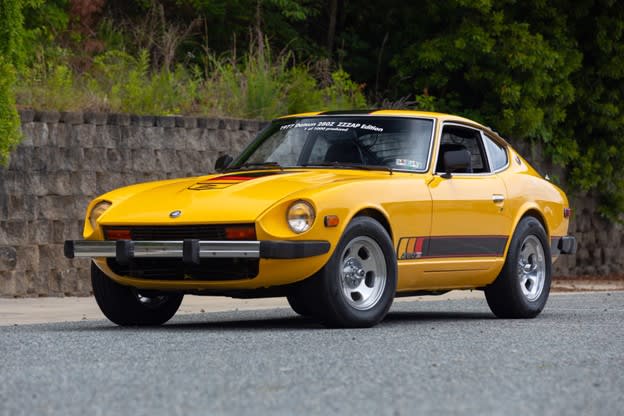
As part of the joint venture with Bally, Datsun created a 280Z ZZZAP Edition sports car, with only 1,000 units produced.
Photo: Nissan
Gran Turismo Debuts, Features Nissan Vehicles
Twenty-one years after ZZZAP was released, the personal gaming revolution was well underway, and "Gran Turismo" debuted for the original Sony PlayStation in 1997. It has gone on to sell over 90 million units worldwide as of November 2022.
The original "Gran Turismo" featured Nissan vehicles, including a Skyline GT-R, which was also included on the cover art. Since then, the relationship has only grown, and the "Gran Turismo" series features more Nissan vehicles than those of any other manufacturer.
"It just ignited interest in Nissan, Datsun and our racing heritage overall," said Mike Disser, manager, Social Media at Nissan.
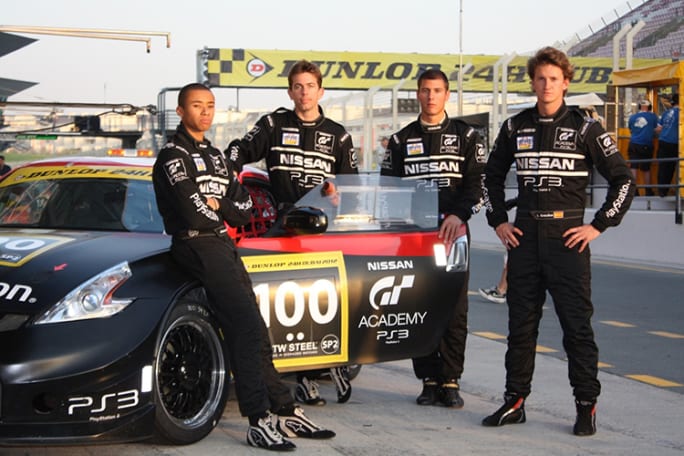
GT Academy drivers Jann Mardenborough, Bryan Heitkotter, Jordan Tresson and Lucas Ordoñez.
Photo: Nissan
Nissan, Sony Launch 'GT Academy'
In 2008, Nissan and Sony Interactive Entertainment launched "GT Academy," which invited the best Gran Turismo gamers to compete at the world's top racetracks. A reality TV show was also produced and aired on Speed and Spike Channels.
Disser, who was heavily involved in "GT Academy" as then-manager of Lifestyle and Sponsorship Marketing, said 75,000 people registered to participate the first year – a number that exploded to roughly 400,000 the second year.
"Watching these gamers go from couches and gaming chairs to behind the seats of real cars – it was fascinating," Disser said.
According to Nissan, "GT Academy" launched the careers of several professional drivers, including Lucas Ordóñez, Bryan Heitkotter, and Jann Mardenborough.
Jeffrey Kowalczyk, executive director, Entertainment and Alliances at the advertising agency TBWA\Nissan United, said "GT Academy" is an example of what can happen when two seemingly disparate organizations make a bold move together.
"It had never been done before," said Kowalczyk, who was an integral part of the "GT Academy" team. "But when you marry the technology of Nissan with that of Sony and 'Gran Turismo', it was lightning in a bottle."
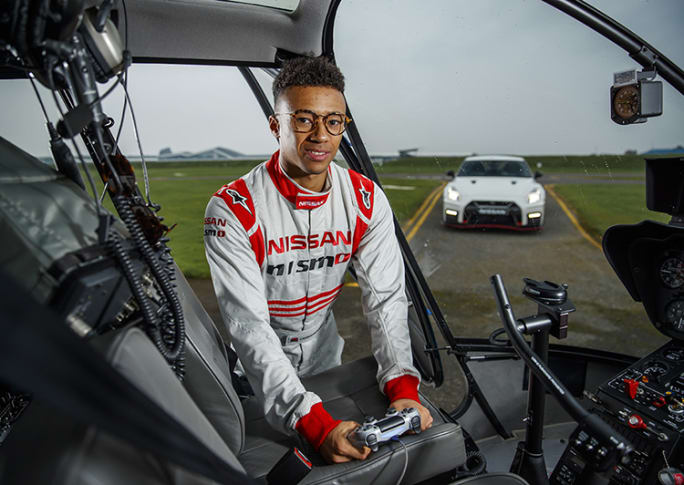
Jann Mardenborough with and the remotely controlled GT-R at Silverstone in 2017.
Photo: Nissan
Mardenborough Races GT-R, Nissan-Sony Partnership Leads to Film
In 2017, Mardenborough raced a GT-R around Silverstone's famed National Circuit using a PlayStation DualShock 4 controller. The car reached speeds above 130 mph.
Hollywood also took notice of the Nissan-Sony partnership.
In 2023, Sony Pictures released "Gran Turismo: Based on a True Story" in theaters worldwide, with Mardenborough as the main character in the storyline. The film is based on the true story of a team of a struggling working-class gamer (Archie Madekwe), a failed former racecar driver (David Harbour), and an idealistic motorsport executive (Orlando Bloom).
"The movie truly captured the essence of the GT Academy program," Disser said.

Bandai Namco's Minamo Takahashi (L) and Nissan's Hiroyuki Suzuki (R) collaborated to develop in-car sounds.
Photo: Nissan
Nissan Enters the esports World
In 2019, Nissan continued to expand its video game ventures. It officially entered the world of esports by being the first automaker to partner with FaZe Clan and OpTic Gaming, two international esports teams.
In 2021, Nissan worked with Bandai Namco Group – the company behind Pac-Man and other arcade games – to develop in-car sounds for several new models, including the 2021 Nissan Rogue and Pathfinder.
The purpose of the partnership was to enhance the SUVs' personality and character, and to communicate important information without distracting the user – just like sounds do in the best video games.
More Operations

How Fleets Can Recruit and Train Veterans for Technician Roles
Here's how the technician shortage has affected uptime for fleets, and what to do about it.
Read More →
Avis Budget Group Deploys Neology Toll Management Technology Across Major Brands
Neology’s neoFleet platform will manage toll transactions and toll-authority operations for vehicles across Avis, Budget, Payless, Budget Truck and Zipcar.
Read More →
Fleet Personal-Use Charges Edge Higher in 2026
Nearly eight in 10 surveyed fleets allow personal use of company vehicles, while just over half of respondents report charging employees for the privilege.
Read More →
The Future of Fleet + What’s Changing Right Now | AF News Recap
Could developments overseas offer a preview of what’s coming for U.S. fleets? This week, we’re looking at the future of AI, autonomy, and electrification, plus Ford Pro’s new certified pre-owned program, smarter vehicle offboarding, and a new way for fleets to manage toll expenses.
Read More →
How to Handle Vehicle Offboarding
What do fleet managers need to do when a driver leaves?
Read More →
Sponsored•October 1, 2026
Fleet Manager’s Ultimate Playbook: Navigating the New Standard in OEM Connectivity
Rising operating costs, driver safety concerns, and unplanned downtime are putting unprecedented pressure on modern fleets. Discover how fleet managers use embedded OEM connectivity and real-time vehicle data to cut TCO, prevent downtime, and protect drivers without aftermarket telematics hardware.
Read More →
U.S. Bank Adds Verra Mobility Toll Management to Voyager Fleet Platform
The integration allows U.S. Bank Voyager fleet customers to manage toll payments and violations alongside fuel, EV charging and maintenance expenses.
Read More →
ADAS Prevents Crashes. But Repairs Cost More | AF News Recap
ADAS-equipped vehicles may crash less often, but they can cost more when they do. This week, we’re breaking down what that tradeoff means for fleets, plus Subaru’s first Forester Wilderness Hybrid, Nissan’s new e-POWER Rogue, and why Calstart has become Catalyst Mobility.
Read More →
Moventum Fleet Management Names Mark Iorillo Head of Sales
Iorillo brings nearly 20 years of fleet management and sales experience to the role, including previous positions at Element Fleet Management, CEI, Donlen and Ryder.
Read More →
Fleet Has a Talent Pipeline Problem. What Comes Next? | AF News Recap
Where will fleet’s next generation of leaders come from? This week, we’re looking at the industry’s talent pipeline, what certification can add to a fleet career, how to build an award-worthy track record, and the return of Automotive Fleet’s Personal Use Survey.
Read More →