




Nissan Taps Anthropologist for Self-Driving Cars
Based at the company’s Silicon Valley facility, this Nissan scientist offers special analysis on human driving interactions.

Melissa Cefkin, principal scientist and design anthropologist at Nissan Research Center. Photo courtesy of Nissan.

Melissa Cefkin, principal scientist and design anthropologist at Nissan Research Center. Photo courtesy of Nissan.
Designing Nissan's autonomous vehicle of the future requires an array of technical talent — automobile and software engineers, experts on sensor technology and artificial intelligence, computer scientists, production specialists, an anthropologist.
An anthropologist?
Yes, according to Nissan. An anthropologist is playing a key role by analyzing human driving interactions to ensure that the next-generation autonomous vehicle is prepared to be a “good citizen” on the road.
“Car technology is continuing to evolve and change,” said Melissa Cefkin, principal scientist and design anthropologist at the Nissan Research Center in California's Silicon Valley. “And now, we’re adding this autonomous dimension to it that will bring around further changes in society, all the way down to the everyday way in which we interact and behave on the road.”
While the term anthropologist may conjure up names such as Claude Levi-Strauss, Margaret Mead, and Gregory Bateson, Cefkin represents a decidedly modern branch of the field. She is a corporate and design anthropologist specializing in ethnography — the systematic study of people and cultures from the viewpoint of the subject.
In the case of autonomous vehicles, Cefkin said, that means taking a fresh look at how humans interact with “a deeply and profoundly cultural object” — the automobile — and gaining insights into how new technologies might interpret or act on those behaviors.
“[With autonomous vehicles], if there's someone in the driver’s seat, that person may not be physically driving the car,” Cefkin explained. “And in the future, we may go all the way to driverless so that there may not even be somebody in the driver’s seat.”
Cefkin and other members of her team are focused on the third milestone in Nissan’s autonomous vehicle program — developing technology that enables the vehicle to navigate city driving and intersections without driver intervention. That system is set for introduction in 2020.
Also in the works are an autonomous drive technology designed for highway use in single-lane traffic, along with a multiple-lane application that can autonomously negotiate hazards and change lanes during highway driving.
The first of Nissan’s autonomous drive technologies, known as ProPilot, was released in July.
When Cefkin joined Nissan in March 2015 after stints at IBM, Sapient Corp., and Silicon Valley’s Institute for Research on Learning, she and her team immediately began documenting not just interactions in the city involving drivers, but also those between vehicles and pedestrians, bicyclists, and road features.
“We’re trying to distill out of our work some key lessons for what an autonomous vehicle will need to know — what it perceives in the world and then how it can make sense, make judgments and behave itself to be able to interact effectively in those different systems,” Cefkin said.
Cefkin cited four-way intersections with stop signs as a “problematic and incredibly interesting” situation her team examined closely.
“What happens at a four-way stop — it’s open to a lot of interpretation,” she explained. “Yeah, I'm supposed to stop, [but] once I’ve stopped it doesn't tell me when to go again, so that's up to me to figure out.”
Initial conclusions from the study show that drivers, pedestrians, and bicyclists often use “eye gaze” and forms of “direct communications,” such as a hand wave, “to give off very clear signals about their intentions” in such situations, Cefkin said.
The team is also exploring how to communicate the car’s intention in situations where “multiple agents” — for example, numerous pedestrians or bicyclists — are present. The key would be how to communicate what the vehicle is doing — such as stopping, waiting, yielding, about to go, going, etc. — in a way that would be interpreted in the same way by everyone.
Cefkin noted that such studies demonstrate the wisdom of having anthropologists involved in the earliest stages of vehicle design, rather than making adjustments later in the product cycle.
“What’s different for us is we are working at the heart, the guts of the core technology and bringing insights and the kind of understanding that we have about human practices and human experience right into the fundamental design of the system," Cefkin said.
More Safety

Nexar-Nauto Merger Aims to Give Fleets Better Safety Intelligence Through Larger Driving Dataset
Stefan Heck tells Automotive Fleet that combining more than 10 billion miles of driving history with Nexar's AI models will give fleets deeper insights into driver risk and roadway conditions than either company could provide independently.
Read More →
Don't Wait for a Crisis: 5 Ways to Build Mental Health Into Your Fleet Safety Program
For Suicide Prevention Month, fleet and safety leaders have an opportunity to put mental health where it belongs: at the center of workplace safety.
Read More →
How Camera Data Can Strengthen a Fleet’s Insurance Renewal
Insights from a commercial insurance carrier and a broker show how fleets can turn video telematic data, driver coaching, and improved claims results into a stronger case at insurance renewal.
Read More →
The Safest Fleets Aren’t the Ones with the Most Technology
You’ve made the telematics investment. Here’s how to capture the other half of its value and build the safest fleet on the road.
Read More →
Hidden in Plain Sight: Fleet Compliance Risks
Fleet compliance isn't just about having policies — it's about consistently enforcing them. This practical guide reveals six hidden compliance risks common in public sector and shared fleet operations and outlines proven strategies to improve visibility, accountability, and audit readiness
Read More →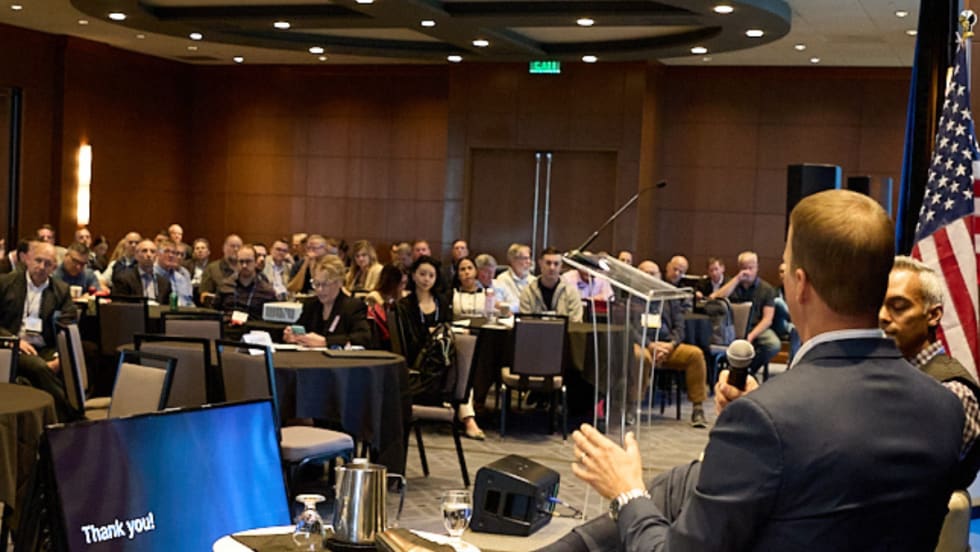
NETS Sets 2026 Fleet Safety Benchmark Conference for Indianapolis
The Sept. 15–17 program will feature fleet benchmarking data, case studies, emerging technologies, and implementation strategies while running alongside the NSC Safety Congress & Expo.
Read More →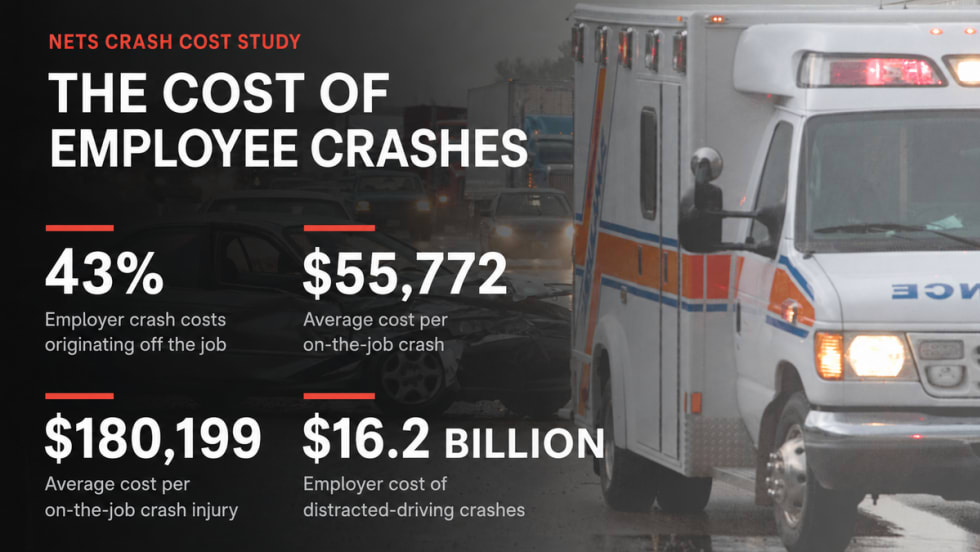
Off-the-Job Crashes Account for 43% of Employers’ $61.7 Billion Crash Burden
NETS quantifies costs dispersed across fleet, risk, HR, and other departments while providing new per-crash benchmarks for employers.
Read More →
Ram Recalls More Than 1.27 Million 1500 Pickups for Seat Belt Anchor Issue
The recall affects certain 2019-2026 Ram 1500 pickups that may have improperly attached second-row seat belt buckle anchors.
Read More →
How Better Visibility Cut Speeding Violations by 48%
Fleet leaders don't need more data, they need clearer visibility into what the data is saying. This case study explores how one utility replaced speeding-event counts with a single metric — miles driven in violation — to strengthen safety and significantly reduce speeding violations.
Read More →
Operation Safe Driver Week: Why the Industry's Oldest Safety Campaign Still Matters to Fleets
A look at how a 2007 enforcement initiative became one of the most consequential weeks on the fleet safety calendar, and what it means for your drivers in 2026.
Read More →