




Nissan Provides Full 2014 Rogue Details
Nissan has launched the second-generation of the Nissan Rogue for the 2014 model-year to members of the media at an event held in late October in Nashville, Tenn.

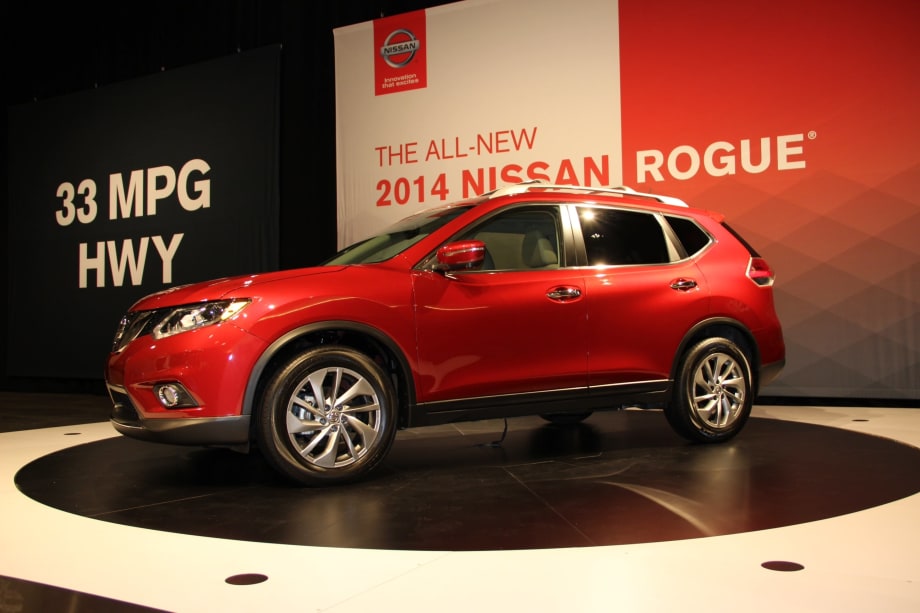
2014 Nissan Rogue (PHOTO: Lauren Fletcher)
2014 Nissan Rogue (PHOTO: Lauren Fletcher)
Nissan has launched the second-generation of the Nissan Rogue for the 2014 model-year to members of the media at an event held in late October in Nashville, Tenn.
The vehicle is now being built at the Smyrna, Tenn. manufacturing plant, part of the automakers strategy to build 85 percent of its products sold in the U.S. in North America.
Click here for a photo gallery from a recent media launch of the 2014 Nissan Rogue.
There have been five key model launches at Smyrna in the past 18 months: the 2013 Infiniti QX60, 2013 Nissan Altima, 2013 Nissan Pathfinder, 2013 Nissan LEAF, and the 2014 Nissan Rogue. This makes a total of six core models now produced at Smyrna, including the Nissan Maxima.
Taro Ueda, VP of Nissan Design America, spoke to the media in attendance about the updated design for the 2014 model. He noted that the exterior has a clean, straightforward design, bigger and better proportions, and has a more wheel-oriented flow.
The crossover segment, according to Scott Shirley, director and chief marketing manager of Nissan, has grown 60 percent since the 2009 model-year, and is now a 1.8-million vehicle per year segment. Shirley noted that this segment is projected to increase 6.5 percent in the next year.
He noted that the Nissan Rogue is the No. 2 selling vehicle in the automakers lineup, behind the Nissan Altima, and sales for the crossover have nearly doubled from the 2008 model-year to 144,921 units sold through September 2013, with 2013 sales up 13.6 percent to date.
Three models will be available, including the Rogue S (the base model), the Rogue SV, and the Rogue SL. There will be five available packages -- the Family Package (S), Family Package (SV), Moonroof Package (SV), Premium Package (SV), and Premium Package (SL).
Pierre Loing, VP of product planning, spoke more about the finer details for the updated vehicle. New for 2014 is an optional third-row for greater seating capacity (seven passenger), a premium interior with "zero gravity" seats, and a class-exclusive "Divide-'N-Hide" cargo system.
The new cargo system has 18 possible configurations, and helps to keep wet and dirty items separate from clean and dry items.
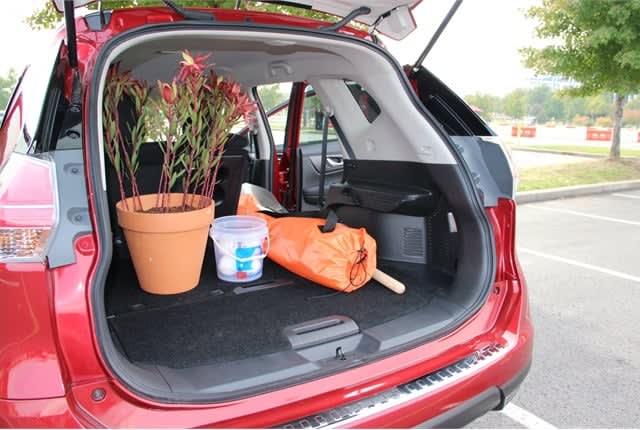
All-new Divide-'N-Hide storage system. (PHOTO: Lauren Fletcher)
Standard safety features now includes Active Trace Control, which can automatically engage the inner/outer brakes, optimizing the vehicles line through turns -- includes active understeer control and corner brake assist.
NissanConnect is also being introduced on the 2014 Nissan Rogue. Two display options are available: a 5-inch color display or larger, 7-inch color touchscreen display. This technology encourages hands-free operation, features app integration, text-to-speech technology, and is cloud-connected. According to Nissan, 1.5 million Nissan vehicles will have this technology by 2015, and NissanConnect will be available across all models by 2017.
The 2014-MY Nissan Rogue goes on sale November 13, 2013.
On sale in January 2014 will be the all-new Rogue Select, which will feature simplified content and model availability with a base MSRP under $20,000.
By Lauren Fletcher
More Operations

What Will Shape the Next Era of Fleet Management?
EVs, AI, and autonomous vehicles are reshaping fleet management. Discover what’s ahead—and how fleet leaders can prepare for the next era.
Read More →
How Fleets Can Recruit and Train Veterans for Technician Roles
Here's how the technician shortage has affected uptime for fleets, and what to do about it.
Read More →
Avis Budget Group Deploys Neology Toll Management Technology Across Major Brands
Neology’s neoFleet platform will manage toll transactions and toll-authority operations for vehicles across Avis, Budget, Payless, Budget Truck and Zipcar.
Read More →

Fleet Personal-Use Charges Edge Higher in 2026
Nearly eight in 10 surveyed fleets allow personal use of company vehicles, while just over half of respondents report charging employees for the privilege.
Read More →
The Future of Fleet + What’s Changing Right Now | AF News Recap
Could developments overseas offer a preview of what’s coming for U.S. fleets? This week, we’re looking at the future of AI, autonomy, and electrification, plus Ford Pro’s new certified pre-owned program, smarter vehicle offboarding, and a new way for fleets to manage toll expenses.
Read More →
How to Handle Vehicle Offboarding
What do fleet managers need to do when a driver leaves?
Read More →
Fleet Manager’s Ultimate Playbook: Navigating the New Standard in OEM Connectivity
Rising operating costs, driver safety concerns, and unplanned downtime are putting unprecedented pressure on modern fleets. Discover how fleet managers use embedded OEM connectivity and real-time vehicle data to cut TCO, prevent downtime, and protect drivers without aftermarket telematics hardware.
Read More →
U.S. Bank Adds Verra Mobility Toll Management to Voyager Fleet Platform
The integration allows U.S. Bank Voyager fleet customers to manage toll payments and violations alongside fuel, EV charging and maintenance expenses.
Read More →
ADAS Prevents Crashes. But Repairs Cost More | AF News Recap
ADAS-equipped vehicles may crash less often, but they can cost more when they do. This week, we’re breaking down what that tradeoff means for fleets, plus Subaru’s first Forester Wilderness Hybrid, Nissan’s new e-POWER Rogue, and why Calstart has become Catalyst Mobility.
Read More →
Moventum Fleet Management Names Mark Iorillo Head of Sales
Iorillo brings nearly 20 years of fleet management and sales experience to the role, including previous positions at Element Fleet Management, CEI, Donlen and Ryder.
Read More →