




Nissan Murano Named 'Top Safety Pick'
ARLINGTON, Va. — The Insurance Institute for Highway Safety announced it has named the redesigned 2009 Nissan Murano a "Top Safety Pick," after conducting a round of front, side and rear crash tests on nine four-door midsize SUV models.
ARLINGTON, Va. — The Insurance Institute for Highway Safety announced it has named the redesigned 2009 Nissan Murano a "Top Safety Pick," after conducting a round of front, side and rear crash tests on nine four-door midsize SUV models.
The Jeep Liberty, Jeep Wrangler 4-door and Kia Sorento, all 2008 models, didn't fare as well in the side test. The Liberty, also sold as the Dodge Nitro, and Wrangler earned the second lowest rating of "marginal" for protection in side crashes. The Sorento earned the lowest rating of "poor," the institute said. The Mazda CX-7 and CX-9 as well as the Mitsubishi Endeavor earned "good" ratings for protection in front and side crashes. All three would have won if they had "good" ratings for protection against neck injury in rear-end crashes, the institute said. The seat/head restraint combinations in both Mazdas were rated "marginal" for rear crash protection. The Endeavor's was rated "poor."
In 2001 only half of the midsize models tested earned "good" ratings in the frontal offset test. In the latest evaluations, all but the Hummer H3 did, and it earned an "acceptable" rating. As manufacturers introduce improved designs, more SUVs are qualifying for Top Safety Pick by earning "good" ratings in all three tests and having electronic stability control (ESC).
For the 2007 model year, the institute added ESC as a criterion. It's a control system with sensors and a microcomputer that continuously monitor how well a vehicle responds to a driver's steering input. The system selectively applies brakes and modulates engine power to keep the vehicle traveling along the path indicated by the steering wheel position. Institute research indicates that ESC reduces the risk of fatal single-vehicle crashes by 56 percent and fatal multiple-vehicle crashes by 32 percent. Many single-vehicle crashes involve rolling over, and this feature reduces the risk of fatal single-vehicle rollovers by 80 percent (SUVs) and 77 percent (cars).
"Combined with test results released last year, consumers now have nine midsize, moderately priced SUV models that earn our Top Safety Pick designation," said Joe Nolan, institute senior vice president. "More good news is that manufacturers have been moving quickly to add safety features like stability control and side airbags to their SUV models."
All of the SUVs in this group have ESC, and all but the Wrangler have standard side airbags. "Increasingly, consumers are getting the latest safety equipment without having to hunt through a list of options," Nolan said.
The Murano has been redesigned for the 2009 model year and ESC, previously an option, now is standard equipment. This is the only SUV in the group recently tested to earn "good" ratings in all three institute tests, and it's one of only two in this group to earn a "good" rating for protection against whiplash injury in rear-end crashes.
Whiplash usually isn't life-threatening, but it can be debilitating and difficult to recover from. Whiplash is the most serious injury reported in about 2 million insurance claims each year, which cost at least $8.5 billion. Rear impacts are common in everyday commuter traffic. In one urban county in Virginia, 63 percent of daytime crashes on urban interstate highways in 2003 were rear impacts.
"You don't know what kind of crash you're going to get into, so you want a vehicle that affords the best protection in the most common kinds of crashes," Nolan said. "The Murano is the only SUV in the group that does this."
Chest protection isn't up to par in some SUVs. Head protection is important in a side crash, but so is protecting the chest and abdomen, the institute said. Manufacturers can do this with additional padding in the doors or with separate side airbags that usually deploy from the side of the seat. Unlike most cars that are equipped with side airbags, some of the SUVs in this group with standard curtain airbags lack separate ones to protect the torso, the institute said. Curtain airbags in the H3, Liberty and Sorento provided good head protection, but all three were downgraded because forces on the driver dummy's metal ribcage indicated that rib fractures and internal organ injuries would be possible in a real-world crash of this severity, the institute said.
"Performance of some of these models in the side test was surprising," Nolan said. "SUVs should have an inherent advantage in such crashes because drivers and passengers ride higher up than in cars. People often think they're safer in an SUV, but many cars perform much better in our side test than some of the SUVs in this group."
The institute noted that the Jeep Wrangler was tested without its optional combination head and torso side airbags. The institute's policy is that when airbags are optional, the vehicle is tested without the option. A manufacturer may request a second test with the option if the automaker reimburses the institute for the cost of the vehicle. In the case of the Wrangler, Chrysler didn't request another test.
Nearly every vehicle the institute tests now earns the top rating of "good" for frontal crash protection. But this wasn't the case for the Hummer H3, which earned an "acceptable" rating. The H3 is one of only two midsize SUV designs the institute has recently tested that didn't draw a "good" rating in the frontal test (the other is the Chevrolet TrailBlazer).
In the institute's test, high forces were recorded on the dummy's lower right leg, indicating the likelihood of injury, the institute said. Still, forces on the dummy's head and chest were low, and the vehicle's structure held up well.
"Acceptable isn't a bad rating," Nolan explained. "It's just not the best protection that's available. Considering the Hummer's acceptable side rating and poor rating in the rear test, we can see that this SUV hasn't been designed with the state-of-the-art crash protection of many of its competitors."
The institute's frontal crashworthiness evaluations are based on results of 40 mph frontal offset crash tests. Each vehicle's overall evaluation was based on measurements of intrusion into the occupant compartment, injury measures recorded on a Hybrid III dummy in the driver seat, and analysis of slow-motion film to assess how well the restraint system controlled dummy movement during the test.
Side evaluations were based on performance in a crash test in which the side of a vehicle was struck by a barrier moving at 31 mph. The barrier represented the front end of a pickup or SUV. Ratings reflect injury measures recorded on two instrumented SID-IIs dummies, assessment of head protection countermeasures, and the vehicle's structural performance during the impact.
Injury measures obtained from the two dummies, one in the driver seat and the other in the back seat behind the driver, were used to determine the likelihood that a driver and/or passenger in a similar real-world crash would sustain serious injury to various parts of the body. The movements and contacts of the dummies' heads during the test also were evaluated. Structural performance was based on measurements indicating the amount of B-pillar intrusion into the occupant compartment.
Rear crash protection was rated according to a two-step procedure. Starting points for the ratings were measurements of head restraint geometry — the height of a restraint and its horizontal distance behind the back of the head of an average-size man. Seats with good or acceptable restraint geometry were tested dynamically using a dummy that measures forces on the neck. This test simulated a collision in which a stationary vehicle was struck in the rear at 20 mph. Seats without good or acceptable geometry were rated "poor" overall because they can't be positioned to protect many people.
More Safety

From Driver Well-Being to EV Charging | AF News Recap
Mental health belongs in the fleet safety conversation. This week, we’re looking at five ways fleets can support employee well-being before a crisis, plus Holman’s expansion in Mexico, new one-day Fleet Forward passes, and why EV charging demand is outpacing infrastructure growth.
Read More →
Nexar-Nauto Merger Aims to Give Fleets Better Safety Intelligence Through Larger Driving Dataset
Stefan Heck tells Automotive Fleet that combining more than 10 billion miles of driving history with Nexar's AI models will give fleets deeper insights into driver risk and roadway conditions than either company could provide independently.
Read More →
Don't Wait for a Crisis: 5 Ways to Build Mental Health Into Your Fleet Safety Program
For Suicide Prevention Month, fleet and safety leaders have an opportunity to put mental health where it belongs: at the center of workplace safety.
Read More →
How Camera Data Can Strengthen a Fleet’s Insurance Renewal
Insights from a commercial insurance carrier and a broker show how fleets can turn video telematic data, driver coaching, and improved claims results into a stronger case at insurance renewal.
Read More →
The Safest Fleets Aren’t the Ones with the Most Technology
You’ve made the telematics investment. Here’s how to capture the other half of its value and build the safest fleet on the road.
Read More →
Hidden in Plain Sight: Fleet Compliance Risks
Fleet compliance isn't just about having policies — it's about consistently enforcing them. This practical guide reveals six hidden compliance risks common in public sector and shared fleet operations and outlines proven strategies to improve visibility, accountability, and audit readiness
Read More →
NETS Sets 2026 Fleet Safety Benchmark Conference for Indianapolis
The Sept. 15–17 program will feature fleet benchmarking data, case studies, emerging technologies, and implementation strategies while running alongside the NSC Safety Congress & Expo.
Read More →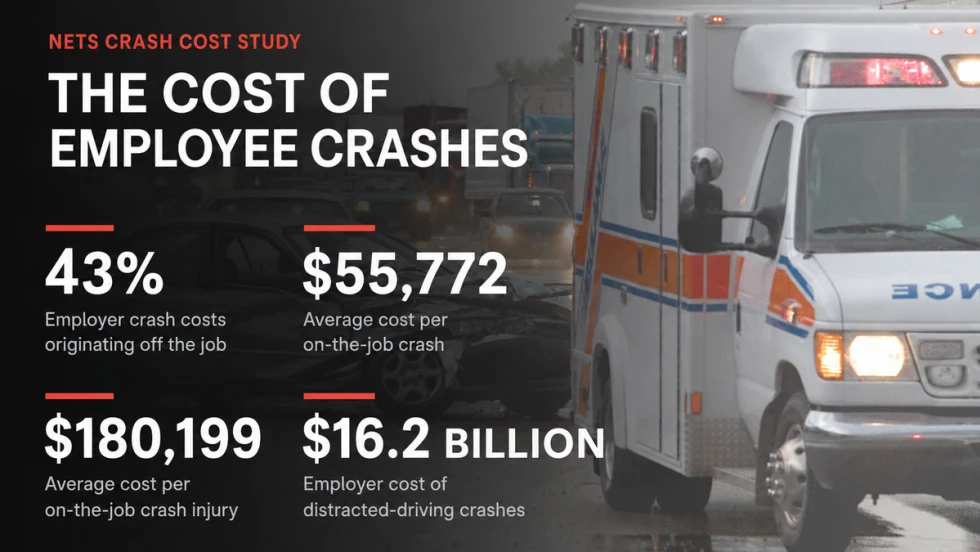
Off-the-Job Crashes Account for 43% of Employers’ $61.7 Billion Crash Burden
NETS quantifies costs dispersed across fleet, risk, HR, and other departments while providing new per-crash benchmarks for employers.
Read More →
Ram Recalls More Than 1.27 Million 1500 Pickups for Seat Belt Anchor Issue
The recall affects certain 2019-2026 Ram 1500 pickups that may have improperly attached second-row seat belt buckle anchors.
Read More →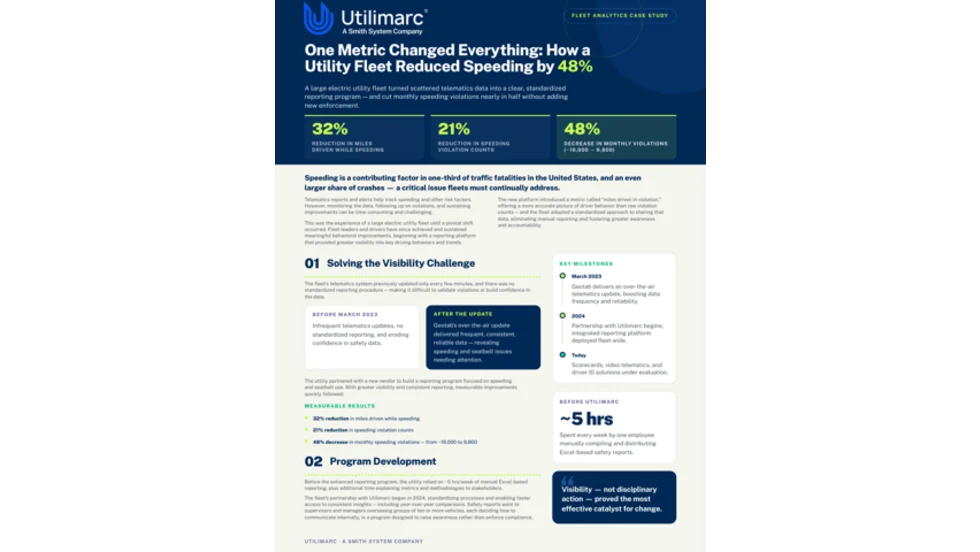
How Better Visibility Cut Speeding Violations by 48%
Fleet leaders don't need more data, they need clearer visibility into what the data is saying. This case study explores how one utility replaced speeding-event counts with a single metric — miles driven in violation — to strengthen safety and significantly reduce speeding violations.
Read More →