




Nissan Frontier Excels in IIHS Rollover Crash Tests
ARLINGTON, VA - In new crash tests aimed at evaluating rollover protection, the Nissan Frontier proved to have the strongest roof, the Insurance Institute for Highway Safety said.
ARLINGTON, VA - In new crash tests aimed at evaluating rollover protection, the Nissan Frontier proved to have the strongest roof, the Insurance Institute for Highway Safety said.
Five 2010 small pickups took part in the testing. The Frontier, also sold as the Suzuki Equator, was the only pickup in the group to draw the highest rating of "good." The Ford Ranger was rated "acceptable." The Dodge Dakota, Toyota Tacoma and Colorado (also sold as the GMC Canyon) drew the IIHS rating of "marginal." The Chevrolet Colorado was deemed the weakest among the five small pickup trucks tested, IIHS said.
IIHS said the rating system was based on research showing that occupants in rollover crashes benefit from stronger roofs. Vehicles rated "good" must have roofs that are more than twice as strong as the minimum required under the current federal safety standard.
The ratings, products of the institute's new roof strength testing program, add to consumer information tests that rate vehicles' front, side and rear crashworthiness. The rollover test is designed to help consumers pick vehicles that will protect them the best in one of the most serious kinds of crashes, IIHS said.
According to the institute, there's plenty of room for future improvement in the safety of small pickup trucks.
"As a group, small pickups aren't performing as well as small cars or small SUVs in all of the institute's safety tests," said David Zuby, IIHS senior vice president. "None of the ones we tested is a top-notch performer across the board. In fact, no small pickup earns our Top Safety Pick award."
The Frontier, IIHS said, came close to winning the 2010 award, but it's rated "acceptable" instead of "good" for protection against neck injury in rear crashes. To earn Top Safety Pick, a vehicle has to earn "good" ratings for protection in front, side, rear and rollover crashes. It also has to have electronic stability control.
[PAGEBREAK]
Nearly 10,000 people a year are killed in rollovers. When vehicles roll, their roofs hit the ground, deform and crush. Stronger roofs crush less, reducing the risk of injury from contact with the roof itself. Stronger roofs also can prevent people, especially those who aren't using safety belts, from being ejected through windows, windshields or doors that have broken or opened because the roof deformed. Roofs that don't collapse help keep people inside vehicles when they roll, IIHS said.
Rollovers are much more common for SUVs and pickup trucks than for cars. In 2008 almost half (47 percent) of all pickup occupants killed in crashes were in trucks that rolled over. This compares with 58 percent of deaths in SUVs and 25 percent in cars.
Of course, the best occupant protection is to keep vehicles from rolling in the first place. Electronic stability control is significantly reducing rollovers, especially fatal single-vehicle ones. When vehicles roll, side curtain airbags help protect people. Safety belt use is essential, IIHS said.
In the institute's roof strength test, a metal plate is pushed against one corner of a roof at a constant speed. To earn a "good" rating, a roof must withstand a force of four times the vehicle's weight before reaching five inches of crush. For an "acceptable" rating, the minimum strength-to-weight ratio required is 3.25. A "marginal" rating value is 2.5, and anything lower than that is "poor." The Frontier withstood a force of just over four times its weight.
[PAGEBREAK]
In April 2009, the National Highway Traffic Safety Administration ended numerous delays by unveiling a new rule that raises the federal roof strength requirement -- currently a strength-to-weight ratio of 1.5 -- to 3 for vehicles with weight ratings up to 6,000 pounds.
Roofs on vehicles with weight ratings 6,000 to 10,000 pounds will be required to withstand a force equal to 1.5 times their unloaded weight, whereas these vehicles' roofs are not regulated under the old standard. Another requirement is that roofs maintain sufficient headroom during testing. For the first time, the government will require the same performance on both sides of a roof when tested sequentially. Phase-in begins in September 2012, and all vehicles must comply by September 2016.
"The long phase-in of the new standard means roofs won't have to get stronger right away," Zuby pointed out, "so we plan to continue rating vehicle roof strength for the foreseeable future. We want to reward manufacturers who are ahead of their competition for protecting people in rollovers."
In addition to the new roof strength ratings, the institute conducted side tests of small pickup truck models. Earning "good" ratings were the Frontier, with standard front and rear head curtain airbags plus front torso airbags. Also earning "good" ratings were the Ranger, with standard front-seat mounted combination head and torso airbags, and the Tacoma, which the IIHS tested in 2008.
More Safety

Nexar-Nauto Merger Aims to Give Fleets Better Safety Intelligence Through Larger Driving Dataset
Stefan Heck tells Automotive Fleet that combining more than 10 billion miles of driving history with Nexar's AI models will give fleets deeper insights into driver risk and roadway conditions than either company could provide independently.
Read More →
Don't Wait for a Crisis: 5 Ways to Build Mental Health Into Your Fleet Safety Program
For Suicide Prevention Month, fleet and safety leaders have an opportunity to put mental health where it belongs: at the center of workplace safety.
Read More →
How Camera Data Can Strengthen a Fleet’s Insurance Renewal
Insights from a commercial insurance carrier and a broker show how fleets can turn video telematic data, driver coaching, and improved claims results into a stronger case at insurance renewal.
Read More →
The Safest Fleets Aren’t the Ones with the Most Technology
You’ve made the telematics investment. Here’s how to capture the other half of its value and build the safest fleet on the road.
Read More →
Hidden in Plain Sight: Fleet Compliance Risks
Fleet compliance isn't just about having policies — it's about consistently enforcing them. This practical guide reveals six hidden compliance risks common in public sector and shared fleet operations and outlines proven strategies to improve visibility, accountability, and audit readiness
Read More →
NETS Sets 2026 Fleet Safety Benchmark Conference for Indianapolis
The Sept. 15–17 program will feature fleet benchmarking data, case studies, emerging technologies, and implementation strategies while running alongside the NSC Safety Congress & Expo.
Read More →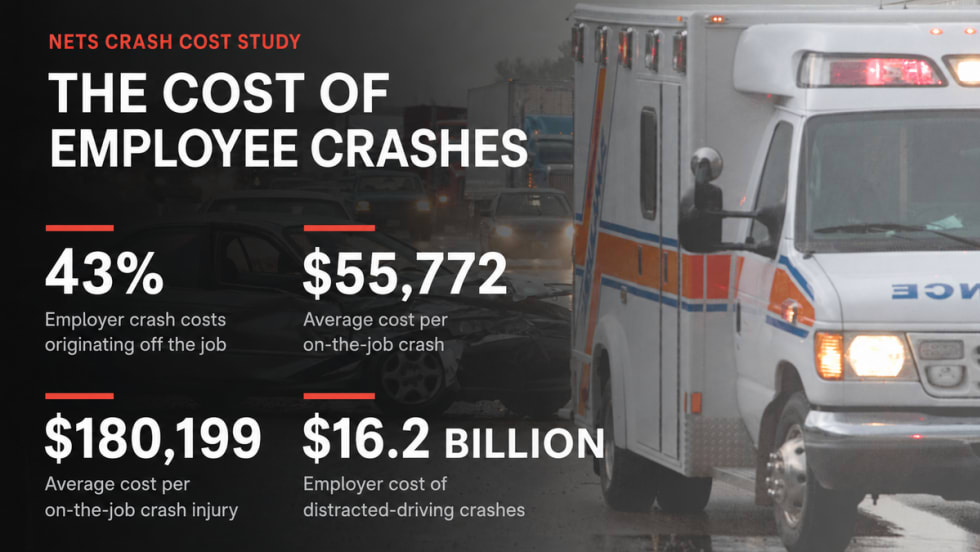
Off-the-Job Crashes Account for 43% of Employers’ $61.7 Billion Crash Burden
NETS quantifies costs dispersed across fleet, risk, HR, and other departments while providing new per-crash benchmarks for employers.
Read More →
Ram Recalls More Than 1.27 Million 1500 Pickups for Seat Belt Anchor Issue
The recall affects certain 2019-2026 Ram 1500 pickups that may have improperly attached second-row seat belt buckle anchors.
Read More →
How Better Visibility Cut Speeding Violations by 48%
Fleet leaders don't need more data, they need clearer visibility into what the data is saying. This case study explores how one utility replaced speeding-event counts with a single metric — miles driven in violation — to strengthen safety and significantly reduce speeding violations.
Read More →
Operation Safe Driver Week: Why the Industry's Oldest Safety Campaign Still Matters to Fleets
A look at how a 2007 enforcement initiative became one of the most consequential weeks on the fleet safety calendar, and what it means for your drivers in 2026.
Read More →