




Nissan Brazil Produces 30K Vehicles for Export
In its first year of producing vehicles for export, the plant produced 10,000 unites, and in the following year saw a 200% increase.
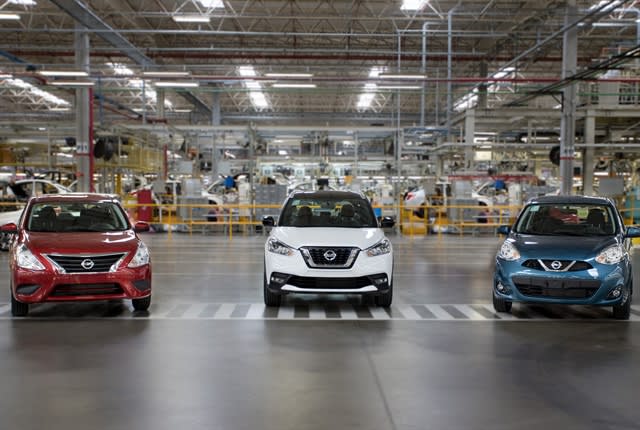
Photo courtesy of Nissan.
Nissan's industrial complex in Resende, Brazil, has produced 30,000 cars that were made for exporting to markets overseas, according to the automaker.
In its first year of producing vehicles for export, the plant produced 10,000 units, and in the following year saw a 200% increase, said Nissan. Between November 2017 and March 2018, the Nissan March, Nissan Versa and Nissan Kicks export models were responsible for a leap from 20,000 to 30,000 units.
Since December, the Argentinian market started to sell the Nissan Kicks that was produced at the Resende Industrial Complex. Argentina had already been receiving the March hatchback and the Versa sedan from Brazil's plant. Both models made in Brazil are also sold in Bolivia, Chile, Costa Rica, Panama, Paraguay, Peru and Uruguay.
The timing coincides with the second anniversary of the plant's export program, which has grown as the result of increased demand in Latin America, according to Nissan.
More Global Fleet

GeoFencing Adds to Your Truck Security Arsenal
Geofencing is a familiar fleet tool today, but its early adoption marked a major shift in vehicle tracking, route monitoring, and the debate over employee privacy.
Read More →
Holman Takes Full Ownership of ARIZA in Mexico
Holman is bringing its Mexican fleet management operation fully under its own brand after more than 30 years as a joint venture. The change gives multinational fleet customers a single Holman operation across the U.S., Canada, and Mexico.
Read More →
5 Tire Maintenance Tips to Help Prevent Work Truck Downtime
Regular tire checks can do more than extend tread life. These five maintenance practices can help work truck fleets catch problems early, reduce costs, and prevent downtime.
Read More →

Proven Ways to Reduce Work Truck Downtime
The age-old problem of downtime will always be a reality, but with new strategies at hand, fleets have more ways to keep trucks on the road longer.
Read More →


Cameras, Safety and Insurance: From Reactive Claims to Real-Time Prevention (Part 2 of 2)
Part Two: Commercial auto remains one of the most challenging and costly lines of coverage for fleet operators and insurers alike. Continue learning more about how to effectively address these issues from Onur Aksan, Enterprise Business Development Executive, Geotab
Read More →
Cameras, Safety and Insurance: From Reactive Claims to Real-time Prevention
Commercial auto remains one of the most challenging and costly lines of coverage for fleet operators and insurers alike. Learn more about how to effectively address these issues from Onur Aksan, Enterprise Business Development Executive, Geotab.
Read More →
Fleet Costs Are Rising: Here’s How Leaders Are Responding
Fleet leaders are under pressure to reduce costs, adapt to economic uncertainty, and make smarter decisions. See how peers across North America are responding with real data, proven strategies, and forward-looking insights. Download the 2026 Market Pulse Report to benchmark your strategy and uncover where you can gain an edge.
Read More →
Enterprise Fleet Management Surpasses 900,000 Vehicles in U.S. & Canada
Enterprise Mobility connects with mobility solutions around the globe
Read More →